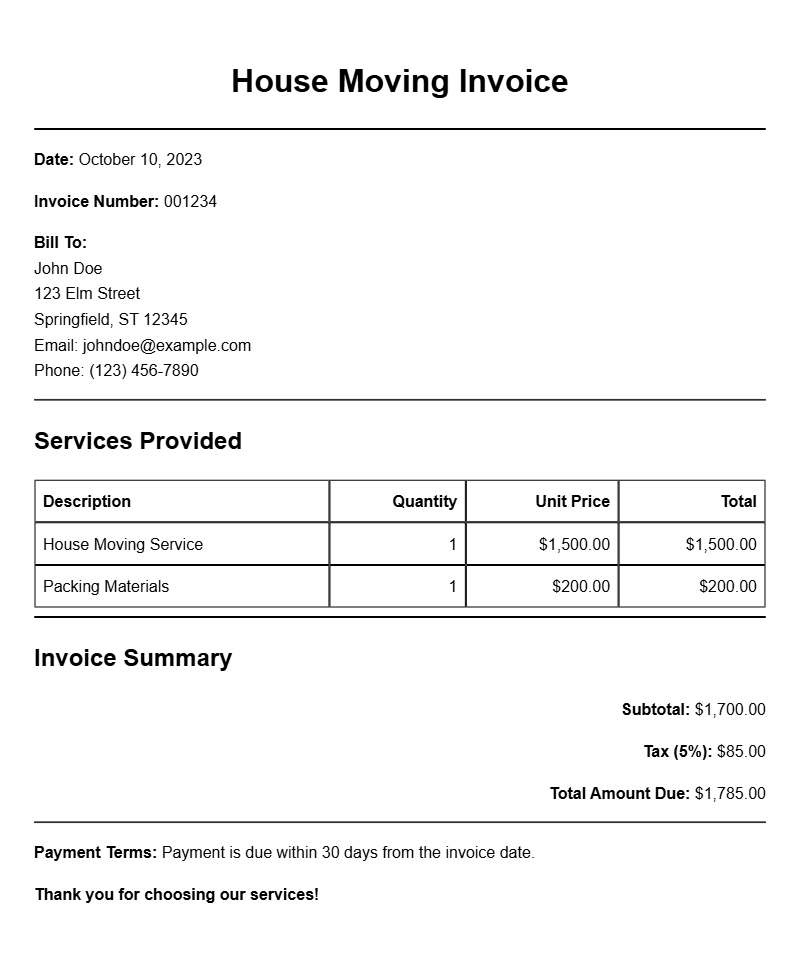
Moving houses can be a whirlwind of excitement and stress, and keeping track of all the expenses is often the last thing on your mind. One essential aspect of managing your move is having clear documentation of the costs involved. This is where a house moving invoice comes into play. It not only helps you stay organized but also serves as a record for any future reference. Whether you’re hiring movers or handling the logistics on your own, understanding how to create an effective invoice is crucial.
WHAT IS A HOUSE MOVING INVOICE?
A house moving invoice is a document that outlines the costs associated with your move. It details services rendered, materials used, and any additional fees. This invoice can be provided by professional moving companies or created by individuals managing their own moves. Having a formal invoice is important for budgeting, tax purposes, or if disputes arise with service providers.
WHEN IS IT USED?
This document is typically used when hiring a moving company, but it can also be handy for DIY moves. If you are renting a truck or purchasing moving supplies, you may also want to create an invoice to keep track of all expenses. If you need to file a claim for damages or seek reimbursement from an employer for moving expenses, an invoice is essential.
KEY COMPONENTS OF A HOUSE MOVING INVOICE
- Header: Your name, address, phone number, and email, along with the moving company’s details if applicable.
- Invoice Number: A unique identifier for your invoice.
- Date: The date the invoice is issued.
- Description of Services: Clear details of moving services provided, including labor, transportation, and materials.
- Costs: Breakdown of charges, including labor rates, mileage, packing supplies, and any additional fees.
- Total Amount Due: The final amount that needs to be paid.
- Payment Terms: Due date and acceptable payment methods.
STEP-BY-STEP WRITING GUIDE
- Start with your contact information at the top, followed by the moving company’s details.
- Add a title like “Moving Invoice” and an invoice number for tracking.
- Include the date and specify the services rendered.
- List each service with a description and corresponding cost.
- Calculate the total amount due and include payment terms.
REALISTIC EXAMPLES AND TEMPLATES
Here’s a simple snippet for a house moving invoice:
Your Name
Your Address
City, State, Zip
Your Phone Number
Your Email
Moving Company Name
Company Address
City, State, Zip
Invoice Number: 001
Date: [Insert Date]
Description of Services:
– Labor (Packing and Loading): $300
– Truck Rental: $150
– Packing Supplies: $50
Total Amount Due: $500
Payment Terms: Due by [Insert Due Date]. Acceptable methods: Cash, Credit Card, PayPal.
COMMON MISTAKES TO AVOID
- Neglecting to include all services and charges.
- Not providing a clear total amount due.
- Forgetting to include payment terms, which can lead to confusion.
TIPS FOR CUSTOMIZATION
Feel free to modify the template above to suit your needs. Add your branding if applicable or adjust the formatting for clarity. If you’re working with multiple moving companies, keep separate invoices for each to avoid mix-ups.
Creating a detailed house moving invoice doesn’t have to be daunting. By following these guidelines, you can ensure that you have a clear record of your moving expenses, making your transition smoother. For more invoice templates for different contexts, check out our resources on store opening invoices, shipping invoices, sales consultant invoices, and others. This way, you’ll be prepared for any situation that arises during your move.
Editable Document Format Examples