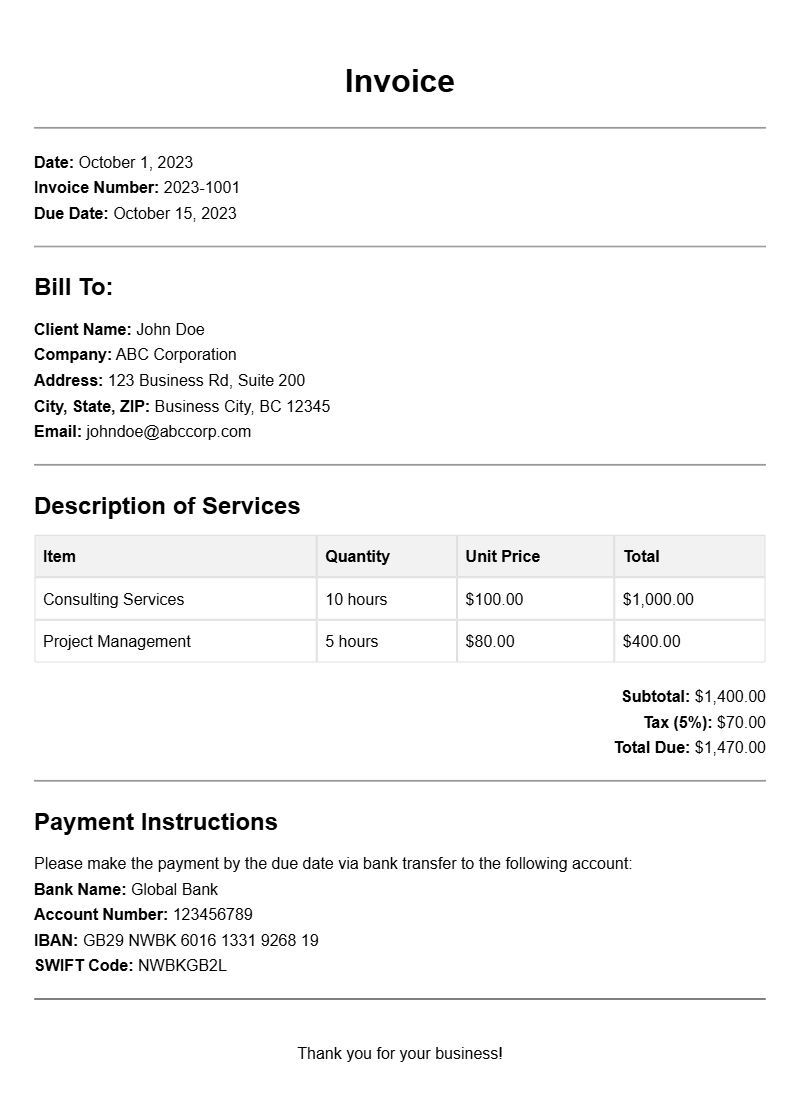
Creating a one-time invoice might seem straightforward, but it can sometimes feel overwhelming if you’re unsure where to start. A one-time invoice is a document you issue when you provide a service or product that doesn’t require ongoing billing. Whether you’re a freelancer, a small business owner, or someone providing a service occasionally, knowing how to craft an effective invoice is essential for getting paid promptly.
What Is a One-Time Invoice?
A one-time invoice is a billing document used for a single transaction. Unlike recurring invoices, which are sent at regular intervals, one-time invoices are typically issued after the completion of a specific job or delivery of a product. This type of invoice serves as a formal request for payment and outlines the details of the transaction.
When Is It Used?
You’ll find one-time invoices handy in various scenarios, such as:
- Freelancers completing a project for a client.
- Artists selling a piece of work.
- Service providers, like plumbers or electricians, finishing a job.
In each of these cases, a one-time invoice helps you clearly communicate what you did and how much you’re charging.
Key Components of a One-Time Invoice
Every effective one-time invoice should include several key components:
- Your Business Information: Name, address, and contact details.
- Client Information: Name and address of the person or company you’re billing.
- Invoice Number: A unique identifier for tracking purposes.
- Date of Issue: The date you’re issuing the invoice.
- Description of Services or Products: A breakdown of what you provided, including quantities and rates.
- Payment Terms: When payment is due and how it can be made.
Step-by-Step Writing Guide
Here’s a simple process to create your one-time invoice:
- Gather Information: Collect all details about the services provided and client information.
- Choose a Template: You can find various invoice templates online that suit your needs.
- Fill in the Details: Input your business info, client info, invoice number, and the date.
- Detail the Services: Clearly describe what you provided, including prices.
- State Payment Terms: Specify how and when you expect payment.
- Review and Send: Double-check for accuracy and email or print your invoice for delivery.
Realistic Examples/Templates
Here’s a quick example of what your one-time invoice might look like:
YOUR BUSINESS NAME
123 Your Street
City, State, Zip
Email: youremail@example.com
Phone: (123) 456-7890
INVOICE
Invoice Number: 001
Date of Issue: [Date]
BILL TO:
Client Name
Client Address
DESCRIPTION
– Service/Product 1: $X.XX
– Service/Product 2: $X.XX
TOTAL DUE: $XX.XX
Payment Terms: Due within 30 days. Pay via [payment methods].
Common Mistakes to Avoid
When crafting your invoice, steer clear of these pitfalls:
- Skipping the invoice number. Always include one for tracking.
- Not detailing the services. Vague descriptions can lead to confusion.
- Forgetting payment terms. Make sure they are clear to avoid delays.
Tips for Customization
Feel free to customize your one-time invoice. Here are a few suggestions:
- Add your logo for branding.
- Consider color schemes that match your business identity.
- Include a personal note thanking the client for their business.
These personal touches can enhance your professional image and strengthen client relationships.
Creating a one-time invoice doesn’t have to be complicated. By following these guidelines and using the provided examples, you can ensure that you’re billing correctly and professionally. For more specialized invoice needs, check out other resources like shipping service invoices or event decoration invoices. Start billing with confidence!
Ready-to-Use Document Samples