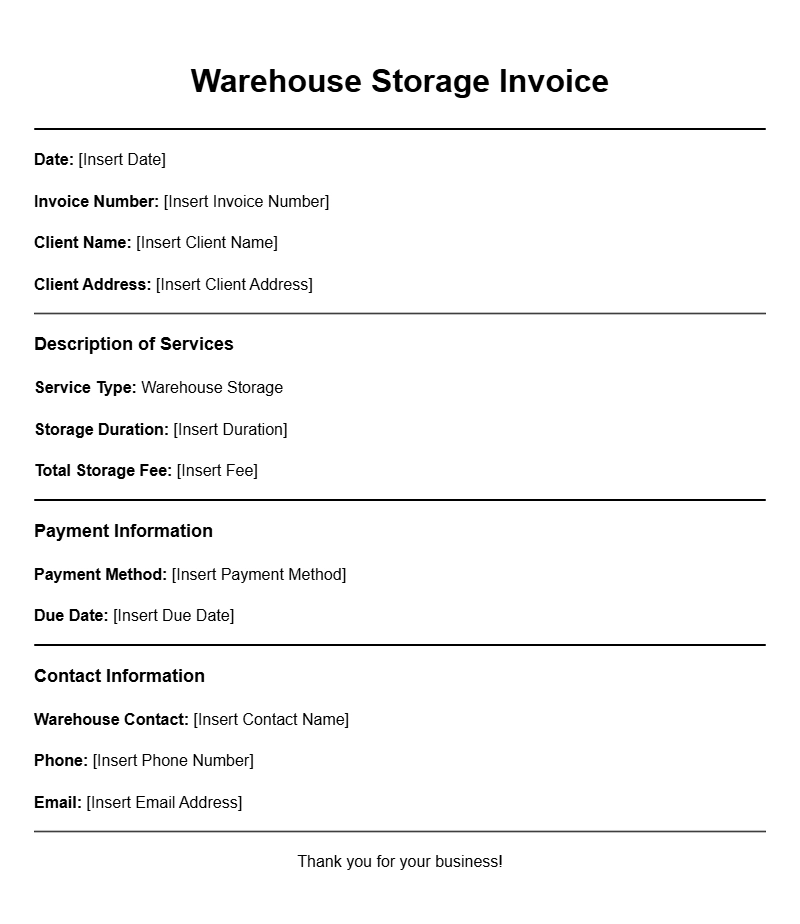
Managing warehouse storage can be a complex task, especially when it comes to keeping track of inventory and invoicing. One tool that can simplify these processes is a warehouse storage invoice template. This structured document helps you itemize services provided, making billing straightforward for both you and your clients. If you’re looking to create or refine your invoices, understanding the essential components and how to customize them can save you time and hassle down the line.
WHAT IS A WAREHOUSE STORAGE INVOICE TEMPLATE?
A warehouse storage invoice template is a pre-formatted document used to bill clients for storage services. It typically includes detailed information about the items stored, duration of storage, and any additional services provided, such as handling or transportation. This template not only helps in ensuring accurate billing but also serves as a record for both parties involved.
WHEN TO USE A WAREHOUSE STORAGE INVOICE TEMPLATE
These templates are particularly useful in various scenarios:
- When a client stores goods in your warehouse for a specified period.
- When you offer additional services, such as packing, unloading, or transporting items.
- For businesses that need to maintain clear records of storage fees for accounting purposes.
KEY COMPONENTS OF A WAREHOUSE STORAGE INVOICE
A well-crafted warehouse storage invoice should contain the following elements:
- Your Business Information: Include your business name, address, and contact details.
- Client Information: Add the client’s name, address, and contact information.
- Invoice Number: A unique identifier for tracking the invoice.
- Invoice Date: The date the invoice is issued.
- Storage Details: Item description, quantity, unit price, and total cost for each item stored.
- Additional Services: Fees for any extra services provided, if applicable.
- Total Amount Due: The grand total, including all items and services.
STEP-BY-STEP WRITING GUIDE
Creating your invoice can be straightforward. Follow these steps:
- Start with your business information at the top.
- Next, add the client’s information below yours.
- Include the invoice number and date to ensure everything is organized.
- List the items stored in a clear table format, including descriptions, quantities, and costs.
- If you provided extra services, list those separately with their respective fees.
- Calculate the total amount due and highlight it for visibility.
REALISTIC EXAMPLES OF A WAREHOUSE STORAGE INVOICE
Here’s a simple example of what your invoice might look like:
Your Business Name
Your Address
Your City, State, Zip
Your Phone Number
Your Email
Client Name
Client Address
Client City, State, Zip
Invoice Number: 001
Invoice Date: MM/DD/YYYY
| Item Description | Quantity | Unit Price | Total |
|——————-|———-|————|——-|
| Pallet of Widgets | 10 | $25.00 | $250.00 |
| Handling Fee | 1 | $50.00 | $50.00 |
Total Amount Due: $300.00
COMMON MISTAKES TO AVOID
When drafting your invoice, be mindful of these common pitfalls:
- Not including all necessary client details, which can lead to payment delays.
- Forgetting to proofread for errors in item descriptions or pricing.
- Neglecting to specify payment terms, which can cause confusion.
TIPS FOR CUSTOMIZATION
Make your invoice stand out and suit your business style:
- Use your brand colors and logo for a professional touch.
- Consider adding a section for payment options to simplify the process for clients.
- Include a message thanking the client for their business to foster good relationships.
Having a well-structured warehouse storage invoice template can streamline your billing process and improve client satisfaction. By customizing it to fit your business needs and following the guidelines above, you can ensure that your invoicing is both efficient and effective. For additional resources, check out examples for triathlon invoices, tattoo artist invoices, and massage therapy invoices that might inspire your next steps.
Sample Documents for Multiple Use Cases