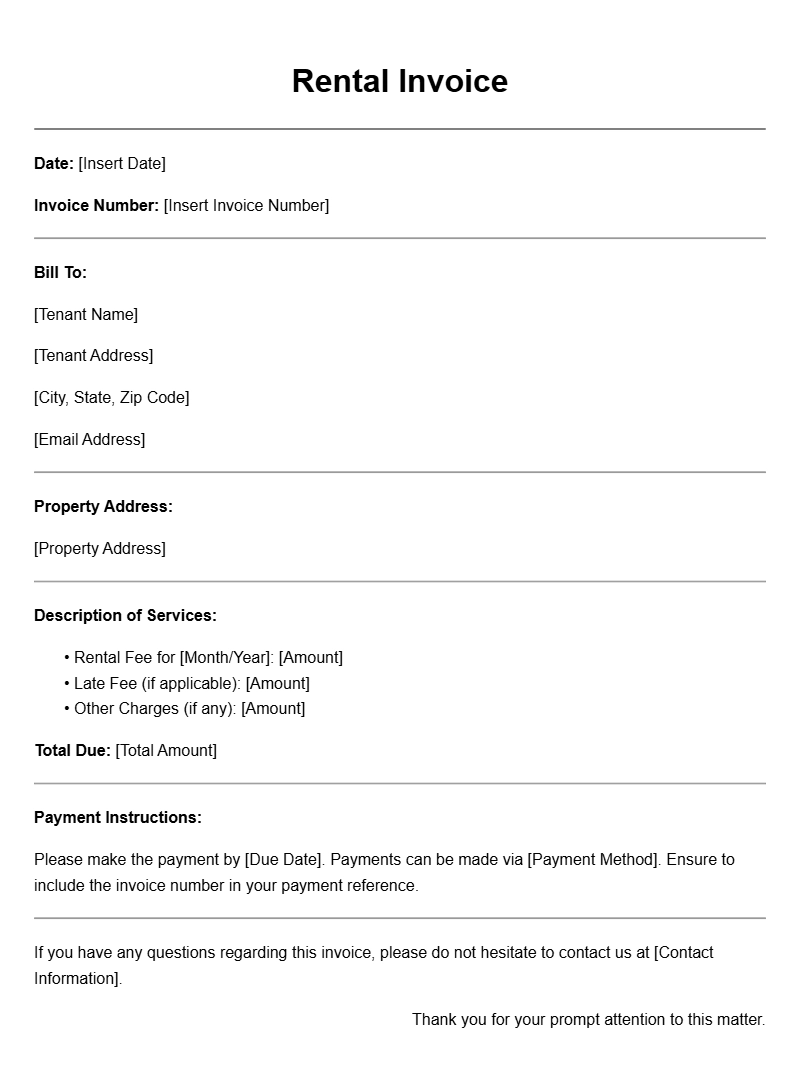
Creating rental invoices can feel daunting, especially if you’re new to the process or don’t have a template handy. A well-structured rental invoice not only ensures you get paid on time but also helps maintain a professional relationship with your tenants. This guide will walk you through rental invoice templates, what they are, when to use them, and how to create one that works for you.
WHAT IS A RENTAL INVOICE TEMPLATE?
A rental invoice template is a pre-formatted document that landlords or property managers use to bill tenants for rent and any additional charges. It serves as a formal request for payment and outlines the details of the rental agreement, making it easy for both parties to keep track of transactions.
WHEN IS IT USED?
You’ll use a rental invoice when it’s time to collect rent, which typically occurs monthly. It’s also useful for charging late fees, utility costs, or any other miscellaneous charges related to the rental property. Having a consistent template helps streamline this process and ensures nothing important is overlooked.
KEY COMPONENTS OF A RENTAL INVOICE
A well-crafted rental invoice should include the following sections:
- Your Contact Information: Name, address, phone number, and email.
- Tenant Information: Name and address of the tenant.
- Invoice Number: A unique identifier for tracking purposes.
- Invoice Date: The date the invoice is issued.
- Due Date: When the payment is expected.
- Description of Charges: A breakdown of rent, late fees, or other costs.
- Total Amount Due: The total sum that needs to be paid.
- Payment Instructions: How and where to send the payment.
STEP-BY-STEP WRITING GUIDE
Creating your rental invoice can be straightforward. Follow these steps:
- Choose a Template: Start with a basic rental invoice template. You can find many free options online or create one in a word processor.
- Fill in Your Information: Add your name, address, and contact details at the top of the invoice.
- Input Tenant Details: Include the tenant’s name and address.
- Add Invoice Number and Date: Assign a unique invoice number and note the date of issuance.
- List Charges: Specify the rental amount due, any late fees, and additional charges. Be clear and concise.
- Calculate Total: Sum up all charges and present the total amount due.
- Provide Payment Details: Clearly state how the tenant can make the payment.
REALISTIC EXAMPLES OF RENTAL INVOICE TEMPLATES
Here’s a simple example of what a rental invoice might look like:
[Your Name]
[Your Address]
[City, State, Zip]
[Phone Number]
[Email Address]
Invoice Number: 001
Date: [Date]
Due Date: [Due Date]
Tenant:
[Tenant Name]
[Tenant Address]
Description of Charges:
– Rent for [Month]: $[Amount]
– Late Fee (if applicable): $[Amount]
– Utility Charges (if applicable): $[Amount]
Total Amount Due: $[Total Amount]
Payment Instructions:
Please make payment via [Payment Method] by [Due Date].
COMMON MISTAKES TO AVOID
When creating rental invoices, it’s easy to make mistakes. Here are a few to watch out for:
- Not including an invoice number, which can complicate record-keeping.
- Failing to specify the due date, leading to potential delays in payment.
- Omitting payment methods or instructions, causing confusion for tenants.
TIPS FOR CUSTOMIZATION
Personalizing your rental invoice can make it more effective:
- Add your logo or branding for a professional touch.
- Consider including a friendly note thanking your tenant for their prompt payment.
- Use colors and fonts that reflect your personal style or brand.
With the right rental invoice template and a clear understanding of its components, you can simplify your billing process. This not only helps you stay organized but also fosters a better relationship with your tenants. Don’t hesitate to explore different styles and formats until you find one that works best for your needs.
Document Structure & Example Models