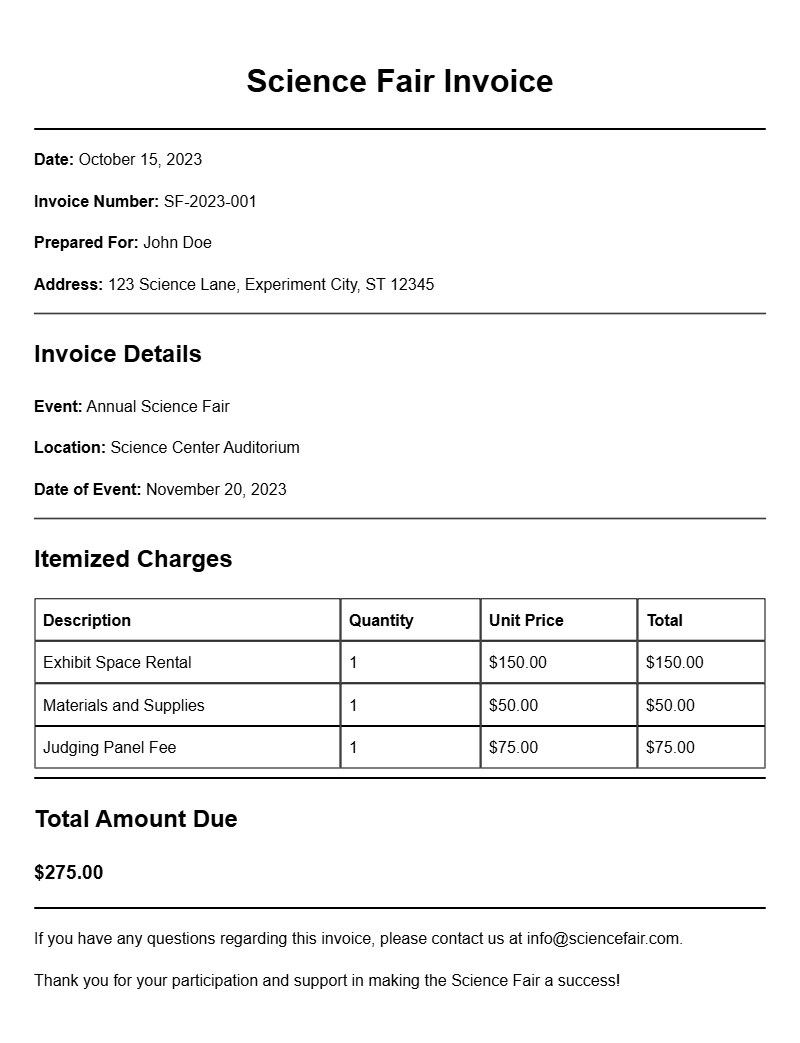
Creating a science fair invoice might not be the first thing on your mind when you’re gearing up for an exciting project. However, if you’re organizing a fair or providing services related to it, having a clear invoice can help manage payments effectively. This guide will walk you through everything you need to know about science fair invoice samples, making it simple to keep your financials in order.
What is a Science Fair Invoice?
A science fair invoice is a document used to request payment for services or products related to a science fair. This could include fees for project materials, registration fees, or even consulting services for participants. The invoice serves as a formal request for payment and includes details necessary for proper accounting.
When is it Used?
You might need a science fair invoice in several situations:
- If you’re organizing a science fair and need to charge vendors or exhibitors.
- When you provide services, like coaching students on their projects.
- If you supply materials or equipment needed for projects.
Key Components of a Science Fair Invoice
A well-structured invoice typically includes:
- Header: Your business name, logo, and contact information.
- Invoice Number: A unique identifier for tracking purposes.
- Date: When the invoice is issued.
- Recipient Information: Name and contact details of the person or organization being billed.
- Description of Services: Detailed breakdown of what the charges are for.
- Total Amount Due: The total sum, including any taxes or fees.
- Payment Terms: Instructions on how and when to pay.
Step-by-Step Writing Guide
Follow these steps to create your own science fair invoice:
- Start with a Template: Choose an existing template or create your own layout.
- Add Your Details: Fill in your contact information at the top of the invoice.
- Include the Date: Add the date you’re issuing the invoice.
- Enter Invoice Number: Generate and include a unique invoice number.
- List Recipient Information: Clearly state who the invoice is for.
- Detail Services: Provide a clear description of services or goods provided, along with their costs.
- Calculate Total: Sum up the total amount due.
- Add Payment Instructions: Specify how payment can be made and mention any deadlines.
Realistic Examples/Templates
Here’s a simple template snippet you can edit:
Your Business Name
1234 Your Street, Your City, ST 12345
Email: your.email@example.com
Phone: (123) 456-7890
Invoice #001
Date: [Insert Date]
Bill To:
[Recipient Name]
[Recipient Address]
Description | Amount
————————————————-
Registration Fee for Science Fair | $50.00
Materials for Project X | $30.00
Total Amount Due: $80.00
Payment Terms: Payment due within 30 days.
Common Mistakes to Avoid
While drafting your invoice, keep an eye out for these common pitfalls:
- Missing contact information can lead to payment delays.
- Forgetting to add an invoice number can complicate tracking.
- Not itemizing services makes it harder for recipients to understand charges.
Tips for Customization
Make your invoice stand out and work for you:
- Add your logo for a professional touch.
- Use a consistent color scheme that matches your branding.
- Include a personal note thanking the recipient for their business.
Creating a clear, professional science fair invoice doesn’t have to be a headache. By following these guidelines and using the examples provided, you’ll be well on your way to managing your financial transactions effectively. This approach not only helps in maintaining records but also enhances your professionalism in the eyes of your clients. For more specific invoice examples, check out resources like roof installation invoice samples or hotel consultant invoice templates. Happy invoicing!
General Document Template Collection