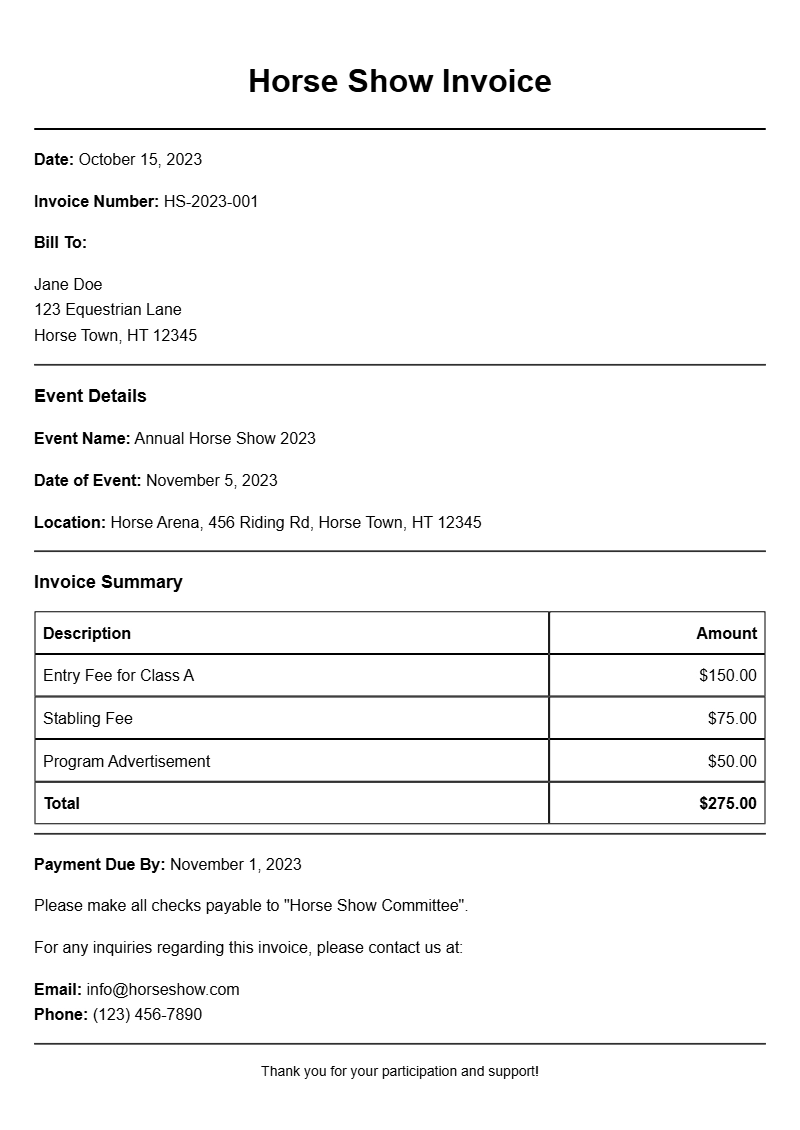
Whether you’re a seasoned equestrian or just starting out, managing the financial side of horse shows can be a challenge. Having a well-structured horse show invoice is essential for clear communication with clients, ensuring you get paid on time, and keeping track of your services. This guide will walk you through everything you need to know about horse show invoice samples and how to create your own.
WHAT IS A HORSE SHOW INVOICE?
A horse show invoice is a document you send to clients detailing the services you provided, such as training, grooming, or transportation for their horses during a show. It outlines the costs associated with these services and serves as a record for both you and the client.
WHEN IS IT USED?
You typically issue a horse show invoice after providing a service or at the conclusion of an event. Whether you’re a trainer who offers lessons, a groomer who cares for horses during a show, or a transportation service, having a formal invoice helps clarify the costs involved and ensures prompt payment.
KEY COMPONENTS OF A HORSE SHOW INVOICE
To create a useful invoice, include these essential components:
- Contact Information: Your name, address, phone number, and email, as well as your client’s details.
- Invoice Number: A unique identifier for tracking and reference.
- Invoice Date: The date the invoice is issued.
- Service Description: Detailed descriptions of each service provided.
- Cost Breakdown: Itemized costs for each service, including any applicable taxes.
- Total Amount Due: The total cost that needs to be paid.
- Payment Terms: Specify when payment is due and accepted payment methods.
STEP-BY-STEP WRITING GUIDE
Creating your invoice doesn’t have to be complicated. Follow these steps:
- Start with your contact information at the top, followed by the client’s details.
- Assign an invoice number for easy tracking.
- List the date you’re sending the invoice.
- Provide a detailed description of services rendered, making sure to be clear and concise.
- Break down costs for each service and include any applicable taxes.
- Calculate the total amount due.
- Include your payment terms and how clients can pay.
REALISTIC EXAMPLES/TEMPLATES
Here’s a simple template to get you started:
Your Name
Your Address
City, State, Zip
Your Phone Number
Your Email
Client’s Name
Client’s Address
City, State, Zip
Invoice Number: 001
Invoice Date: [MM/DD/YYYY]
Services Provided:
– Horse Training (3 sessions): $300
– Grooming Services: $150
– Transportation: $100
Subtotal: $550
Tax (5%): $27.50
Total Amount Due: $577.50
Payment Terms: Due within 30 days. Accepting checks and PayPal.
COMMON MISTAKES TO AVOID
When creating your invoice, keep these common pitfalls in mind:
- Neglecting to include contact information can lead to confusion.
- Forgetting to number your invoices makes tracking harder.
- Providing vague service descriptions can lead to disputes over charges.
- Not specifying payment terms may cause delays in payment.
TIPS FOR CUSTOMIZATION
Make your invoice stand out and fit your brand:
- Use your logo or business colors to create a visually appealing layout.
- Personalize the greeting for a more friendly approach.
- Add a note of thanks or a short message to build rapport with clients.
Writing a horse show invoice may seem daunting, but with the right structure and attention to detail, it can be a straightforward task. Utilize the samples and tips provided to create invoices that reflect your professionalism and keep your business running smoothly.
Sample Documents for Multiple Use Cases