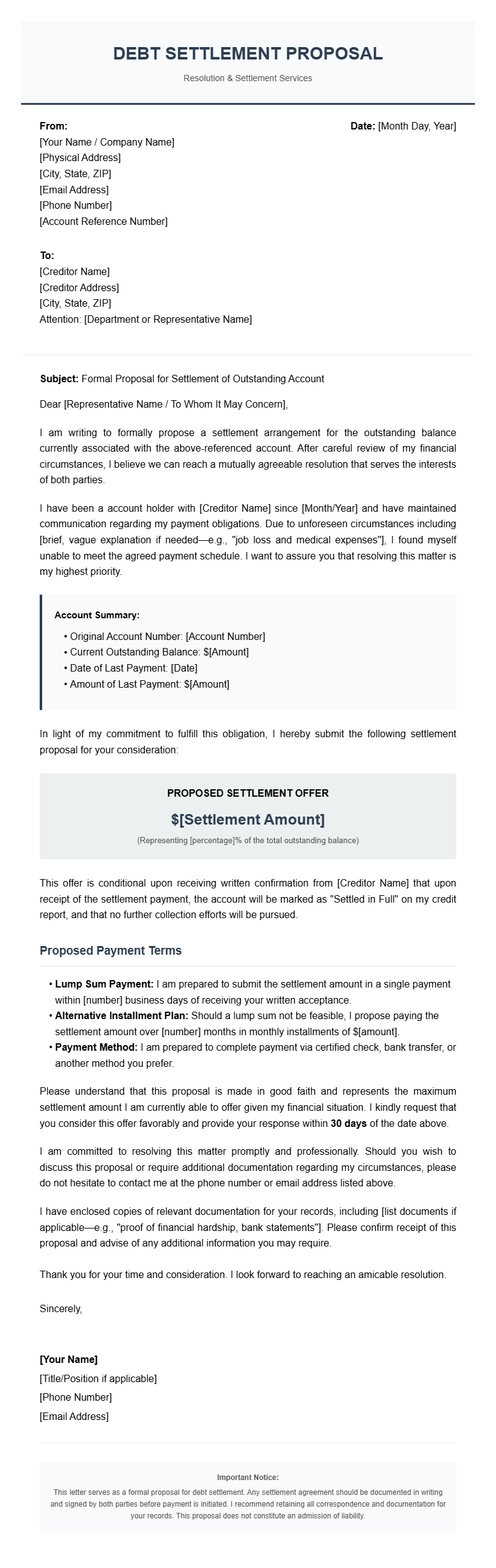
Writing a debt settlement letter feels intimidating at first. You want to ask your creditor for a lower payoff amount, but you’re not sure how to phrase it without sounding desperate or getting ignored. I’ve helped dozens of people navigate this exact situation, and the right template can make a huge difference in getting a positive response from your creditor.
What Is a Debt Settlement Letter?
A debt settlement letter is a structured written request you send to a creditor or collection agency asking them to accept a reduced payment to pay off your debt completely. Instead of owing the full balance, you’re proposing a lump-sum settlement that closes the account. This document serves as your formal proposal and creates a paper trail of your communication with the creditor.
These letters are commonly used when you’ve experienced financial hardship, have a lump sum available (perhaps from a tax refund, bonus, or family loan), or when the debt has been charged off and you’re looking to resolve it before it goes to litigation. The goal is to get the creditor to agree in writing that accepting a lesser amount satisfies your obligation in full.
When Should You Send a Debt Settlement Letter?
Timing matters significantly when you’re considering debt settlement. You typically want to send this letter in these situations:
- The account is significantly delinquent—usually 60 to 90 days past due
- You’ve received a notice that the account will be charged off or sent to collections
- You have access to a lump sum of money that you can offer as settlement
- The original debt has been sold to a third-party collection agency at a discount
- You’re facing potential lawsuit from the creditor and want to resolve the matter first
You shouldn’t send a settlement letter while you’re still current on payments and dealing with an active account. Creditors have little incentive to settle when you’re honoring the original agreement. Wait until the relationship has deteriorated enough that settlement becomes economically attractive to them.
Key Components of an Effective Debt Settlement Letter
Your letter needs several critical elements to be taken seriously and to protect your interests. Missing any of these components can result in your letter being dismissed or the agreement falling apart later.
- Your identifying information: Full name, address, account number, and contact details so the creditor can locate your account immediately
- Creditor details: Name and address of the company you’re sending the letter to, including any account number or reference information
- Current account status: Stating the original debt amount, current balance, and how long the account has been delinquent
- Your hardship explanation: Brief, factual explanation of what caused your financial difficulty—job loss, medical emergency, divorce, etc.
- Settlement offer: Specific dollar amount you’re offering to pay, expressed as a percentage of the current balance
- Proposed timeline: When you can make the payment, commonly 30 to 45 days from the date of a signed agreement
- Settlement terms: Request for written confirmation that the settled amount satisfies the debt in full and that they’ll report the account as “settled” or “paid in full for less than owed”
- Documentation requests: Ask them to provide the settlement agreement in writing before you send any payment
Step-by-Step Guide to Writing Your Letter
Let me walk you through this process using a real example. Imagine Maria has a credit card debt with an original balance of $8,500. The account is now 7 months delinquent and the current balance (including accrued interest and fees) shows $10,200. She has $3,500 available from her tax refund to offer as settlement. Here’s how she’d structure her letter:
Step 1: Open with Identification
Start by clearly identifying who you are and which account you’re discussing. Don’t assume the creditor will pull up your information based on your name alone—especially with larger companies where accounts get transferred between departments or sold to different servicers.
Your opening should look something like this:
“I am writing regarding account number XXXX-XXXX-4421, held under my name at the address 2847 Maple Grove Lane, Apartment 3B, Columbus, OH 43201.”
Step 2: State Your Purpose Clearly
Get to the point quickly. Creditors deal with hundreds of letters, and they appreciate straightforward communication. State that you’re proposing a settlement and specify what you want them to agree to.
“Due to significant changes in my financial circumstances, I am unable to continue regular payments on this account. I am proposing a lump-sum settlement payment of $3,500 to satisfy this obligation in full.”
Step 3: Provide Financial Context
Explain your situation factually. You don’t need to share every detail, but creditors need enough information to understand why you’re struggling and why you’re making this specific offer.
“I was employed as a paralegal until March 2024, when I was laid off during a firm restructuring. After exhausting my savings and temporarily taking on gig work, I have recently secured new employment but am not yet in a position to resume full monthly payments on this or other debts.”
Step 4: Make Your Offer Specific
Always state a concrete number. Vague offers like “I can pay something” rarely get responses. Research what percentage settlement is realistic (typically 40% to 60% for charged-off accounts), and make an offer you can actually follow through on.
“I am offering $3,500 as a settlement for this account. This represents approximately 34% of the current balance. I can make this payment within 30 days of receiving a signed settlement agreement.”
Step 5: Request Written Confirmation
This is the most important protective element. Never send money before getting the agreement in writing. Your letter should explicitly state what you need from them.
“Before I send any payment, I require a written settlement agreement on company letterhead that clearly states the agreed settlement amount of $3,500, confirms this payment will satisfy the debt in full, and specifies how the account will be reported to the credit bureaus.”
Step 6: Set a Reasonable Deadline
Give them time to review but create urgency. Including a deadline shows you’re serious and prevents the negotiation from dragging on indefinitely.
“Please respond by [date 21 days from now] with either the signed settlement agreement or your counterproposal. If I do not receive a response by this date, I will assume this offer is not acceptable and will explore other options.”
Editable Template for Debt Settlement Letter
You can use this template as a starting point, but personalize it with your specific details:
[Your Full Name]
[Your Address]
[City, State ZIP]
[Phone Number]
[Email Address]
[Date]
[Creditor Company Name]
[Creditor Address]
[City, State ZIP]
Re: Settlement Proposal for Account Number [XXXX-XXXX-XXXX]
Dear Sir or Madam:
I am writing regarding the above-referenced account, which currently shows a balance of $[current balance]. Due to [brief hardship explanation—job loss, medical situation, divorce, etc.], I am no longer in a position to maintain regular payments on this debt.
I am proposing a one-time lump-sum payment of $[your offer amount] in exchange for full satisfaction of this account. This offer is valid for 30 days from the date of this letter.
Before I submit any payment, I require:
- A signed written agreement confirming $[settlement amount] will satisfy the debt in full
- Written confirmation of how the account will be reported to credit bureaus
- Assurance that no further collection action will be taken after payment
If this proposal is acceptable, please send the settlement agreement to the address listed above. I can deliver payment within 10 business days of receiving the signed agreement.
Thank you for your time and consideration.
Sincerely,
[Your Signature]
[Your Printed Name]
Common Mistakes to Avoid
I’ve seen people undermine perfectly good settlement offers by making these errors:
Sending payment before getting written confirmation. This is the biggest mistake. A creditor verbally agreeing doesn’t mean anything until you have a signed letter in hand. Send money first refutes your recourse if they later claim you still owe the remaining balance.
Not specifying credit reporting terms. Some creditors will agree to settle but then report the account as “settled for less than full balance” which is almost as damaging as the original delinquency. Always ask them to report it as “paid in full” or “account satisfied.”
Offering too much too early. Start negotiations lower than what you’re actually willing to pay. If you’d ultimately accept 50%, open at 30%. You can always increase your offer; it’s much harder to ask for a reduction after naming a figure.
Including unnecessary personal details. You don’t need to share your full financial history, family circumstances, or emotional struggles. Keep your hardship explanation brief and factual. Excess detail can actually weaken your position by giving the creditor information to use against you in negotiations.
Forgetting to mention getting the agreement in writing. This protects you legally and ensures both parties understand the terms. A creditor who refuses to put the agreement in writing should raise immediate red flags.
Tips for Customizing Your Letter
Your specific situation should shape how you approach this letter:
If you’re dealing with a debt that’s already been sold to a collection agency, research the original creditor first. The debt may have been purchased at a significant discount—sometimes for 10 to 20 cents on the dollar—which means the collector has more flexibility to negotiate while still making a profit.
When your account is still with the original creditor, focus on their loss-mitigation departments. Many major credit card issuers have internal programs specifically for settlement. Your letter stands a better chance if it reaches the right team rather than general customer service.
If you’re proposing a settlement for multiple debts, consider sending separate letters or using different amounts proportionally. A creditor doesn’t need to know you have extra money available from other sources. Keep each negotiation isolated.
For accounts where you’ve already received a lawsuit threat or summons, time is critical. Move quickly on settlement before a judgment is entered, which would make your situation much more difficult. In these cases, you might want to have a financial professional review your letter before sending.
What Happens After You Send the Letter
If you don’t receive a response within two weeks, follow up with a phone call. Keep track of who you speak with, the date, and what was discussed. Document everything in a follow-up letter if any verbal agreements are made.
Creditors typically counteroffer within your proposed timeframe. They might come back at 45% instead of your 34% offer, or request the payment be made within 15 days instead of 30. Everything is negotiable at this stage.
Once you reach agreement, read the written settlement carefully before signing and sending payment. Verify it matches exactly what you understood from negotiations. Confirm the payment amount, the credit reporting language, and any other promises made during discussions.
Getting Professional Help
If your situation involves large amounts, multiple debts, or legal threats, you might consider consulting a financial counselor or attorney before sending settlement letters.Organizations approved by the Department of Justice provide HUD-certified housing counseling, and many credit counseling agencies offer free or low-cost advice on debt resolution strategies. Similar templates and professional guidance might also be available for related correspondence needs—like when you need a payment reminder letter to document conversations with creditors or when you’re managing other formal communications like teaching appointment paperwork or consent forms for school programs.
Whether you’re handling employment-related matters with documents like promotion recommendation letters or negotiating overtime arrangements, written communication that is clear and professionally structured makes a real difference in practical situations.
Taking control of your debt through settlement is a legitimate financial strategy used by millions of people. Having the right letter template gives you a solid foundation to negotiate confidently and protect yourself throughout the process. Start with your specific numbers, customize the template to your situation, and remember: always get agreements in writing before sending any money.
Editable Document Format Examples