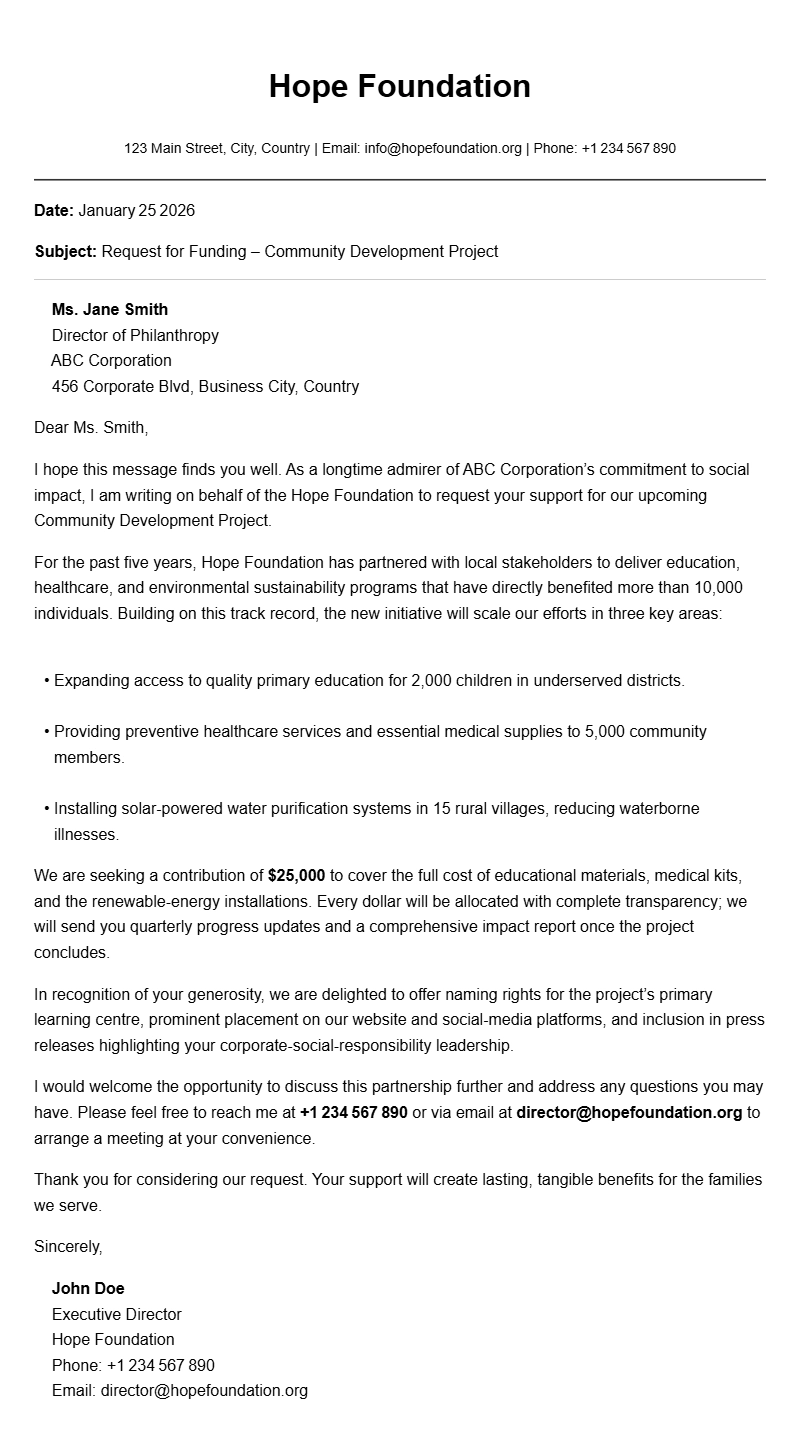
You’re sitting there with a blank screen, cursor blinking, trying to figure out how to ask people for money. It happens to every fundraiser at some point. The good news is you don’t have to start from scratch. Having solid request letter samples to reference makes the whole process less intimidating. In this guide, I’ll walk you through everything you need to write a fundraising appeal letter that actually gets responses.
What Is a Fundraising Request Letter?
A fundraising request letter is a formal appeal written to potential donors, asking them to contribute money or resources to a cause, organization, or project. These letters serve as the primary tool for nonprofit outreach, community fundraising campaigns, and institutional development efforts. Unlike a simple donation request, a well-crafted fundraising letter tells a story, creates emotional connection, and gives readers a clear reason to act.
Most organizations use these letters when launching annual campaigns, responding to emergencies, funding specific programs, or building long-term donor relationships. The format typically follows a business letter structure but prioritizes persuasive language and donor-centered messaging.
When Do You Need a Fundraising Appeal Letter?
You’ll want to write one of these letters in several situations:
- Annual giving campaigns where you’re reaching out to past donors
- Capital campaigns to raise funds for buildings, major equipment, or large projects
- Emergency or disaster response fundraising when time is critical
- Grant proposals that require matching funds or community support documentation
- Grassroots fundraising drives for schools, churches, or community groups
- Event-based fundraising where you’re seeking sponsors or general support
The specific tone and length of your letter will vary depending on your audience and urgency. Annual campaigns can afford a warmer, more detailed approach. Emergency appeals need to be direct and concise while still conveying authenticity.
Key Components of an Effective Fundraising Request Letter
Every strong fundraising letter contains these essential elements:
A Compelling Opening
Your first paragraph needs to hook the reader immediately. Skip the generic “We are writing to ask for your support” opener. Instead, paint a quick picture of the problem you’re solving or the dream you’re pursuing. Something like: “Last year, 200 local families couldn’t afford basic school supplies for their children. That’s about to change, and here’s why.”
Clear Problem Statement
Explain what issue you’re addressing and why it matters. Keep this specific rather than vague. “We serve 1,200 meals weekly to families facing food insecurity” carries more weight than “We help people who are hungry.”
Your Proposed Solution
After establishing the problem, explain what you’re doing about it. This is where you connect your organization’s work to the donor’s potential contribution. Be concrete about what their gift will accomplish.
Specific Ask Amount
Never leave the donation amount open-ended unless you’re explicitly asking for whatever they can give. Research shows that suggesting a specific amount increases response rates. You might offer tiers like: “A gift of $50 feeds a family for two weeks. $100 covers after-school tutoring for one child for a month.”
Emotional Connection
Stories work better than statistics for most donors. Share a brief anecdote about someone your organization has helped, a volunteer whose life changed, or a community transformation you’ve witnessed. This human element makes your appeal memorable.
Urgency and Time Sensitivity
If your campaign has a deadline or matching gift opportunity, mention it. Urgency motivates action, but don’t fake it. Only create time pressure if it genuinely exists.
Thank You and Recognition
Always acknowledge that you’re grateful for the reader’s consideration. Mention how you’ll recognize donors (if applicable) and express that their support, whatever the amount, makes a meaningful difference.
Contact Information and Next Steps
End with clear instructions on how to donate. Include a reply envelope, website link, or contact person information. Make it impossibly easy to take action.
Step-by-Step Guide to Writing Your Fundraising Letter
Here’s how to tackle this project systematically:
Step 1: Define Your Purpose and Audience
Before typing a single word, ask yourself: Who am I writing to, and what do I want them to do? A letter to major donors looks different from one targeting community members. Knowing your audience shapes your tone, length, and ask amount.
Step 2: Gather Your Stories and Data
Compile 2-3 concrete examples of your work in action. Pull specific numbers that demonstrate impact. Having this material ready makes the writing process flow much smoother. If you’re using letter templates as starting points, you can slot your specifics into the framework more easily.
Step 3: Write a Complete First Draft Without Editing
Don’t try to be perfect on the first pass. Get your ideas down, include your stories, and make your ask. You can trim and polish later. Many people get stuck trying to write the perfect opening sentence and never move forward.
Step 4: Edit for Clarity and Concision
Read your draft aloud. Where do you stumble? Those spots probably need rewording. Look for sentences that can be shortened without losing meaning. Your letter should feel conversational, not like you’re reading a legal document.
Step 5: Add Specific Numbers and Outcomes
Replace vague claims with measurable results. Instead of “Your donation helps students,” try “Your $75 donation provides a semester of tutoring sessions for one student who was falling behind in math.” Specificity builds credibility.
Step 6: Strengthen Your Call to Action
Make sure your ask is unmistakable. Use action verbs like “give,” “support,” “join us,” or “contribute today.” Double-check that you’ve included exactly how to donate and what happens next.
Step 7: Proofread Thoroughly
Errors undermine trust. Read through once for typos, once for grammar, and once for flow. If possible, have someone else read it who doesn’t know your organization. Their fresh perspective catches things you miss.
Fundraising Request Letter Templates and Examples
Here are three different templates you can adapt for your needs. Each serves a slightly different purpose, so choose the structure that fits your campaign.
Template 1: Annual Campaign Letter
This format works well for yearly fundraising drives where you’re reaching out to existing supporters.
[Your Organization Letterhead]
Dear [Donor Name],
Every year, [Organization Name] asks supporters like you to help us continue work that changes lives in our community. This year, we’re focusing on [specific program or goal].
Here’s what your contribution does:
- $25 provides [specific outcome]
- $50 funds [specific outcome]
- $100 covers [specific outcome]
Last year, your generosity helped us [specific achievement]. We’re proud of what we’ve accomplished together, and we know we can do more with your continued support.
This year, we’re working toward [specific goal]. If [number] families give just $75, we can fully fund [specific program].
Please return your gift in the enclosed envelope by [date], or donate online at [website]. Every gift matters, and every gift is appreciated.
Thank you for being part of [Organization Name].
Warmly,
[Your Name]
[Title]
Template 2: Emergency or Urgent Appeal
Use this format when time is critical and you need rapid response.
Subject: We need your help right now
Dear Friend,
I’m writing to you today because we’re facing an urgent situation that requires immediate action.
[Describe the emergency and its impact on real people.]
Within the next two weeks, we need to raise $[amount] to provide [specific outcome]. Without this funding, [consequence].
Here’s how you can help: [Give specific giving options and clear instructions.]
We know you’re busy. We know you receive many requests. But this situation won’t wait, and the people affected can’t wait either.
Please give what you can today at [website] or return the enclosed card with your contribution.
With deep gratitude,
[Name]
[Organization]
Template 3: Major Donor Solicitation
This more personalized format works best for smaller lists of high-potential donors.
Dear [Name],
I wanted to reach out personally because I believe in the work we’re doing at [Organization], and I think you will too.
For the past [number] years, we’ve been tackling [problem]. The results speak for themselves: [specific achievement]. But we’re at a critical juncture where we can either maintain our current level of service or expand our impact significantly.
I’m inviting you to be part of our expansion. We’re looking for [number] founding donors to contribute $[amount] each, which will allow us to [specific outcome].
Would you consider a gift of $[amount] to help us [goal]? I’d love to discuss this with you further and share more details about the project. Please call me at [phone] or reply to this email.
Whatever you decide, thank you for considering this opportunity to make a real difference.
Sincerely,
[Your Name]
[Title]
Common Mistakes to Avoid
Watch out for these frequent errors that weaken fundraising letters:
- Starting with “I” instead of “you”: Donors care about themselves and the cause, not your organization’s internal processes. Lead with their interests.
- Asking for the wrong amount: Too high and you seem out of touch. Too low and you leave money on the table. Research typical giving levels for your donor base.
- Being vague about impact: “Your donation helps children” doesn’t tell anyone what that actually means. Be specific about outcomes.
- Forgetting to include how to give: If readers don’t know exactly what to do next, they won’t do anything. Spell out the process.
- Sounding desperate or guilt-driven: Effective fundraising inspires generosity, not discomfort. Approach donors as partners, not as ATM machines.
- Using outdated information: Before sending, verify all statistics, names, and program details are current. Nothing kills credibility faster than errors.
- Making the letter too long: For most campaigns, one page is sufficient. Respect your reader’s time. If you have more to say, link to your website rather than extending the letter.
Tips for Customizing Your Template
Copying a template word-for-word rarely works. Here’s how to make yours feel genuine and specific:
Insert real stories: Replace generic examples with actual anecdotes from your organization’s work. Names and specific details make stories come alive.
Match your organization’s voice: A church outreach letter should sound different from a youth sports program request. Your letter should feel consistent with how you communicate in other contexts.
Segment your lists when possible: If you’re writing to longtime supporters versus first-time donors, customize the message accordingly. Longtime donors don’t need as much background information.
Update your statistics: Use current numbers, not outdated ones. Donors notice when you claim achievements from several years ago as if they’re recent.
Add personal touches: If appropriate, mention previous interactions with the donor. “It was wonderful seeing you at the gala last month” creates connection.
Consider timing: When you’re planning your campaign, think about when your readers are most likely to give. Seasonal patterns often influence giving behavior, so adjust your approach accordingly.
These letters work best when they’re part of a broader relationship-building strategy. A single letter rarely transforms a cold prospect into a loyal donor. Think of each appeal as one conversation in an ongoing relationship.
If you need help with other business letter formats as you build out your organization’s communication toolkit, there are plenty of templates available. But for fundraising specifically, the templates above give you a solid foundation to adapt.
The most important thing you can do is just start writing. Your first draft won’t be perfect, and that’s fine. The act of getting words on paper is harder than the editing process. Once you have something to work with, you can shape it into a letter that genuinely connects with your readers and inspires them to give.
Standard Format & Layout Reference