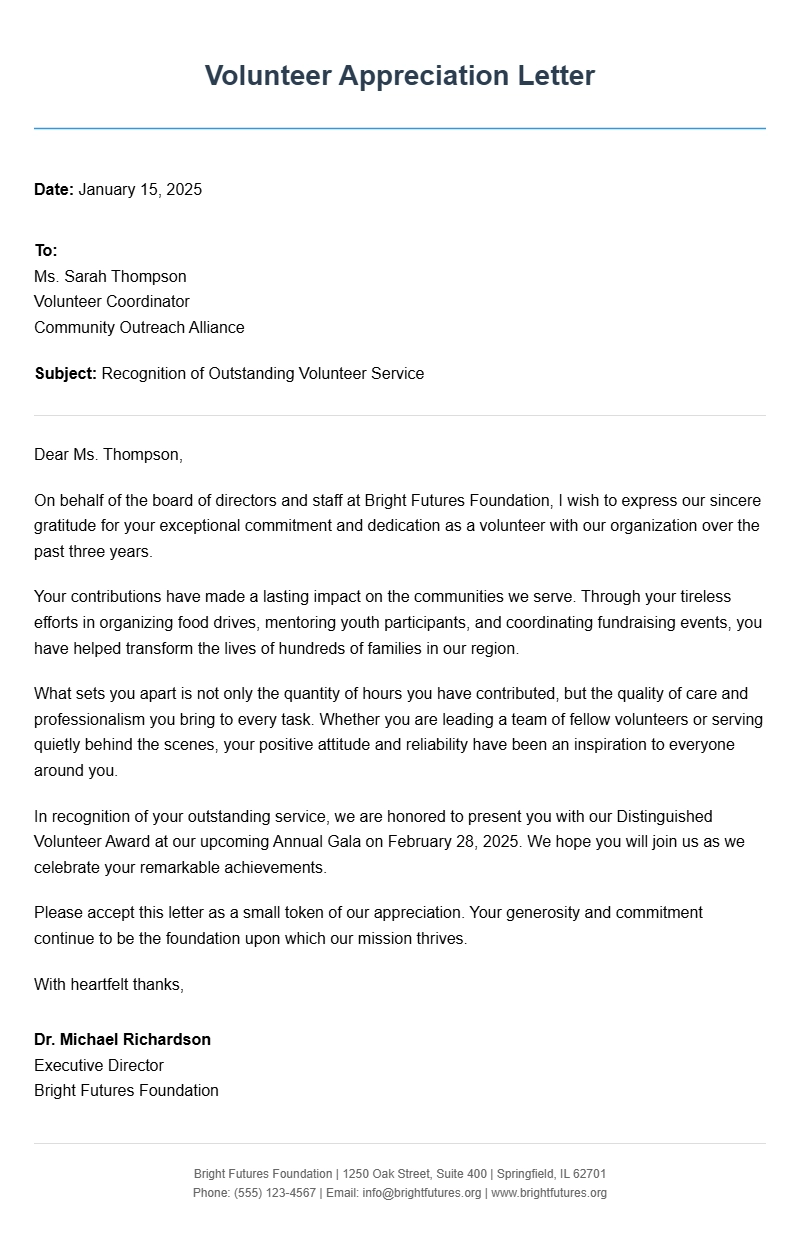
Volunteer appreciation letters matter more than most people realize. When someone gives their time freely, a genuine thank-you note can mean the world to them. Whether you’re coordinating a nonprofit program, running a community event, or just want to acknowledge someone’s efforts, knowing how to write a heartfelt appreciation letter is a skill worth having. This guide walks you through everything you need to create letters that actually resonate with recipients.
What Is a Volunteer Appreciation Letter?
A volunteer appreciation letter is a written acknowledgment that recognizes someone’s voluntary contributions to an organization, event, or cause. Unlike formal award citations or lengthier nomination packages, these letters focus on personal connection and genuine gratitude. They serve as a tangible record of someone’s impact and often become keepsakes that volunteers treasure long after the work is done.
The key difference between a good and a mediocre appreciation letter lies in specificity. Anyone can write “Thank you for your help.” A truly useful letter names what the person did, explains why it mattered, and leaves the reader feeling genuinely seen. That said, you don’t need to be a professional writer to create something meaningful. Sometimes simple words, chosen carefully, work better than elaborate prose.
When Do You Need One?
Volunteer appreciation letters fit several common situations:
- After a specific event concludes and you want to acknowledge immediate contributions
- During annual volunteer recognition programs or appreciation weeks
- When someone completes a milestone number of service hours
- When a long-term volunteer moves on or retires from their role
- As a follow-up after particularly challenging projects or emergency responses
- Before requesting future involvement from the same volunteers
The timing matters. A letter that arrives days after someone’s contribution feels responsive and relevant. One that arrives months later, even with the best intentions, can feel obligatory rather than genuine. If you’re managing volunteer coordination, building appreciation into your workflow right after events or milestones makes the task easier and the results more authentic.
Key Components That Make Letters Work
Effective volunteer appreciation letters typically include these elements:
Personal Address
Start with the volunteer’s name rather than a generic “Dear Volunteer” or “To Whom It May Concern.” Using their name immediately establishes a personal connection and signals that this letter is specifically for them.
Specific Recognition
Name the exact contribution you’re acknowledging. Instead of vaguely praising their “hard work,” mention that they “organized the supply closet for the food drive” or “coordinated with fifteen local businesses to secure donations.” Specificity demonstrates that you noticed what they did and validates their effort.
Impact Explanation
Connect their action to real outcomes. Volunteers often don’t see the full picture of how their work contributes to larger goals. Help them understand their role in the bigger story. “Your setup work meant our senior lunch ran smoothly for eighty guests” tells them more than “Thanks for helping with the event.”
Genuine Gratitude
Express thanks in your own voice rather than corporate doublespeak. “I’m genuinely grateful for your reliability” feels different from “The organization values your continued commitment to excellence.” The first comes across as sincere; the second sounds like it came from a template.
Personal Touch
Include something that shows you know this person as an individual, not just as a volunteer. Maybe you share a memory of working together, mention something specific you appreciate about their personality, or reference a conversation you had. This human element transforms a form letter into personal correspondence.
Future Connection
When appropriate, signal that you hope to work together again or that their contributions are part of an ongoing mission. This leaves volunteers feeling valued as potential long-term partners rather than one-time helpers.
Step-by-Step Writing Guide
Here’s how to approach writing your letter:
- Collect your thoughts first. Before typing, think about the specific person you’re writing to. What did they actually do? How did it help? What stands out about their attitude or approach? Jot down a few notes to anchor your writing.
- Draft the opening quickly. Don’t agonize over the first sentence. Get something down and move forward. You can revise once you have material to work with.
- Build with specifics. Layer in concrete details about their contributions. Use names, dates, and observable facts rather than general praise.
- Add the emotional core. Include why their work mattered to you personally, not just to the organization. Your genuine appreciation will come through if you write honestly.
- Close with forward momentum. End on a note that invites continued relationship, whether that’s looking forward to future projects or simply wishing them well.
- Read aloud before sending. If a sentence sounds stiff when spoken, revise it. The best appreciation letters sound like someone talking, just more thoughtful than average.
Practical Templates and Examples
Template 1: After a One-Time Event
Dear [Name],
I wanted to reach out personally to thank you for helping with [event name] on [date]. Your willingness to step in on short notice meant we could pull off something we weren’t sure was possible.
Specifically, your work with [specific task] made a real difference. [Brief description of what they did and why it mattered].
Events like this succeed because of people like you. I’m grateful you chose to spend your [day/weekend] with us, and I hope you’ll consider joining us again in the future.
Thank you again.
[Your name and title]
Template 2: For Milestone Service Hours
Dear [Name],
Congratulations on reaching [number] hours of volunteer service with us. This milestone represents more than a number on a spreadsheet.
When you started [mention context if known], you brought [specific quality or skill]. Over time, that’s translated into [specific ongoing contribution or impact].
What stands out most to me is [specific memory or observation about their character/approach]. That’s the part of your service that doesn’t show up in any count but makes a real difference to everyone around you.
We’re lucky to have you as part of this work. Here’s to the next milestone.
With genuine appreciation,
[Your name and title]
Template 3: When a Long-Term Volunteer Moves On
Dear [Name],
When you joined us [time period or context], I don’t think any of us fully understood what we were gaining. Over the years, you’ve become such a core part of what we do that it feels strange to write this letter at all.
Your contributions here have been countless, but a few stand out. [Specific example 1]. And [specific example 2]. Beyond the work itself, your [specific quality, like patience, optimism, or problem-solving] shaped how our whole team operates.
Leaving a role isn’t easy, and I know you’ll bring that same energy to whatever comes next. Please know that you’ve made a lasting impact here, and you’re always welcome back.
Thank you for everything.
[Your name and title]
Common Mistakes to Avoid
Watch out for these pitfalls that undermine otherwise good intentions:
- Making it all about the organization. Letters that focus exclusively on how the volunteer’s service benefited your nonprofit feel transactional. The appreciation should center on the person, not your needs.
- Using identical language for everyone. If you’re sending appreciation letters to a dozen volunteers, each one should sound distinct. Reading the same phrases about “unwavering commitment” gets exhausting and loses meaning.
- Focusing only on tasks. Volunteers are people, not functionaries. Mentioning something about who they are beyond their contribution makes the letter memorable.
- Sending generic templates without editing. If you use any template as a starting point, customize it thoroughly. Sentences like “We truly could not have done it without you” become hollow when they appear in every letter.
- Delaying too long. Timeliness matters. A prompt thank-you feels like recognition; a delayed one feels like an obligation you’re finally fulfilling.
- Over-formalizing the language. Unless your context calls for extreme formality, write like a normal person. “Your magnificent dedication shall not be forgotten” sounds absurd when a simple “Your help made a real difference” would work better.
Tips for Customization
Adapt these letters based on your specific situation:
Consider your relationship with the volunteer. Someone you’ve worked with closely for years deserves more personal detail than someone who helped once. Match the depth of your letter to the depth of your relationship.
Account for cultural context. Some recipients appreciate public recognition while others prefer private acknowledgment. Some prefer formal structure while others respond to casual warmth. When possible, cater to the individual’s preferences.
Include supplementary elements when useful. A small gift card, a photo from the event, or a printed certificate can accompany the letter without replacing it. These extras work best when the letter itself stands on its own.
Match the channel to the situation. Email works for routine appreciation. Handwritten notes carry more weight for significant milestones. Public recognition letters might belong in newsletters or at events. Choose the format that fits both your message and your relationship.
If you’re looking for related templates, our collection of business letter templates includes formats for formal correspondence that can adapt to various organizational contexts. Similar principles apply across different professional letters.
Making Appreciation Part of Your Culture
Regular appreciation does more than make volunteers feel good. Research consistently shows that acknowledgment increases volunteer retention and engagement. People who feel recognized tend to commit more hours and bring better energy to their work.
Building appreciation into your ongoing operations makes the task manageable. Rather than scrambling to write letters after the fact, keep a running document where you note specific contributions as they happen. A sentence captured when the memory is fresh gives you material for a meaningful letter later.
Whether you’re coordinating hundreds of volunteers or simply thanking a neighbor who helped with a community project, the principles remain the same. Be specific. Be genuine. Take a moment to recognize what they actually did and why it mattered. That small investment of time creates回报 that compounds over time.
Document Structure & Example Models