Getting a claim denied feels like hitting a wall when you’re already dealing with stress, medical bills, or financial pressure. You know the service was legitimate. You paid your premiums. And now an insurance company is telling you they won’t cover it. If you’re staring at a denial letter and wondering what to do next, you’re in the right place.
An appeal letter is your formal way of pushing back. It’s not just a complaint—it’s a structured argument that explains why the insurance company’s decision doesn’t hold up. This guide walks you through exactly how to write one that gets taken seriously, with real examples and editable templates you can adapt to your situation.
What Is a Claim Denial Appeal Letter?
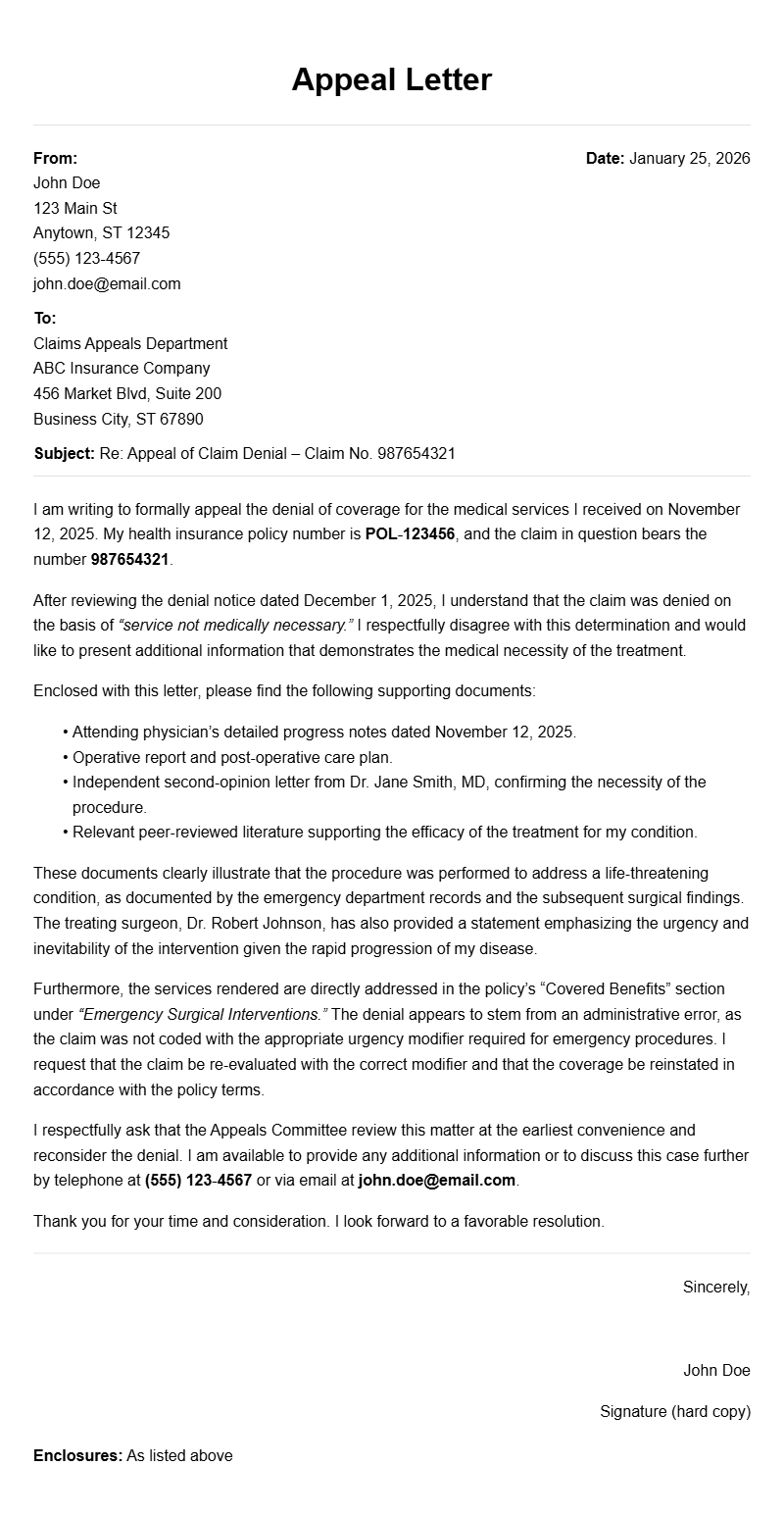
A claim denial appeal letter is a formal written request sent to your insurance company asking them to reconsider a denied claim. It typically includes your account information, details about the denied claim, a clear explanation of why you believe the denial was incorrect, and any supporting documentation that strengthens your case.
Think of it as your opening statement in a conversation where you’re trying to convince the insurance company to change their mind. You’re not just saying “I disagree.” You’re showing them why the evidence, the policy language, and the circumstances support your position.
When Should You Write an Appeal Letter?
You should write an appeal letter whenever your insurance company denies a claim and you believe the decision is wrong or unfair. Common situations include:
- Medical procedures or treatments deemed “not medically necessary”
- Services or medications excluded from your specific plan
- Claims denied due to coding errors or missing information
- Prior authorization issues where approval wasn’t obtained correctly
- Coverage disputes during transitions between plans
If you’re unsure whether to appeal, check your denial letter. It should specify exactly why the claim was denied and whether the decision can be appealed. Most insurance companies have deadlines—often 30 to 60 days from the denial date—so act promptly.
Key Components of an Effective Appeal Letter
Every strong appeal letter contains these essential elements:
Your Identification Information
Start with your full name, policy number, member ID, and contact information. Insurance companies process thousands of claims. Making it easy for them to locate your file immediately sets a professional tone and reduces the chance of delays.
Reference to the Denied Claim
Include the claim number, date of service, and the specific dollar amount that was denied. This information is usually in the explanation of benefits or denial letter you received. Being precise shows you’ve done your homework.
A Clear Statement of Appeal
State directly that you are formally appealing the decision. Mention that you’re requesting a thorough review of the circumstances surrounding the denied claim.
Your Reasoning and Supporting Evidence
This is the heart of your letter. Explain why you believe the denial was incorrect, citing specific policy language, medical necessity, or factual errors. Attach supporting documents like medical records, a letter from your healthcare provider, or peer-reviewed research if relevant.
A Specific Request for Resolution
State clearly what you’re asking for—whether it’s a full reversal, a reprocessing of the claim, or a reconsideration based on additional information. Being specific helps the reviewer understand exactly what outcome you’re seeking.
Step-by-Step Guide to Writing Your Appeal Letter
Follow these steps to create a compelling appeal:
Step 1: Gather Your Documents
Before you start writing, collect everything related to the claim. This includes the denial letter, your insurance policy documents, medical records, bills, receipts, and any correspondence you’ve had with your insurance company or healthcare provider. Having these at hand helps you reference specific details accurately.
Step 2: Understand Why the Claim Was Denied
Read the denial letter carefully. Look for the specific reason code or explanation. Is it a coding issue? A coverage exclusion? A “not medically necessary” determination? Your appeal must directly address the stated reason for denial. If you appeal against a reason that wasn’t given, the insurance company may simply reiterate their original decision.
Step 3: Research Your Policy
Pull out your insurance policy or benefits summary. Look for language that supports your position. Does the policy cover the service you received? Are there any exceptions or limitations you can cite? Sometimes the policy language is vague enough that a reasonable interpretation supports your claim.
Step 4: Get Supporting Documentation from Your Provider
If your claim was denied for medical necessity, ask your healthcare provider to write a supporting letter. This letter should explain why the treatment was required, what alternatives were considered, and how the specific circumstances of your case justified the service. A letter from a medical professional carries weight because it comes from an expert witness to your situation.
Step 5: Draft Your Letter
Write in clear, professional language. Avoid emotional language or accusations. Focus on facts and logical arguments. Keep your letter concise—one to two pages is usually sufficient. Use a standard business letter format.
Step 6: Review and Submit
Proofread your letter for errors. Make sure all dates, numbers, and names are accurate. Submit it according to your insurance company’s instructions—often through an online portal, by certified mail, or by fax. Keep a copy for your records.
Claim Denial Appeal Letter Template
Here’s a template you can customize for your situation. Replace the bracketed sections with your specific information:
[Your Name]
[Your Address]
[City, State ZIP]
[Phone Number]
[Email Address]
Date: [Month Day, Year]
To:
[Insurance Company Name]
[Appeals Department or Address]
Re: Formal Appeal of Denied Claim
Member Name: [Your Full Name]
Member ID: [Your Member ID Number]
Policy Number: [Your Policy Number]
Claim Number: [Claim Number]
Date of Service: [Date of Service]
Amount Denied: [$Amount]
Dear Appeals Review Committee:
I am writing to formally appeal the denial of my claim dated [date of denial]. I believe this denial was made in error and request a thorough review of my case.
Background of the Claim
On [date of service], I received [brief description of service, e.g., “physical therapy treatment for a herniated disc”] from [provider name] at [provider facility]. The total charge was [$amount]. My claim was denied on [denial date] with the reason listed as [quote the reason given on the denial letter].
Reason for Appeal
I am appealing this decision because [explain why you believe the denial was incorrect. Examples: “The service was covered under my plan’s physical therapy benefits, which allows up to 20 sessions per year.” or “My treating physician has documented that this treatment was medically necessary given my specific diagnosis and failed response to conservative treatments.”]
Supporting Documentation
I have enclosed the following documents to support my appeal:
- Copy of the original denial letter
- Letter from my healthcare provider explaining the medical necessity of the service
- Relevant pages from my insurance policy showing coverage for this service
- Medical records documenting my condition and treatment history
Request for Resolution
I respectfully request that my claim be reprocessed and paid in full according to the terms of my policy. If additional information is needed to make a determination, please contact me at the phone number or email address listed above.
Thank you for your time and consideration. I look forward to your response within the timeframe required by state regulations.
Sincerely,
[Your Signature]
[Your Printed Name]
Example: Appealing a “Not Medically Necessary” Denial
Here’s how a real-world appeal might address this common denial reason:
“The denial stated that the MRI was not medically necessary. However, my primary care physician ordered this imaging after physical examination revealed signs consistent with a potential meniscus tear, including joint locking and significant pain that didn’t improve with four weeks of rest and anti-inflammatory medication. The American Academy of Orthopaedic Surgeons recommends MRI as the appropriate diagnostic tool when clinical examination suggests meniscal injury and conservative treatment has failed. Enclosed is a letter from Dr. [Name] documenting the examination findings and reasoning for ordering the MRI, along with my physical therapy records showing the conservative treatment I completed prior to the imaging.”
Common Mistakes to Avoid
Avoid these pitfalls that weaken many appeal letters:
Being Vague About the Denial Reason
Don’t write a general complaint about unfairness. Your letter must address the specific reason given for denial. If the denial cites a policy exclusion, explain why that exclusion doesn’t apply to your situation.
Submitting Incomplete Documentation
If you’re missing records or supporting letters, your appeal may be denied simply because the reviewer doesn’t have enough information. Follow up with your healthcare provider to get supporting documentation before you submit.
Missing Deadlines
Insurance companies set appeal deadlines for a reason. Missing them can result in automatic denial with no further recourse. Mark the deadline on your calendar and submit well in advance.
Using Emotional Language
Statements like “This is absolutely unacceptable” or “You’ve ruined my life” might feel true, but they don’t help your case. Insurance reviewers respond better to logical, fact-based arguments. Stay professional throughout your letter.
Forgetting to Include Your Information
It sounds simple, but appeals are often delayed because the writer forgot to include their member ID, claim number, or contact information. Double-check these details before submitting.
Tips for Customizing Your Appeal Letter
Every claim denial is different. Use these strategies to tailor your letter effectively:
Mention Previous Approvals
If you’ve received the same service covered before, mention that. It demonstrates that the insurance company has previously deemed this service appropriate for your situation, which undermines their current denial.
Cite Specific Policy Language
Reference exact sections, page numbers, or wording from your policy. This shows you’ve read the terms and believe your situation falls within the covered benefits.
Include Clinical Guidelines
For medical necessity denials, peer-reviewed guidelines or professional society recommendations can support your case. Cite them directly in your letter.
Ask for a Peer Review
If appropriate, request that a medical professional from the insurance company (rather than an administrative reviewer) evaluate your case. Clinical reviewers often interpret medical necessity differently than non-clinical staff.
Keep Records of All Communication
Document every phone call, email, and letter related to your claim. If you’ve made multiple attempts to resolve the issue, mention that in your appeal. It demonstrates persistence and can sometimes expedite review.
If you’re dealing with other workplace or professional correspondence, having solid templates makes a big difference. For instance, if you’re a teacher dealing with documentation, you might find our teacher evaluation letter samples helpful for organizing your thoughts. Similarly, organizations managing policies or proposals often rely on structured letter templates—like our school policy update letter templates or contractor proposal letter templates—to ensure clarity and professionalism.
What Happens After You Submit?
After your insurance company receives your appeal, they typically have 30 to 60 days to respond, depending on your state and the type of plan you have. During this review, the company may:
- Approve your claim and reprocess it for payment
- Uphold the original denial with a detailed explanation
- Request additional information or documentation
- Escalate your case for a secondary review
If the decision is upheld and you still believe you’re entitled to coverage, you may have additional options. Many states offer external review processes where an independent third party evaluates your case. Your state insurance department can provide information about these options.
Final Thoughts
Writing a claim denial appeal letter isn’t complicated, but it does require attention to detail and a structured approach. Focus on the facts, gather strong supporting documentation, and submit your appeal before the deadline. The insurance company denied your claim once—but that doesn’t have to be the final word.
Take action as soon as you receive a denial. The longer you wait, the harder it may be to gather fresh documentation, and your appeal window may close. With a well-prepared letter and solid evidence, you’re giving yourself the best possible chance of a favorable outcome.
Template Variations & Sample Formats