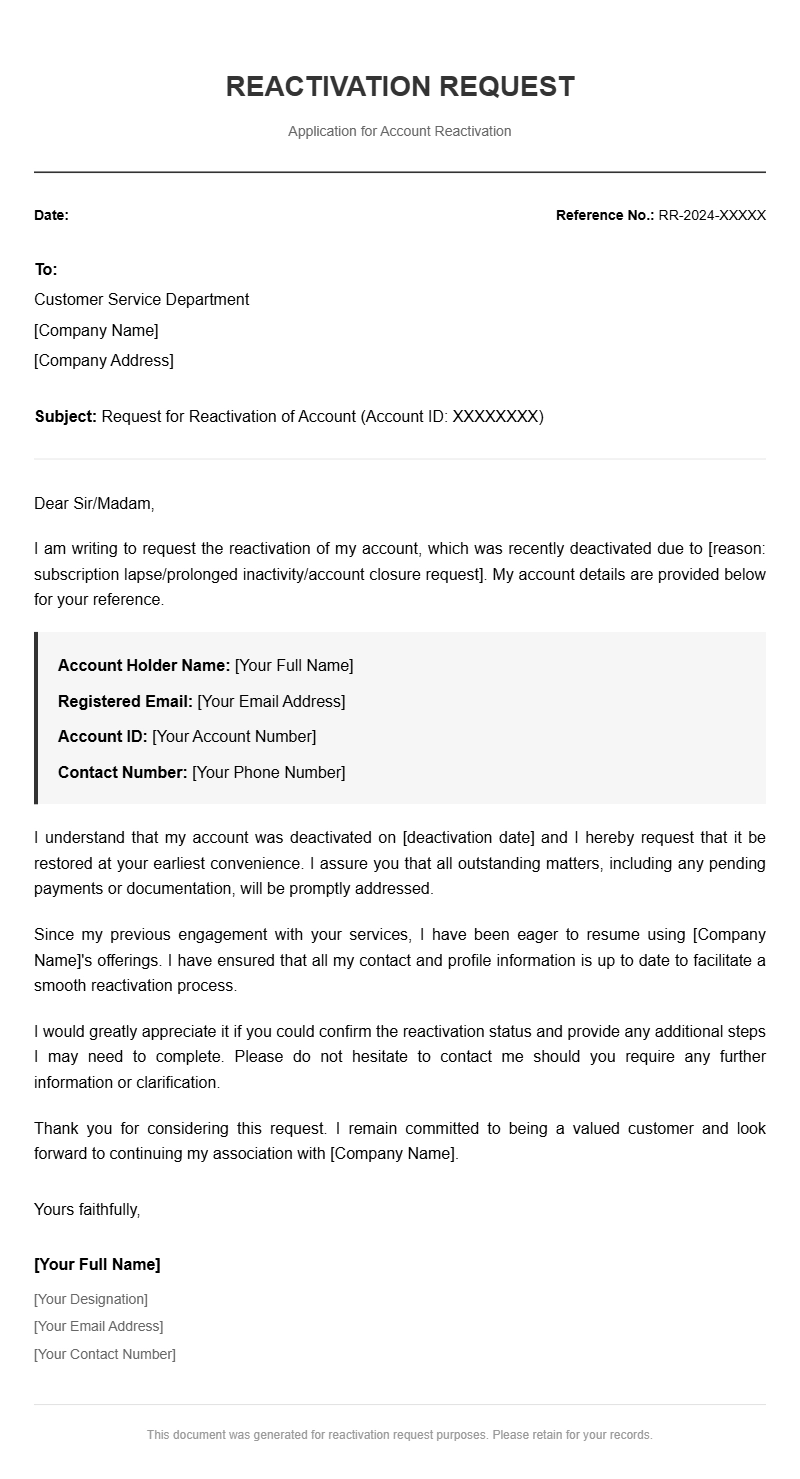
Let me guess—you’ve got a list of inactive members or customers gathering digital dust, and someone told you a reactivation letter might bring them back. Maybe you’re a gym owner, a subscription service manager, or a nonprofit director trying to win back people who stopped engaging. You’re looking for something that actually works, not just another generic template you’ll delete after five minutes.
Good news: writing an effective reactivation request doesn’t require fancy marketing speak or a huge budget. What it needs is the right structure, a genuine tone, and a clear reason for the recipient to care. This guide walks you through everything from understanding when these letters make sense to tweaking templates for your specific situation.
What Is a Reactivation Request Letter?
A reactivation request letter is a written communication sent to individuals or customers who have become inactive—whether that’s a lapsed gym membership, an abandoned subscription, a dormant account, or a former client who hasn’t used your services in months. The goal is simple: remind them why they signed up in the first place and give them a compelling reason to come back.
Unlike promotional emails that push new products, these letters focus on personal connection and addressing why someone left. They acknowledge the gap, offer something valuable, and make it easy to take the next step. Think of it as a conversation starter, not a sales pitch.
You’ll commonly see these used in fitness centers, professional associations, SaaS platforms, healthcare practices, and membership organizations. Any organization with recurring engagement or subscription models can benefit.
When Should You Send a Reactivation Request Letter?
Timing matters more than most people realize. Send too early, and the recipient barely remembers signing up. Send too late, and you’ve lost the relationship entirely.
Most businesses see the best results when they reach out during the “dormancy window”—typically 30 to 90 days after a member stops engaging. After six months, reactivation rates drop significantly because people have mentally moved on.
Consider sending a reactivation letter when you notice specific triggers:
- A membership or subscription expires without renewal
- A customer hasn’t logged in or made a purchase in 60+ days
- A client misses recurring appointments or stops attending events
- A former customer unsubscribes but doesn’t delete their account permanently
If you’re running a seasonal business, align your outreach with periods when your service becomes relevant again. A fitness center might re-engage members in January when New Year’s resolutions kick in, while an educational platform might reach out before a new course semester starts.
Key Components of an Effective Reactivation Letter
Before diving into templates, let’s break down what every reactivation letter needs. Skip any of these elements, and your letter loses punch.
The Personal Touch
Start by addressing the recipient by name. Nothing says “mass email” faster than “Dear Valued Customer.” Pull their name from your database and use it naturally in the opening line.
Acknowledge the Gap
Don’t pretend nothing happened. People know they’ve been absent. Address it directly but without guilt-tripping. Something like “We noticed you haven’t visited us since [date]” works better than pretending you don’t track engagement.
Remind Them What They’re Missing
Recap the benefits that made them sign up originally. Keep this specific—if they were a gym member, mention the equipment, classes, or community they had access to. If they were a software user, reference a feature they used to love.
Offer an Incentive
Give them a reason to act now. This could be a discounted reactivation rate, a waived re-entry fee, bonus credits, or exclusive access to something new. The incentive should feel genuine, not desperate.
Make the Call-to-Action Obvious
Tell them exactly what to do next. “Click here to reactivate” or “Reply to this email to schedule your first session back” removes the guesswork. Don’t bury this in fine print.
Step-by-Step Guide to Writing Your Letter
Here’s how to build a reactivation letter that actually gets responses, whether you’re starting from scratch or customizing a template.
Step 1: Gather the Right Data First
Before you write a single word, pull relevant information about each recipient. Know when they joined, how long they were active, what they used most, and why they likely left (if you have that data). This lets you personalize beyond just dropping in their name.
Step 2: Choose Your Tone
Match your voice to your audience. A gym reactivation letter can be friendly and energetic. A B2B software reactivation might need a more professional, consultative tone. A nonprofit re-engaging donors should feel warm and appreciative. Don’t copy the same letter for every context.
Step 3: Write a Subject Line That Gets Opened
This isn’t technically part of the letter body, but it determines whether anyone reads it. Avoid “We miss you!” (too generic) or “Come back please” (too desperate). Try something specific like “Hey [Name], your profile is still here whenever you’re ready” or “[Specific benefit] is waiting for you.”
Step 4: Draft the Body
Keep it short—under 200 words if possible. Hit the key components we discussed earlier. Use plain language. Read it out loud before sending. If it sounds stiff in your head, revise until it sounds like something you’d actually say to a friend.
Step 5: Add a Clear Next Step
End with one specific action you want them to take. Don’t give them three options. Pick the one that matters most and make it easy. Include a direct link or clear instructions on how to respond.
Reactivation Letter Templates You Can Customize
These templates cover common scenarios. Copy them, adjust the details, and make them sound like you.
Template 1: Gym or Fitness Center Reactivation
We noticed you haven’t been to the gym lately, and honestly, the equipment’s been waiting for you.
Your membership here started because you wanted to feel stronger, more energized, or hit a specific goal. That hasn’t changed—we’ve just added a few new spin bikes and expanded our morning class schedule since your last visit.
Here’s an offer just for you: reactivate your membership this week and we’ll waive the re-entry fee and give you two weeks free. No pressure, no guilt—just a clean slate if you’re ready to get back at it.
If you’re thinking about coming back, just reply to this email or click here to reactivate. We’d love to have you back in the community.
Template 2: Subscription Service or SaaS Reactivation
Hi [Name],
It’s been a while since you logged into [Service Name]. We haven’t changed your password or deleted your data—everything’s still exactly where you left it.
We know life gets busy, and sometimes tools fall by the wayside. But since you last visited, we’ve added [one or two specific new features] that our active users have been loving.
If you’d like to try the updated version, reactivate your account anytime in the next 30 days and you’ll get [specific incentive] as our way of saying welcome back.
No strings—just click this link to start fresh: [URL]
Template 3: Professional Association or Membership Reactivation
Dear [Name],
We wanted to reach out personally because your membership with [Organization] lapsed a few months ago, and we’ve missed having you in the room.
Your expertise and perspective were valuable to this community, and nothing about that has changed—except maybe the new networking events, the updated certification programs, and the industry reports we’ve published since you stepped away.
Reinstating your membership is straightforward. You’ll retain your previous standing and seniority within the organization. As a special reactivation offer, we’re offering [specific benefit] for members who return before [date].
Interested in reconnecting? Reply to this message or visit [URL] to get started. We’d be glad to have you back.
Common Mistakes to Avoid
These errors kill reactivation rates. Steer clear of them.
- Being vague about the benefit: “We have lots of great things to offer” means nothing. Mention specific features, events, or value they actually care about.
- Overly aggressive language: “LAST CHANCE!!!”, “You might lose this forever!!!”, and similar tactics backfire. They make people feel pressured and less likely to respond.
- Forgetting a mobile-friendly format: Many people will read your letter on their phone. Keep paragraphs short, use clear CTAs, and test how it looks on small screens.
- Sending the same letter to everyone: If you have data about what each person used or why they left, personalize accordingly. A former class-attendee at a gym wants different messaging than someone who only used the weight room.
- Including too many asks: Don’t ask them to renew, fill out a survey, and follow you on social media all in one letter. Focus on one action.
Tips for Customizing Your Reactivation Letter
These tweaks help templates feel personal and boost your response rates.
Segment Your Audience
Group recipients by engagement level, tenure, or service usage. Someone who left after three years deserves different messaging than someone who joined and vanished in two weeks. Check out our student invitation letter samples for ideas on segmenting communications by audience type.
Reference Their History
If someone attended your yoga classes twice a week for two years, mention that. If they only used your software for one specific feature, highlight improvements to that feature. Personalization signals that you value them as an individual, not a number.
Choose the Right Channel
Email works for most situations, but if you have phone numbers and a smaller list, a personal call performs better for high-value members. Our recruiter-to-candidate letter templates show how phone outreach scripts differ from written communications.
Test Two Versions
If you’re sending to a large list, try A/B testing your subject lines or opening sentences. Track open rates and response rates. Small tweaks can improve results significantly over time.
Time It Right
Day and time matter. For B2B contexts, Tuesday through Thursday mornings tend to perform best. For consumer-facing gyms or retail memberships, consider weekend mornings when people are thinking about their health and schedules. Our webinar invitation letter templates include timing tips that apply to many outreach scenarios.
Make Your Next Reactivation Campaign Count
A good reactivation request letter respects the recipient’s time, acknowledges their absence without guilt-tripping, reminds them of genuine value, and makes it effortless to come back. You don’t need a massive budget or a copywriting agency—just a clear understanding of who you’re writing to and what they actually want.
Pick the template that fits your situation, customize it with real data, and send it at the right moment. Track what works and adjust for next time. Each reactivation you win back is more sustainable than acquiring a brand-new customer, and the letter format gives you space to build genuine connection instead of fighting for attention in a crowded inbox.
Ready-to-Use Document Samples