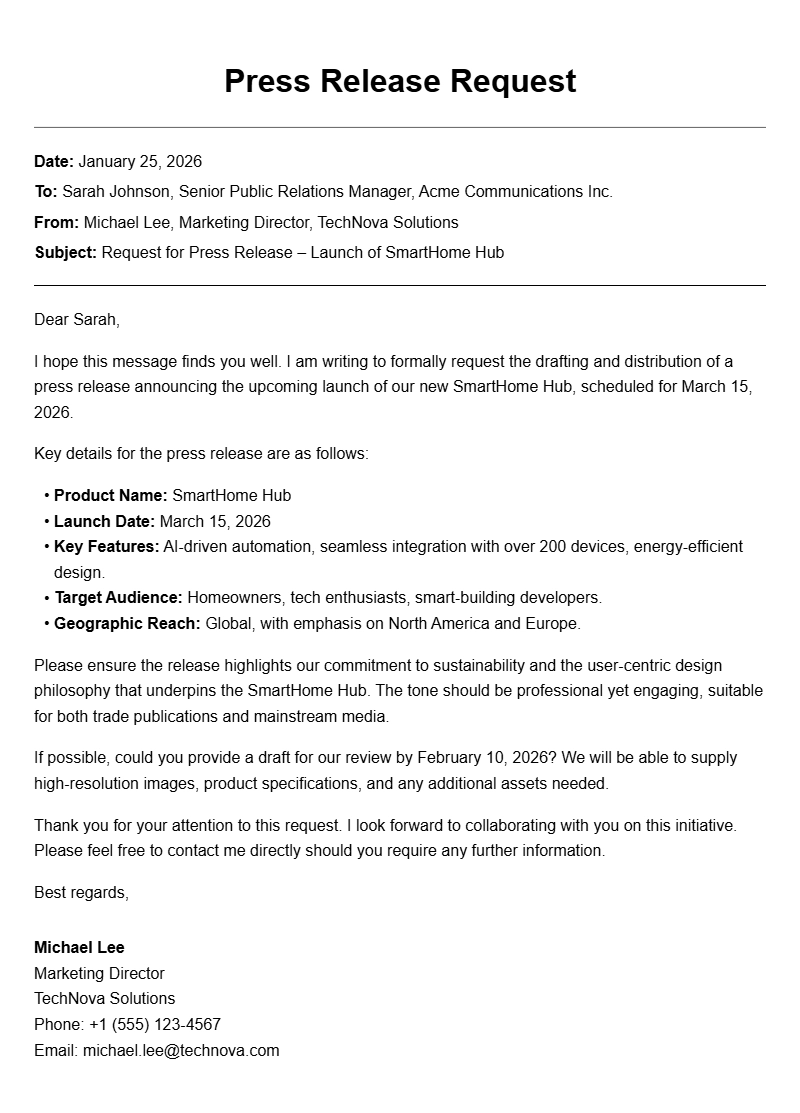
If you’ve ever drafted a press release only to realize you need someone else to get it in front of journalists, you’ve probably wondered how to ask for that help politely and efficiently. A press release request letter—sometimes called a distribution request email—does exactly that. It’s a short, friendly note you send to a PR professional, media contact, or newswire service asking them to share your announcement with their audience.
What Is a Press Release Request Letter?
A press release request letter is a concise email or letter that introduces your press release, explains why the recipient should care, and asks them to distribute or amplify it. Think of it as a friendly “would you mind helping spread the word?” note, rather than a formal contract. The goal is to make the recipient’s job easy while showing that you’ve done the groundwork.
When Do You Need One?
You’ll typically use this type of request when:
- You’re a small business or nonprofit reaching out to a local journalist for event coverage.
- A startup wants a PR agency to push a product launch across its media list.
- An organization is working with a newswire service to syndicate a breaking announcement.
- You’re coordinating a community event and need a partner to share the press release on their social channels.
If you’re also preparing other formal correspondence, you might find our collection of teacher reference letter sample useful for unrelated requests.
Key Components of the Letter
- Subject line – Clear, specific, and concise (e.g., “Request for distribution: New Product Launch – ABC Corp”).
- Greeting – Use the recipient’s name; a personal touch goes a long way.
- Introduction – Briefly who you are and the organization you represent.
- Purpose statement – A one‑sentence summary of what the press release announces.
- Why it matters – A short pitch explaining the relevance to the recipient’s audience.
- Call to action – Politely request distribution, mention any deadlines, and note any attached files.
- Contact info – Name, phone, email, and any relevant links.
- Professional sign‑off – Thank‑you line and your signature.
Step‑by‑Step Writing Guide
- Identify the right contact – Find the journalist, PR manager, or newswire account that covers your industry or event.
- Craft the subject line first – Keep it under 60 characters; include the key news item and a hint of urgency if needed.
- Start with a friendly greeting – “Hi [Name],” works better than “Dear Sir/Madam,” when you have a contact.
- Introduce yourself briefly – One line: “I’m the communications lead at XYZ, a local sustainable fashion brand.”
- State the news in one sentence – “We’re excited to announce that we’ve launched our first recycled‑fabric collection, which reduces waste by 30%.”
- Add a relevance snippet – Explain why this matters to their readers: “Your audience has shown interest in eco‑friendly fashion, and this launch aligns with that trend.”
- Make the ask – “Would you consider sharing the attached press release with your readers or adding it to your upcoming newsletter?”
- Include logistics – Mention the release date, any embargo information, and the attached file (PDF or DOC).
- Close with gratitude – “Thank you for your time; I’d be happy to provide any additional details.”
- Sign off – Use your full name, title, phone number, and a link to your company’s media page.
Editable Template & Example
Below is a ready‑to‑use template. Replace the bracketed placeholders with your details, and adjust the tone based on your relationship with the recipient.
Subject: Request for Distribution – [Press Release Title] – [Your Company]
Hi [Recipient Name],
My name is [Your Name], and I’m the [Your Title] at [Your Company]. We’re getting ready to announce [brief description of the news, e.g., “the launch of our new eco‑friendly product line”], and we believe it would resonate with your readers.
Here’s a quick summary of the release:
- Headline: [Press Release Headline]
- Key point: [One‑sentence highlight]
- Release date: [Month Day, Year] (embargoed until [date/time] if applicable)
Could you help spread the word by publishing the attached press release or sharing it on your social channels? The file is attached as a PDF, and I’ve also included a short bio and high‑resolution images for easy use.
Feel free to reach out if you need any extra information or would like a quick call to discuss details. I’m available at [Your Phone] or [Your Email].
Thank you for considering this request. I appreciate your time and look forward to hearing from you.
Best regards,
[Your Full Name]
[Your Title] – [Your Company]
[Phone] | [Email] | [Company Website]
Example for a product launch:
Subject: Request for Distribution – “GreenGear’s Solar Backpack Launch” – GreenGear Inc.
Hi Sarah,
I’m Alex Rivera, marketing coordinator at GreenGear Inc. We’re excited to announce the release of our Solar Backpack, which charges devices using a built‑in solar panel—perfect for outdoor enthusiasts and commuters alike.
Key points:
- Headline: GreenGear Launches Solar Backpack for On‑the‑Go Charging
- Key point: First consumer‑grade backpack that provides up to 10W of solar power while remaining lightweight.
- Release date: March 15, 2026
Would you consider adding this to your upcoming “Tech for Travel” roundup or sharing it with your tech‑savvy readership? The press release and high‑resolution images are attached.
Thanks for your time—let me know if you’d like a quick chat before the release date.
Best,
Alex Rivera
Marketing Coordinator – GreenGear Inc.
(555) 123‑4567 | alex@greengear.com
Common Mistakes to Avoid
- Sending a generic “Dear Sir/Madam” without researching the contact’s name.
- Forgetting to attach the press release or provide a download link.
- Writing a wall of text instead of scannable bullet points.
- Using jargon that makes the request sound impersonal.
- Missing a clear deadline or embargo notice, which can cause confusion.
- Neglecting to proofread, leading to typos that undermine professionalism.
Tips for Customizing the Letter
- Reference previous coverage – If you’ve read an article they wrote, mention it: “I enjoyed your recent piece on sustainable travel, and this launch aligns with that theme.”
- Tailor the relevance snippet – Show why your news matters to their specific audience, not just a generic “it’s exciting.”
- Adjust formality – A journalist you’ve emailed before might appreciate a more relaxed tone, while a formal PR agency may expect a polished, corporate style.
- Use the right medium – Email is standard, but if you have a direct phone line and a strong relationship, a brief call followed by an email works too.
- Include a personal signature – A photo, LinkedIn profile, or short bio can add credibility.
Quick Checklist Before Sending
- Recipient name and email are correct.
- Subject line reflects the core news and stays under 60 characters.
- Press release is attached (or a direct download link is provided).
- All placeholders are replaced with actual data.
- Deadline or embargo date is clearly noted.
- Contact information is up‑to‑date.
- Proofread for spelling, grammar, and tone.
If you find yourself drafting other professional letters, our library also includes insurance cancellation letter templates, bullying complaint letter templates, and supplier agreement letter templates that follow the same straightforward approach. For any situation where you need to request leniency or support, check out our hardship request letter sample.
Now that you have a clear template and a step‑by‑step guide, pick the version that fits your audience, personalize it with your specifics, and send it out. A well‑crafted request can open doors to broader media coverage and help your announcement reach the people who matter most.
Document Examples & Template Samples