Sending a job rejection letter is one of those tasks that sounds simple but can feel awkward if you don’t have a ready script. Whether you’re an HR manager at a mid‑size firm, a solo recruiter, or a founder handling hiring yourself, you need a clear, respectful way to tell a candidate they didn’t make the cut. That’s where a job rejection letter template comes in—it saves time, keeps the tone human, and helps preserve your employer brand.
What Is A Job Rejection Letter And When Do You Use It?
A job rejection letter is a short, professional message you send to an applicant after you’ve decided not to move forward with their candidacy. You typically send it after a phone screen, an interview, or a final round of assessments. The goal is to acknowledge the candidate’s effort, give a courteous closure, and leave the door open for future opportunities.
Key Elements Of A Rejection Letter
- Personal greeting – use the candidate’s first name to add a human touch.
- Expression of gratitude – thank them for taking the time to interview or for applying.
- Clear statement of decision – briefly state that you’ve chosen another candidate or that the position has been filled.
- Optional feedback – a short, honest note about why they weren’t selected (keep it generic unless you’ve promised specifics).
- Future encouragement – invite them to apply for future roles or keep their resume on file.
- Polite sign‑off – a simple “Best regards” or “Sincerely” followed by your name and title.
Step‑By‑Step Guide To Writing A Rejection Letter
- Gather the basics – have the candidate’s name, the job title, and the stage of the interview ready.
- Pick the right tone – aim for friendly yet professional. A conversational style works well for most roles; a more formal tone suits senior or regulated positions.
- Draft the subject line (if email) – keep it clear, e.g., “Following up on your interview for [Job Title].”
- Open with a warm greeting – “Hi [Candidate Name],” sets a positive note.
- Thank them – “Thank you for taking the time to speak with us about the [Job Title] role.”
- State the decision – “After careful consideration, we’ve decided to move forward with another candidate.”
- Add a brief note (optional) – “Your experience in X was impressive, but we felt the fit for this particular opening wasn’t the best match.”
- Encourage future contact – “We’d love to keep your resume on file for upcoming opportunities.”
- Close politely – “Best wishes, [Your Name],” with your title and contact info.
Rejection Letter Templates You Can Copy And Edit
Below are two ready‑to‑use formats. Replace the bracketed placeholders with your specific details.
Short Email Template (Under 100 Words)
Subject: Following up on your interview for [Job Title]
Hi [Candidate Name],
Thank you for chatting with us about the [Job Title] position. We enjoyed learning about your background in [relevant skill or experience]. After careful review, we’ve decided to proceed with a candidate whose experience more closely aligns with our current needs.
We’ll keep your resume on file and encourage you to apply for future openings that match your profile. We wish you all the best in your job search.
Best regards,
[Your Name]
[Your Title] | [Company Name]
Detailed Letter Template (With Optional Feedback)
Hi [Candidate Name],
I appreciate the time you invested in the interview process for the [Job Title] role at [Company Name]. Your experience in [relevant area] and your enthusiasm for [company value or mission] made a strong impression.
After a thorough discussion, we’ve chosen another candidate whose qualifications better match the specific responsibilities of this opening. This decision was not easy, and we value the effort you put into the process.
If you’re open to it, we’d love to stay in touch for upcoming opportunities that may suit you better. Please feel free to connect with me on LinkedIn or keep an eye on our careers page.
Wishing you continued success,
[Your Name]
[Your Title] | [Company Name] | [Phone] | [Email]
Common Mistakes To Avoid
- Using a generic template without personalization – a quick “Dear Candidate” can feel cold.
- Sending the letter too late – aim for a response within a few days of the decision.
- Being vague about next steps – if you’ll keep the resume on file, say
General Document Template Collection
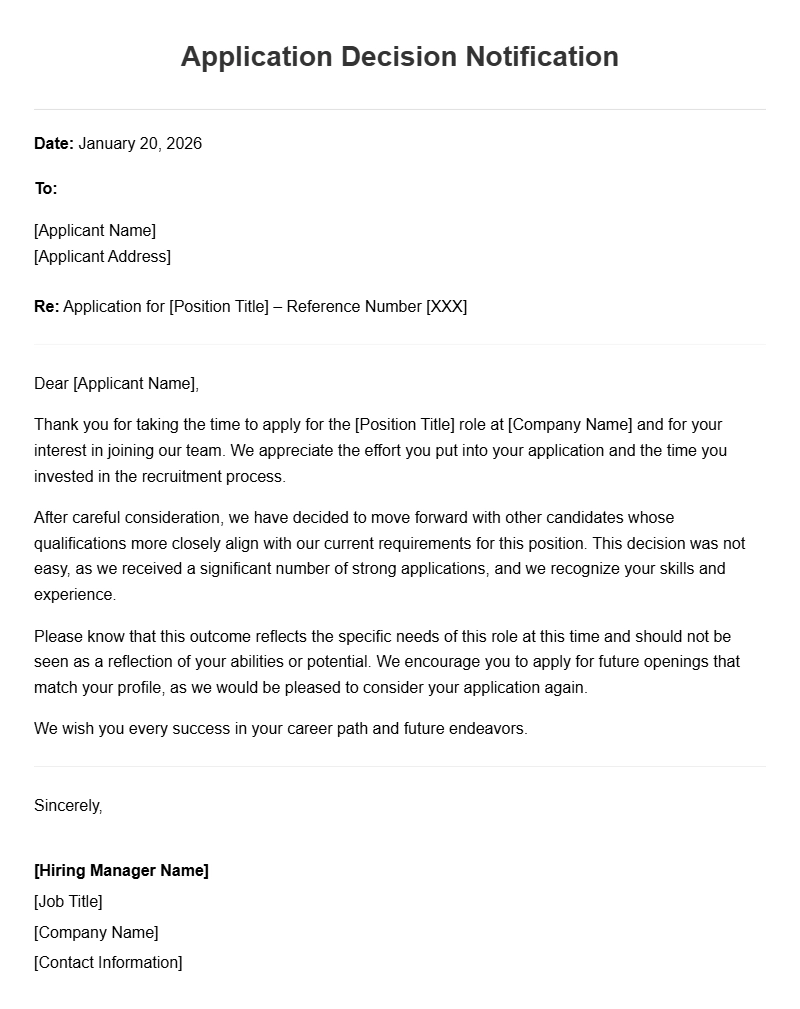
Job Rejection Letter Templates and Examples