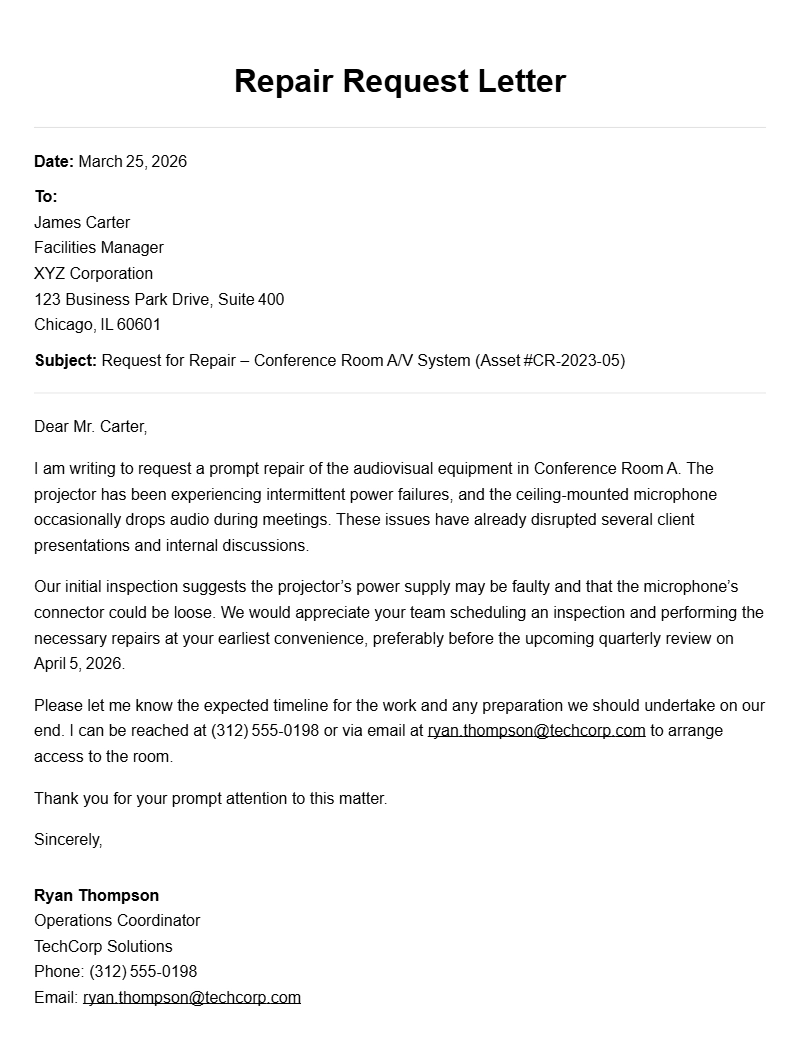
Most people don’t think about repair request letters until something breaks and they need to get a landlord, property manager, or maintenance team to actually do something about it. You know the feeling—you’ve reported the issue, maybe twice, and nothing seems to happen. A well-written repair request letter can cut through that silence and get results. This guide walks you through everything you need to write one that works, with actual templates you can adapt immediately.
What Is a Repair Request Letter?
A repair request letter is a written document that formally notifies a property owner, landlord, or management company about a maintenance issue that needs attention. It goes beyond a casual verbal complaint or text message by creating a documented record of the problem, when you reported it, and what response you’re requesting.
The letter serves two purposes: it communicates the specific issue clearly, and it establishes a paper trail that protects your rights as a tenant or property occupant. If repairs get delayed or the situation escalates, having this letter in writing matters significantly.
When Should You Use a Repair Request Letter?
You should put it in writing when any of these situations apply:
- The issue poses a health or safety risk—such as mold, faulty wiring, or a gas leak
- You’ve reported the problem verbally or through email but haven’t received a response within a reasonable timeframe
- The repair involves landlord responsibilities and they’re dragging their feet
- You need documentation for legal purposes or to protect yourself from liability
- The problem is recurring or getting worse
For example, if your heating system stopped working in January and you’ve mentioned it to your landlord twice without action, a formal repair request letter signals that you’re serious about getting this resolved. If you’re in student housing and dealing with persistent plumbing issues, using a structured approach helps ensure your complaints actually reach decision-makers.
Essential Components of a Repair Request Letter
A strong repair request letter includes several key elements that make it effective:
1. Property and Unit Identification
State your address, apartment number, and the date. This seems obvious, but property managers handle dozens of units, so make it easy for them to locate your file immediately.
2. Clear Description of the Problem
Be specific about what’s broken and where. Instead of writing “the bathroom has issues,” describe exactly what happens—”the toilet runs constantly, even after flushing, causing water waste and a high utility bill.” The more concrete you are, the harder it is for someone to dismiss your request as vague.
3. Date When the Problem Was First Noticed or Reported
Including the original report date establishes a timeline. If you’ve complained before, reference those earlier dates and methods (verbal, email, maintenance ticket number) to show you’ve been patient.
4. Impact on Daily Living
Explain briefly how this affects you. Not to dramatize, but to communicate urgency. “The kitchen light flickers when it rains” matters more than “the light is weird sometimes.” If the issue affects your ability to use a room safely or properly, say so.
5. Requested Action and Timeline
State clearly what you want done and by when. A reasonable request might be: “I am requesting that this repair be completed within 14 days. If the issue is more complex, please contact me to discuss a realistic timeline.”
6. Signature and Contact Information
Sign the letter, include your phone number and email, and specify your preferred contact method. Make it easy for them to respond.
Step-by-Step Guide to Writing Your Letter
Follow these steps to draft a letter that gets attention:
Step 1: Gather Your Information
Before you start writing, collect any supporting details: photos of the damage, dates of previous complaints, maintenance ticket numbers, and any correspondence you’ve had. This background makes your letter more credible and specific.
Step 2: Choose the Right Format
If you’re sending a physical letter, print it and sign it by hand. If you’re emailing, you can attach a PDF or type it directly in the message body. Some tenants find that email gets faster responses, while others prefer certified mail for documentation purposes. For urgent safety issues, both methods together works best.
Step 3: Write the Opening Directly
Start with a clear statement: “I am writing to formally request repair of [specific issue] at [address/unit].” Don’t bury the point in flowery language. Property managers read dozens of letters—this one needs to communicate immediately.
Step 4: Describe the Problem Specifically
Use concrete details. “The window in the bedroom doesn’t close properly” beats “the window is broken.” Include what you’ve tried, if anything, and why professional repair is needed rather than a quick fix.
Step 5: Add the Timeline and Impact
Mention when you first noticed the problem and when you reported it previously. Then explain briefly how it affects your daily life. “I cannot securely lock my bedroom window, which presents a security concern” communicates more urgency than just saying the window is broken.
Step 6: State Your Request Clearly
Ask for the repair to be completed by a specific date, or request that the landlord contact you within a certain timeframe to discuss the situation. Being specific prevents vague “we’ll get to it eventually” responses.
Step 7: Keep a Copy
Keep the original or a clear copy of everything you send. If you email, save the sent message and any attachments. If you mail, take a photo of the letter before sending and keep the tracking receipt.
Repair Request Letter Template
Use this template as a starting point and customize it for your situation:
Date: [Insert Date]
To: [Property Manager/Landlord Name]
[Property Management Company Name]
[Address]
Re: Formal Repair Request for [Issue] at [Your Address, Unit Number]
Dear [Property Manager’s Name or “To Whom It May Concern”],
I am writing to formally request repair of [describe the specific problem in detail]. This issue was first noticed on [date] and affects my ability to [describe impact on daily living].
Previous attempts to address this matter include [list any previous contacts—dates, method, and who you spoke with if available].
I am requesting that this repair be completed by [reasonable deadline, typically 7-14 days depending on severity]. If the repair requires more time due to parts or scheduling, please contact me at [phone number] or [email] to discuss a reasonable timeline.
Please confirm receipt of this request and provide an estimated repair date at your earliest convenience. I am available for access to the unit [mention your availability for maintenance visits].
Thank you for your attention to this matter.
Sincerely,
[Your Full Name]
[Your Address]
[Phone Number]
[Email Address]
Example: Repair Request for a Leaking Pipe
Here’s how a specific scenario might look:
Date: February 12, 2025
To: Maria Santos, Property Manager
Horizon Properties LLC
1240 Oak Street, Suite 200
Springfield, IL 62701
Re: Urgent Repair Request – Water Leak Under Kitchen Sink at 4521 Maple Drive, Unit 3B
Dear Ms. Santos,
I am writing to request immediate repair of a water leak under the kitchen sink in my apartment at 4521 Maple Drive, Unit 3B.
On February 8, 2025, I noticed water pooling under the sink cabinet when I opened the doors to retrieve cleaning supplies. I checked the drain pipes and found moisture seeping from the joint where the P-trap connects to the tailpiece. The leak has worsened over the past four days, with water now dripping onto the kitchen floor every time the sink is used.
I have already reported this issue by phone on February 9, leaving a message with your office. I also submitted a maintenance request through your tenant portal on February 10 (ticket #45892). I have not yet received a response or scheduled repair.
Beyond the water damage to my cabinetry, this leak creates a slip hazard on my kitchen floor and contributes to water waste. I am requesting that a plumber address this within the next seven days.
Please contact me at (555) 412-7890 or at derek.chen@email.com to schedule a convenient time for inspection and repair. I am available Monday through Friday after 4 PM, and any time on weekends.
Sincerely,
Derek Chen
4521 Maple Drive, Unit 3B
Springfield, IL 62704
(555) 412-7890
derek.chen@email.com
Notice how this letter names the specific problem, gives dates, references previous attempts to resolve it, and specifies a timeline—all while remaining professional and clear.
Common Mistakes to Avoid
Several patterns weaken repair request letters and reduce their effectiveness:
Being Too Vague
“Something is wrong with my bathroom” doesn’t give anyone enough information to act. Specify what, where, when, and how. The more details you include, the harder it is for your letter to get filed away without action.
Emotional Language or Accusations
Resist the urge to write “you’ve ignored me for weeks” or “this is unacceptable.” Even if frustration is justified, a professional tone carries more weight. Stick to facts and dates rather than feelings.
No Clear Request or Deadline
If you don’t specify what you want and when you want it, you’re leaving the next step vague. Always include a concrete request—even if the other party doesn’t meet it, you’ve established a benchmark.
Forgetting to Keep Copies
You’d be surprised how often tenants send important letters and then have no record of it. Save everything: emails, screenshots, delivery confirmations, and copies of physical letters.
Skipping Documentation of Previous Attempts
If you’ve complained before, document it in your letter. Reference dates, names of people you spoke with, and ticket numbers. This shows patience and gives context for why you’re escalating to a formal letter.
Tips for Customizing Your Letter
The templates above work as starting points, but adjust them based on your specific situation:
For Safety-Critical Issues
If the repair involves fire safety equipment, gas problems, structural issues, or health hazards like mold, be explicit about the safety concern. State that the issue poses a risk and request expedited repair. Some jurisdictions have faster timelines for habitability issues.
For Recurring Problems
If this is the third time you’ve requested the same repair, mention that pattern directly. “I have requested repair of this air conditioning unit three times since June 2024” establishes a clear history.
For Rent-Geared-to-Income or Subsidized Housing
If you live in subsidized housing or student housing, check whether your housing authority has specific procedures for repair requests. Some programs require using particular forms or channels. Using their official process alongside your own documentation strengthens your position.
When Sending Via Email
Keep your email subject line clear and searchable: “Repair Request – Leaking Pipe – Unit 3B – 4521 Maple Drive.” This makes it easier for property management to locate your message if you need to follow up.
Moving Forward After You Send the Letter
A repair request letter is often enough to get action, especially if the property manager has simply been slow rather than intentionally ignoring you. Give them a few business days to respond, then follow up if needed.
If you don’t receive a response within the timeframe you specified, send a polite check-in. Reference your original letter and ticket number. Sometimes letters get lost in administrative systems, and a gentle follow-up jogs loose the right person’s attention.
For ongoing issues, keep updating your documentation. If repairs get made, note the date they were completed. If they don’t, note that too and consider whether you need to escalate to your local housing authority or seek legal guidance on tenant rights in your area.
The goal of a repair request letter isn’t just to complain—it’s to get something fixed so you can live comfortably in your home. A clear, documented, professionally written request moves you much closer to that outcome than a frustrated text or vague voicemail ever will.
Practical Document Examples