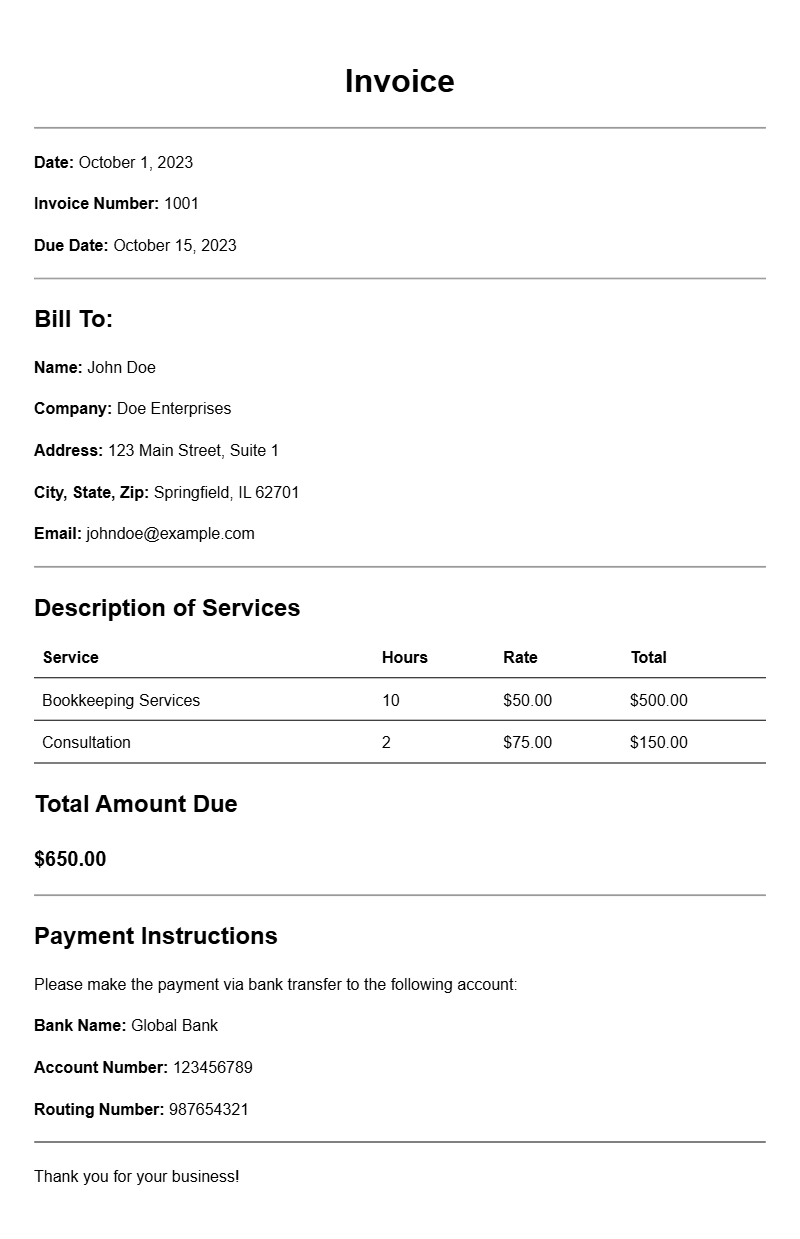
Creating invoices is a fundamental part of running any business, and having the right bookkeeper invoice samples can make the process smoother and more efficient. Whether you’re a freelancer, a small business owner, or simply someone managing your own finances, understanding how to craft an effective invoice is essential. This guide will walk you through what a bookkeeper invoice is, when to use it, its key components, and how to create one that works for you.
WHAT IS A BOOKKEEPER INVOICE?
A bookkeeper invoice is a document that details the goods or services provided by a business and requests payment from the client. It serves as a record for both parties, outlining what was delivered and the terms of payment. This type of invoice is particularly useful for professionals who provide ongoing services or have repeat clients.
WHEN TO USE A BOOKKEEPER INVOICE
Use a bookkeeper invoice whenever you provide a service or product that requires payment. Examples include:
- Consulting services
- Freelance work
- Monthly bookkeeping services
- Project-based work
It’s essential to issue an invoice promptly after completing your work to ensure timely payment. This keeps your cash flow steady and helps build professional relationships.
KEY COMPONENTS OF A BOOKKEEPER INVOICE
An effective invoice should include several key components:
- Your business information: Name, address, phone number, and email.
- Client information: Name and contact details of the person or organization being billed.
- Invoice number: A unique identifier for tracking purposes.
- Date of issue: The date the invoice is created.
- Due date: When payment is expected.
- Itemized list of services/products: Description, quantity, and price for each item.
- Total amount due: Clearly indicate the total to be paid.
- Payment terms: Specify acceptable payment methods and any late fees.
STEP-BY-STEP WRITING GUIDE
Here’s how to create your invoice:
- Start with your business information at the top.
- Include the client’s details below yours.
- Add a unique invoice number and date.
- List each service or product in a clear format, including quantity and price.
- Calculate the total and include any taxes if applicable.
- Outline your payment terms and methods.
REALISTIC EXAMPLES AND TEMPLATES
Here’s a simple invoice template you can edit:
Your Business Name
123 Business St.
City, State, ZIP
Email: your@email.com
Phone: (123) 456-7890
Invoice #001
Date: [Insert Date]
Due Date: [Insert Due Date]
Billed To:
Client Name
Client Address
Description of Services
| Item Description | Quantity | Unit Price | Total |
|—————————|———-|————|———|
| Monthly Bookkeeping | 1 | $200.00 | $200.00 |
| Consultation Fee | 2 | $100.00 | $200.00 |
| Total Due: | | | $400.00 |
Payment Terms: Payment due within 30 days. Acceptable methods: Bank transfer, PayPal.
COMMON MISTAKES TO AVOID
As you create your invoices, keep an eye out for these common pitfalls:
- Not including all necessary details, which can delay payment.
- Forgetting to number invoices sequentially, making tracking difficult.
- Using vague descriptions that don’t clarify what services were provided.
- Not stating payment terms clearly, leading to confusion about when payment is due.
TIPS FOR CUSTOMIZATION
Make your invoices stand out and reflect your brand by:
- Using your business logo and colors.
- Adding a personal note or a thank-you message.
- Customizing the layout to suit your style or industry.
Don’t hesitate to adjust templates to better fit the nature of your work or services.
Creating a well-structured invoice is key to getting paid on time. By using the samples and tips provided here, you can ensure your invoices are clear, professional, and effective. Whether you’re invoicing for a one-time project or ongoing services, a good invoice lays the groundwork for successful financial interactions.
For additional examples, check out our other resources like hair appointment invoices, barbecue catering invoices, and wedding invoice templates.
Editable Document Format Examples