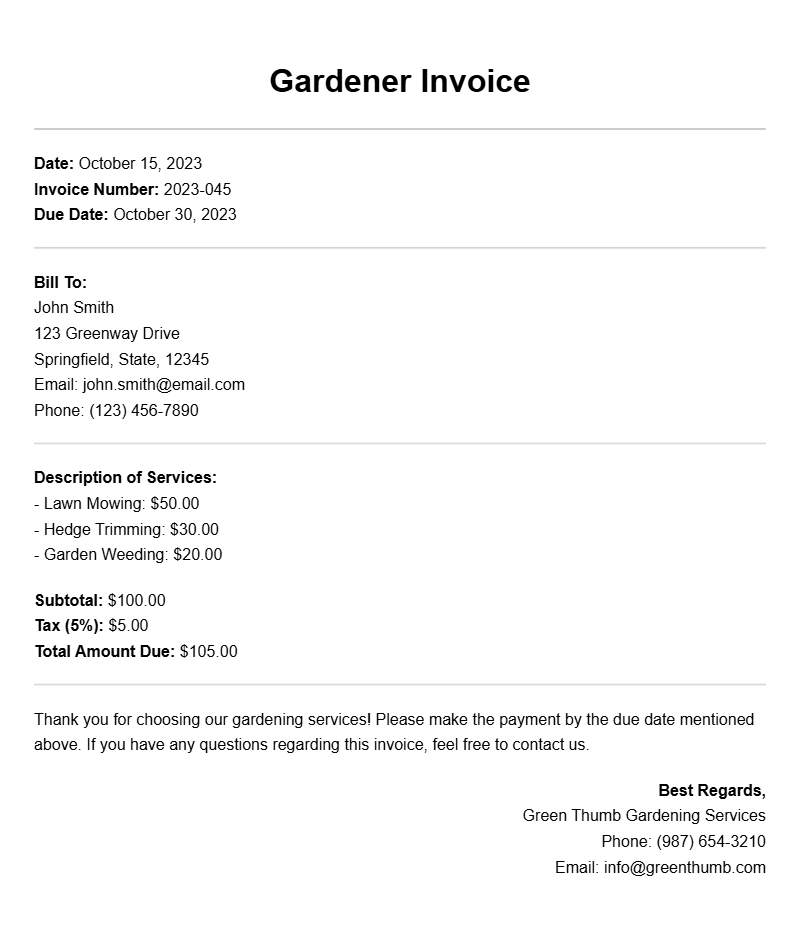
Creating a gardener invoice can feel overwhelming, especially if you’re just starting out or managing multiple clients. But having a solid invoice not only helps you get paid on time but also presents you as a professional. In this article, we’ll walk through what a gardener invoice is, when to use it, and how to create one that works for you.
What is a Gardener Invoice?
A gardener invoice is a document that details the services provided by a gardener to their clients, along with the costs associated with those services. It serves as an official request for payment after work has been completed. This invoice can be for a one-time service or for regular maintenance work.
When is it Used?
You’ll typically use a gardener invoice in several situations, such as:
- After completing a landscaping project.
- For routine lawn care services.
- When you provide specialized services like tree trimming or garden design.
Key Components of a Gardener Invoice
To ensure your invoice is clear and professional, include the following key sections:
- Your Business Information: Include your name, business name, address, phone number, and email.
- Client Information: The name and address of the client.
- Invoice Number: A unique identifier for tracking.
- Date of Service: When the work was performed.
- Description of Services: A breakdown of the work completed.
- Payment Terms: Due date and accepted payment methods.
- Total Amount Due: Clearly state the total to be paid.
Step-by-Step Writing Guide
Crafting your gardener invoice can be straightforward if you follow these steps:
- Choose a Template: You can find templates online or create your own in a word processor.
- Fill in Your Information: Start with your business details at the top.
- Add Client Information: Include the client’s name and address below your information.
- Assign an Invoice Number: This helps with record-keeping.
- Detail the Services Provided: Be specific about what you did and include any relevant hours worked.
- Calculate the Total: Make sure to include any taxes or additional fees.
- Specify Payment Terms: Let your client know when you expect payment and how they can pay.
Realistic Examples/Templates
Here’s a simple example of what your gardener invoice could look like:
Your Company Name
Your Address
Your Phone Number
Your Email
Invoice Number: 001
Date: [Insert Date]
Client Name: [Client’s Name]
Client Address: [Client’s Address]
Description of Services:
– Lawn Mowing (2 hours) – $50
– Hedge Trimming (1 hour) – $30
– Flower Bed Maintenance (1.5 hours) – $45
Total Amount Due: $125
Payment Terms: Due within 15 days. Accepting cash, check, or PayPal.
Common Mistakes to Avoid
Here are some pitfalls to watch out for:
- Forgetting to include your contact information.
- Not assigning an invoice number, which can lead to confusion.
- Being vague about the services performed.
- Neglecting to specify payment terms.
Tips for Customization
Personalize your invoice to reflect your brand. Here are a few ideas:
- Use your company logo at the top.
- Choose colors and fonts that match your branding.
- Add a small note thanking your client for their business.
Creating a gardener invoice doesn’t have to be a chore. By following these guidelines, you can ensure that your invoices are clear, professional, and effective in getting you paid. If you’re looking for more examples, check out other specialized invoice samples like babysitting invoices, custom framing invoices, and translation service invoices. Start using professional invoices today, and make your billing process smoother!
Template Variations & Sample Formats