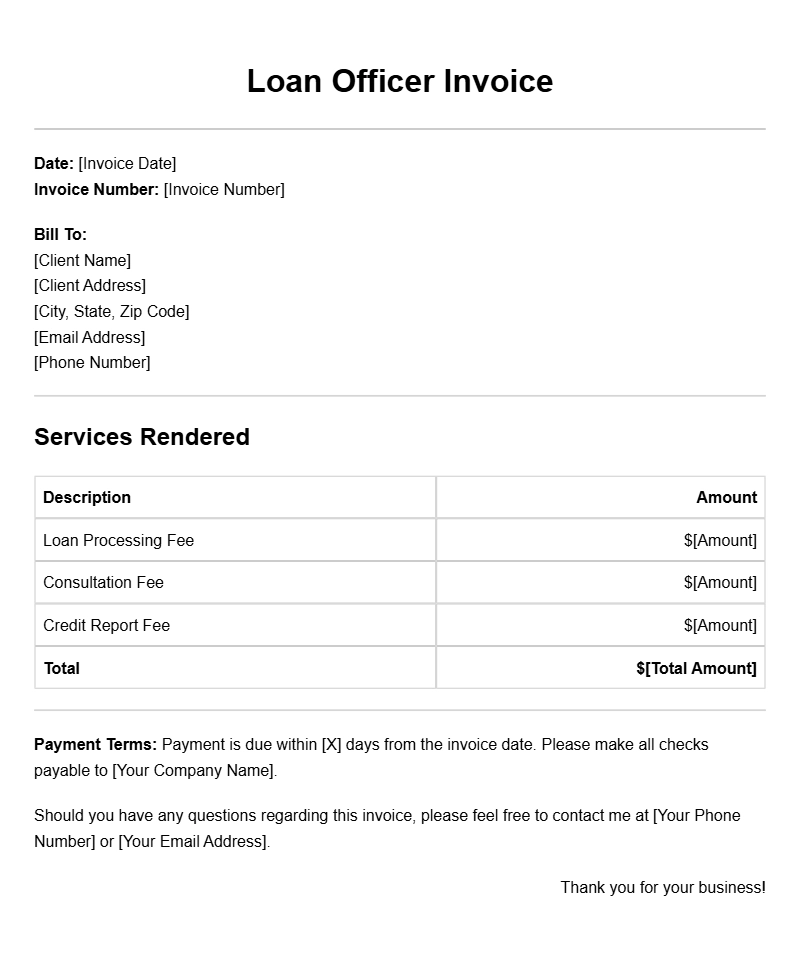
As a loan officer, managing your invoicing process efficiently is key to maintaining a healthy cash flow and ensuring your clients receive clear, professional communication. One effective way to streamline this process is by using loan officer invoice templates. These templates help you create invoices quickly, ensuring you don’t miss out on getting paid for your hard work.
WHAT IS A LOAN OFFICER INVOICE TEMPLATE?
A loan officer invoice template is a formatted document that outlines the services provided by a loan officer, alongside the fees for those services. It serves as a formal request for payment from clients, detailing what they owe and when payment is due. Having a professional invoice can enhance your credibility and make it easier for clients to understand their obligations.
WHEN IS IT USED?
You typically use an invoice template after completing a service related to a loan, such as processing a mortgage application or providing consultation. Sending an invoice promptly after your service ensures that clients remember the details and are more likely to pay on time.
KEY COMPONENTS OF A LOAN OFFICER INVOICE
Every good invoice includes several essential components to ensure clarity and professionalism:
- Your Contact Information: Include your name, title, phone number, and email address.
- Client Information: The name and address of the client receiving the invoice.
- Invoice Number: A unique identifier for tracking purposes.
- Date of Issue: The date you send the invoice.
- Due Date: Clearly state when payment is expected.
- Description of Services: Break down the services provided with corresponding fees.
- Total Amount Due: A summary of the total charges.
- Payment Instructions: Specify how the client can make their payment.
STEP-BY-STEP WRITING GUIDE
Creating your invoice is straightforward. Follow these steps:
- Open your preferred word processor or spreadsheet program.
- Choose a clean, professional layout. You can start with a blank document or use an existing template.
- At the top, add your contact information, followed by the client’s details.
- Include the invoice number, date of issue, and due date.
- List the services provided with clear descriptions and amounts next to each.
- At the bottom, calculate the total amount due and include payment instructions.
REALISTIC EXAMPLES/TEMPLATES
Here’s a simple example of how your invoice could look:
Your Name
Your Title
Your Phone Number
Your Email Address
Client Name
Client Address
Invoice Number: 001
Date of Issue: October 1, 2023
Due Date: October 15, 2023
Description of Services:
– Mortgage Consultation: $200
– Loan Processing Fee: $300
Total Amount Due: $500
Payment Instructions: Please transfer the total amount to [Your Payment Method].
COMMON MISTAKES TO AVOID
When creating your invoices, be mindful of these common pitfalls:
- Omitting important details, which can lead to confusion.
- Forgetting to send invoices promptly, causing delays in payment.
- Using unclear payment instructions, which can frustrate clients.
TIPS FOR CUSTOMIZATION
To make your invoice stand out, consider these customization tips:
- Add your logo or branding to enhance professionalism.
- Use colors that reflect your brand but keep it easy to read.
- Include a personal note thanking the client for their business.
By using a loan officer invoice template, you can save time, ensure accuracy, and present a professional image to your clients. This small investment in your invoicing process can lead to quicker payments and satisfied clients. If you’re also interested in other types of invoices, check out the dance lessons invoice samples, soccer tournament invoice templates, or coach invoice templates to find more resources that suit your needs.
Standard Format & Layout Reference