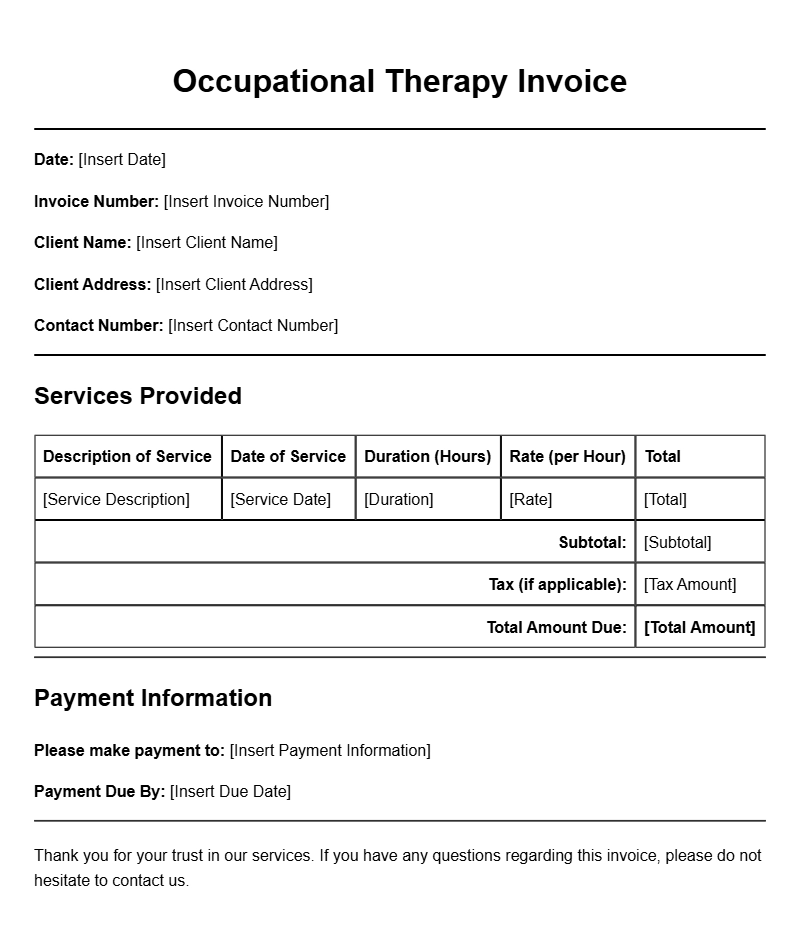
Creating an invoice as an occupational therapist can feel daunting, especially when you’re balancing client care with the business side of your practice. Using the right occupational therapist invoice templates can simplify this task and ensure you get paid on time. In this article, we’ll explore what these templates are, when to use them, and how to customize them for your needs.
What is an Occupational Therapist Invoice Template?
An occupational therapist invoice template is a pre-designed document that helps you bill your clients for services rendered. It’s a structured way to itemize the services provided, along with costs, which makes the billing process straightforward for both the therapist and the client. These templates can be downloaded and modified based on individual practice requirements.
When to Use an Occupational Therapist Invoice Template
You should use an invoice template after you’ve completed a session or series of sessions with a client. This ensures that you have a clear record of services provided, hours worked, and any materials used. Invoicing promptly helps keep your cash flow healthy and maintains professional relationships with your clients.
Key Components of an Occupational Therapist Invoice
- Your Contact Information: Include your name, address, phone number, and email address.
- Client Information: Include the client’s name, address, and contact details.
- Invoice Number: Create a unique invoice number for tracking purposes.
- Invoice Date: The date when the invoice is issued.
- Services Rendered: Clearly list each service provided along with the date it was provided.
- Payment Terms: Specify when payment is due, accepted payment methods, and any late fees.
Step-by-Step Writing Guide for Your Invoice
- Start with your information at the top of the invoice.
- Next, add the client’s details below your information.
- Include the invoice number and date to keep track of billing.
- List the services you provided with dates and costs next to each item.
- Clearly state your payment terms to avoid confusion.
- End with a thank-you note or a reminder of your next appointment, if applicable.
Editable Template Snippet
Here’s a simple example of what your invoice might look like:
Your Name
Your Address
Your City, State, Zip
Your Phone
Your Email
Client Name
Client Address
Client City, State, Zip
Invoice #: 001
Invoice Date: [Date]
Services Rendered:
– Initial Assessment: $150 (Date)
– Follow-up Session: $100 (Date)
Total Due: $250
Payment Terms: Due within 30 days. Late fee of 5% after due date.
Common Mistakes to Avoid
- Not including an invoice number can make tracking payments difficult.
- Failing to specify payment terms can lead to delayed payments.
- Missing client details may result in confusion and payment issues.
Tips for Customization
Feel free to personalize your template to reflect your brand. You can include your logo, adjust colors, and modify the layout to suit your style. Additionally, consider adding a personal touch, such as a brief message thanking your client for their business.
Using occupational therapist invoice templates can take the stress out of billing, allowing you to focus on what you do best: helping your clients. By following these steps and avoiding common pitfalls, you can make invoicing a breeze. For more related templates, check out monthly cleaning invoice templates, legal consulting invoice samples, and others that might suit your needs.
Document Examples & Template Samples