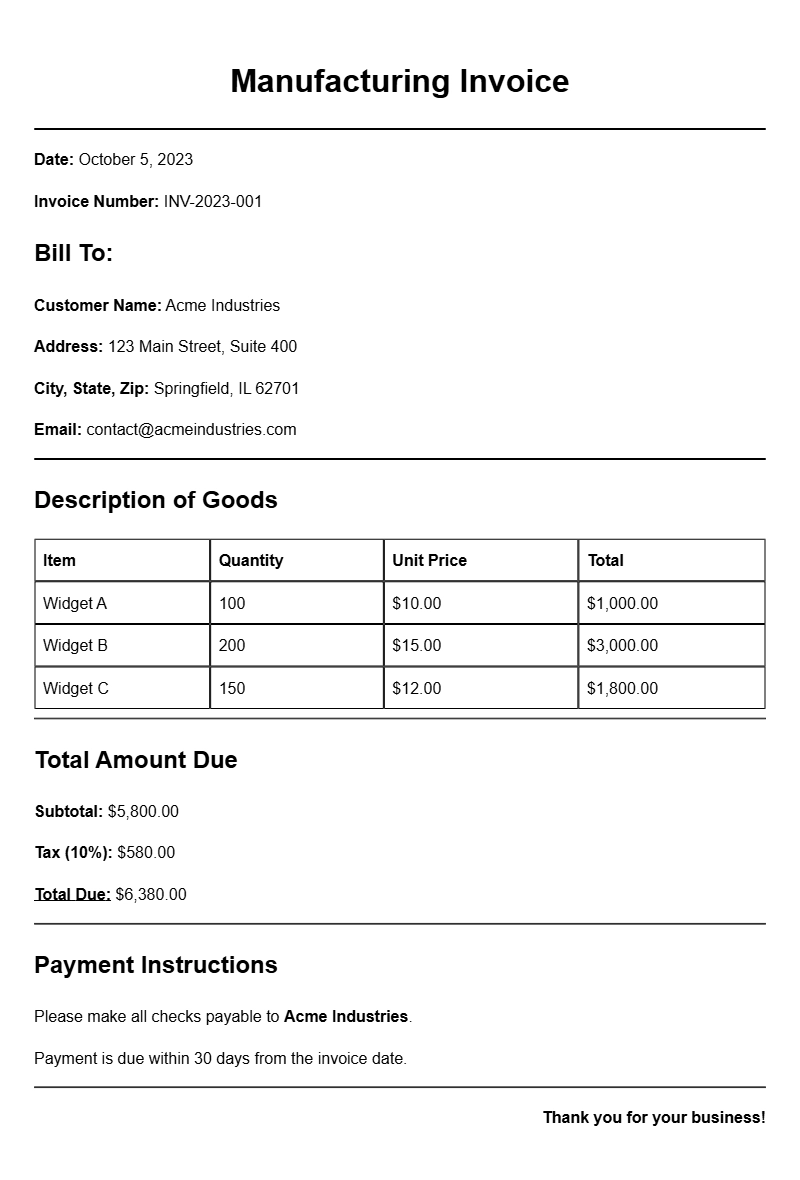
Creating a manufacturing invoice can feel daunting, especially if you’re not sure where to start. This document is essential for ensuring that you get paid for your hard work and that your customers understand exactly what they’re being charged for. If you’re looking for manufacturing invoice samples to help guide you through this process, you’re in the right place.
WHAT IS A MANUFACTURING INVOICE?
A manufacturing invoice is a detailed document that outlines the products or services provided by a manufacturer to a customer. This invoice serves as a formal request for payment and includes all relevant transaction information. It’s not just a bill; it’s a record of the transaction that both parties can refer back to.
WHEN IS IT USED?
You’ll typically use a manufacturing invoice when you’ve completed an order and are ready to bill your customer. This could be after producing a batch of products, delivering custom items, or providing services like machining or assembly. Sending an invoice promptly ensures timely payment and maintains good relationships with your clients.
KEY COMPONENTS OF A MANUFACTURING INVOICE
When crafting your invoice, include the following key components:
- Header: Your business name, logo, and contact information.
- Invoice Number: A unique identifier for tracking purposes.
- Date: The date the invoice is issued.
- Customer Information: The name and contact details of the customer.
- Description of Goods/Services: Detailed information about what was provided, including quantities and prices.
- Payment Terms: Specify when payment is due and any late fees.
- Total Amount Due: Clearly state the amount the customer owes.
STEP-BY-STEP WRITING GUIDE
- Gather Information: Collect all necessary details about the transaction.
- Choose a Template: Start with a simple manufacturing invoice template. You can find editable samples online or create your own.
- Fill in the Header: Enter your business information at the top.
- Add Invoice Number and Date: Make sure each invoice is numbered uniquely.
- Input Customer Details: Ensure accuracy in the customer’s name and address.
- List Products/Services: Provide a detailed breakdown, including item numbers if applicable.
- Include Payment Information: State the payment methods you accept and any terms.
- Review: Double-check for errors before sending it out.
REALISTIC EXAMPLES/TEMPLATES
Here’s a simple template to get you started:
Your Company Name
Your Address
City, State, Zip
Phone Number
Email Address
Invoice Number: 001
Date: [Insert Date]
Bill To:
[Customer Name]
[Customer Address]
[Customer City, State, Zip]
Description Quantity Unit Price Total
——————————————————–
Product A 10 $20.00 $200.00
Product B 5 $15.00 $75.00
——————————————————–
Subtotal: $275.00
Sales Tax (5%): $13.75
Total Amount Due: $288.75
Payment Due By: [Insert Due Date]
COMMON MISTAKES TO AVOID
- Not including an invoice number, which can lead to confusion and payment delays.
- Failing to provide clear payment terms, leaving customers unsure of when payment is due.
- Omitting important details about products or services, which can result in disputes.
TIPS FOR CUSTOMIZATION
Make your invoice stand out by customizing it with your branding elements. Use your company colors and logo. Consider adding a personal note thanking your customer for their business. This small touch can enhance relationships and encourage repeat business.
Creating a manufacturing invoice doesn’t have to be complicated. With a clear template and a few best practices in mind, you can streamline your invoicing process. If you need more help, check out these examples for other invoice types, such as equipment rental invoices, license fee invoices, and content creation invoices. Happy invoicing!
Document Examples & Template Samples