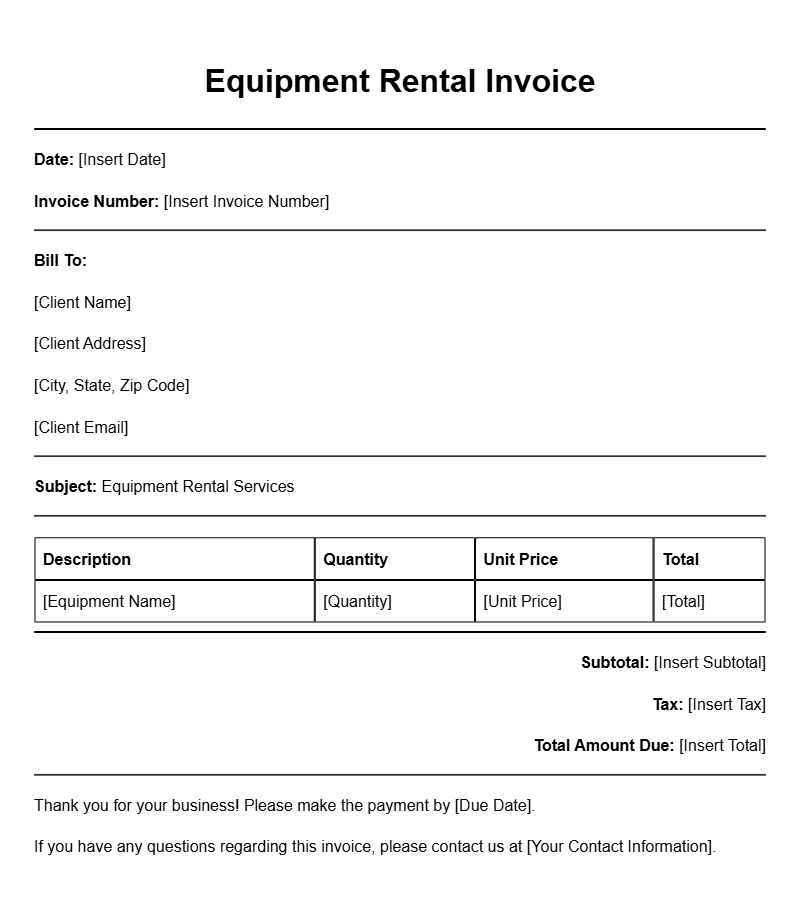
When managing an equipment rental business, having a clear and well-structured invoice template can make all the difference. It not only streamlines your billing process but also helps maintain a professional image. Whether you’re renting out construction equipment, party supplies, or tools, a solid invoice template lays the groundwork for effective communication with your clients. Let’s explore what an equipment rental invoice template is, when to use it, and how to create one that meets your needs.
WHAT IS AN EQUIPMENT RENTAL INVOICE TEMPLATE?
An equipment rental invoice template is a pre-designed document that you can fill out to bill clients for the rental of equipment. It typically includes details about the rental period, equipment specifications, rates, and payment terms. The template ensures that you capture all necessary information while maintaining consistency in your invoicing process.
WHEN IS IT USED?
This type of invoice is used whenever you provide equipment to a client for a specified period in exchange for payment. For example, if a construction company rents a backhoe for two weeks, you’ll need an invoice to document the transaction. It’s also useful for tracking rentals and managing your accounts receivable effectively.
KEY COMPONENTS OF AN EQUIPMENT RENTAL INVOICE
- Business Information: Your company name, address, phone number, and logo.
- Client Information: The name and contact details of the client renting the equipment.
- Invoice Number: A unique identifier for easy tracking.
- Rental Details: Description of the equipment, rental period, and quantity.
- Rates and Fees: Daily or weekly rental rates, additional fees (like delivery), and any applicable taxes.
- Total Amount Due: A clear statement of the total amount the client owes.
- Payment Terms: Information about payment deadlines and acceptable payment methods.
STEP-BY-STEP GUIDE TO CREATING AN INVOICE
- Choose a template or create one from scratch using software like Microsoft Word or Excel.
- Insert your business name and logo at the top of the document.
- Fill in the client’s details and the invoice number.
- List the equipment being rented, including a brief description, rental period, and quantity.
- Clearly outline the rental rates and any additional fees.
- Calculate the total amount due and include it prominently.
- Add your payment terms at the bottom of the invoice.
REALISTIC EXAMPLES AND TEMPLATES
Here’s a simple example of what your invoice could look like:
[Your Company Logo]
[Your Company Name]
[Your Company Address]
[Your Company Phone Number]
Invoice Number: 001
Date: [Invoice Date]
Bill To:
[Client Name]
[Client Address]
[Client Phone Number]
Description | Quantity | Rate | Total
———————–|———-|——–|——–
Excavator Rental | 1 | $200/day| $1,400
Delivery Fee | 1 | $100 | $100
—————————————————
Total Amount Due: $1,500
COMMON MISTAKES TO AVOID
- Not including a unique invoice number can make tracking difficult.
- Failing to specify rental periods may lead to confusion regarding payment.
- Overlooking tax implications can lead to unexpected charges for clients.
TIPS FOR CUSTOMIZATION
Feel free to modify your invoice template to reflect your brand. Use colors and fonts that align with your company’s identity. Additionally, you can personalize the message to clients by adding a thank-you note or a reminder of the rental agreement terms. Using software that allows for easy edits can save you time and hassle.
A reliable equipment rental invoice template is not just a formality; it’s a vital tool for maintaining clear communication with clients and keeping your business organized. By implementing a structured approach to invoicing, you can enhance your professionalism and efficiency. If you’re also in need of invoices for other services, consider checking out resources for boat maintenance invoices or personal trainer invoices.
Practical Document Examples