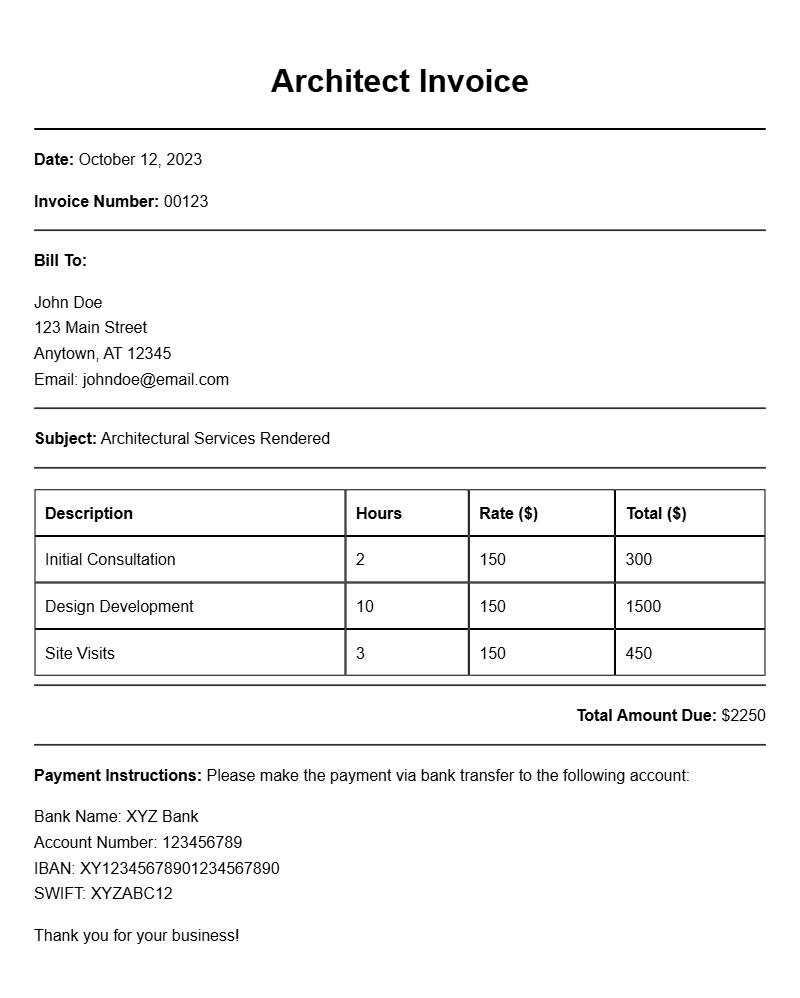
When it comes to managing your architecture business, creating effective invoices is essential. An architect invoice not only serves as a request for payment but also outlines the services provided, ensuring clarity for both you and your client. If you’re searching for architect invoice samples, you’re in the right place. This guide will walk you through what an architect invoice template looks like, when to use it, and how to create one that fits your style and needs.
What is an Architect Invoice?
An architect invoice is a formal document that details the architectural services rendered to a client. It typically includes the project name, a breakdown of costs, payment terms, and other relevant details. This document is vital for ensuring you get paid on time while providing your clients with a clear understanding of what they’re being billed for.
When to Use an Architect Invoice
You should use an architect invoice whenever you finish a project, reach a billing milestone, or when you require an initial payment. It’s also helpful for ongoing projects where you bill clients on a periodic basis. Having a well-structured invoice can streamline your payment process and reduce misunderstandings.
Key Components of an Architect Invoice
- Your Information: Include your name, business name, address, and contact details.
- Client Information: Add the client’s name, address, and contact information.
- Invoice Number: Assign a unique invoice number for tracking.
- Invoice Date: Specify the date the invoice is issued.
- Services Rendered: List all architectural services performed with descriptions.
- Costs: Provide a breakdown of costs, including hourly rates, fixed fees, and any additional charges.
- Payment Terms: State your payment terms, such as due date and accepted payment methods.
- Notes: Include any additional information or instructions for the client.
Step-by-Step Writing Guide for Your Invoice
- Start with your information at the top, followed by the client’s details.
- Assign a unique invoice number and date.
- Clearly outline the services provided with descriptions and time spent on each task.
- List the costs associated with each service, including any taxes or additional fees.
- Specify the total amount due.
- Include your payment terms to clarify when you expect to receive payment.
- Finish with any personal notes or thank-you messages to the client.
Realistic Examples and Templates
Here’s a simple invoice template snippet you can customize:
Your Name or Business
Your Address
City, State, Zip
Email | Phone Number
Client Name
Client Address
City, State, Zip
Invoice #1234
Invoice Date: MM/DD/YYYY
Services Rendered:
– Architectural Design for XYZ Project: $1,500
– Site Consultation: $300
Total Amount Due: $1,800
Payment Terms:
Due by MM/DD/YYYY. Accepting checks and bank transfers.
Common Mistakes to Avoid
- Not including all relevant details, which can lead to confusion.
- Forgetting to assign a unique invoice number, making tracking difficult.
- Overcomplicating the layout, making it hard for clients to read.
- Not specifying payment terms, which can delay your payments.
Tips for Customization
Personalizing your invoice can make it more appealing. Consider these tips:
- Use your brand colors and logo to create a professional look.
- Be consistent with your font style and size throughout the document.
- Add a personal note or a thank-you message to build client relationships.
Creating clear and professional invoices is an essential task for every architect. By using the right template and following these guidelines, you can ensure your invoices are effective and help maintain positive client relationships. If you’re looking for more inspiration, check out related invoice samples like appliance installation invoices or event deposit invoices.
Template Variations & Sample Formats