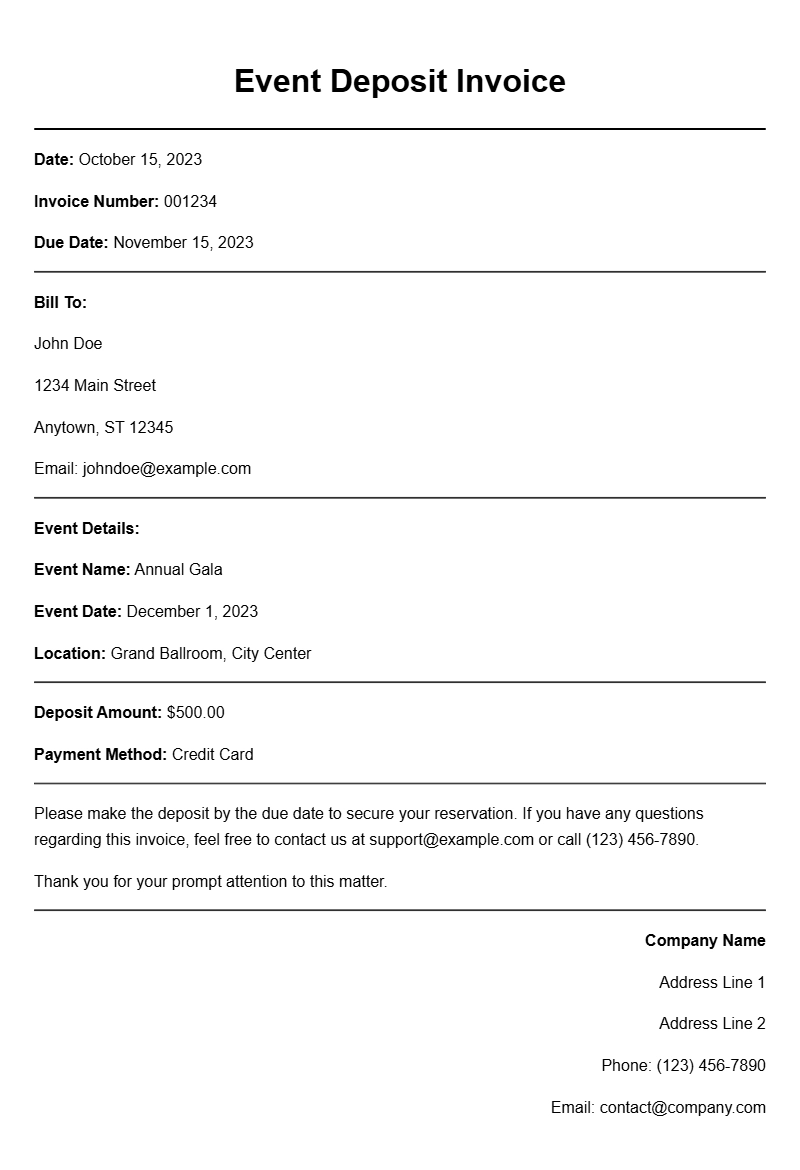
Creating an event deposit invoice is an essential step for anyone organizing events, whether it’s a wedding, corporate function, or a community gathering. This document not only helps you keep track of payments but also establishes a clear agreement with your clients. If you’re looking for event deposit invoice samples that you can easily customize, you’ve come to the right place.
What is an Event Deposit Invoice?
An event deposit invoice is a formal request for payment that outlines the deposit required to secure a booking for an event. It typically includes details about the event, the services provided, and the total amount due, along with the deposit amount required upfront. This invoice serves as a record for both the event organizer and the client.
When is it Used?
You’ll want to use an event deposit invoice when your client confirms their intention to hire you for an event. This is often done after discussions about the services you’ll provide, such as catering, venue rental, or entertainment. Requiring a deposit helps ensure that clients are serious about their bookings and protects your time and resources.
Key Components of an Event Deposit Invoice
- Your Business Information: Include your name, business name, address, phone number, and email.
- Client Information: Add the client’s name, address, and contact details.
- Invoice Number: A unique number for tracking purposes.
- Event Details: Date, time, and location of the event.
- Description of Services: List what services the deposit is securing, like catering or decoration.
- Total Amount Due: The full cost of the services.
- Deposit Amount: The upfront payment required.
- Payment Terms: When the deposit is due and accepted payment methods.
- Due Date: Specify when the invoice must be paid.
Step-by-Step Writing Guide
- Gather all necessary information about the event and your services.
- Format your invoice clearly, ensuring all components are easy to read.
- Clearly state the deposit amount and total costs.
- Include payment methods and due dates to avoid confusion.
- Send the invoice promptly after your client agrees to the terms.
Realistic Examples/Templates
Here’s a simple template you can use as a starting point:
Your Business Name
Your Address
Your Email
Your Phone Number
Invoice Number: 001
Date: [Date]
Client Name
Client Address
Event Details:
Event Name: [Event Name]
Event Date: [Event Date]
Location: [Event Location]
Description of Services:
– [Service 1]
– [Service 2]
Total Amount Due: $[Total Amount]
Deposit Amount: $[Deposit Amount]
Payment Due By: [Due Date]
Thank you for your business!
Common Mistakes to Avoid
- Not including clear payment terms, which can lead to confusion.
- Forgetting to keep a copy for your records.
- Failing to follow up with the client after sending the invoice.
Tips for Customization
Make the invoice feel personal by adding your logo and using a friendly tone in your communication. If you often work with specific types of events, consider creating tailored templates for those occasions. Check out examples from wedding planning invoices or HVAC maintenance invoices for inspiration.
Creating a well-structured event deposit invoice can streamline your booking process and enhance client trust. Use the templates and tips above to craft your own today! Don’t forget to check out additional resources like email marketing invoices or Zumba instructor invoices for more ideas on effective invoicing.
General Document Template Collection