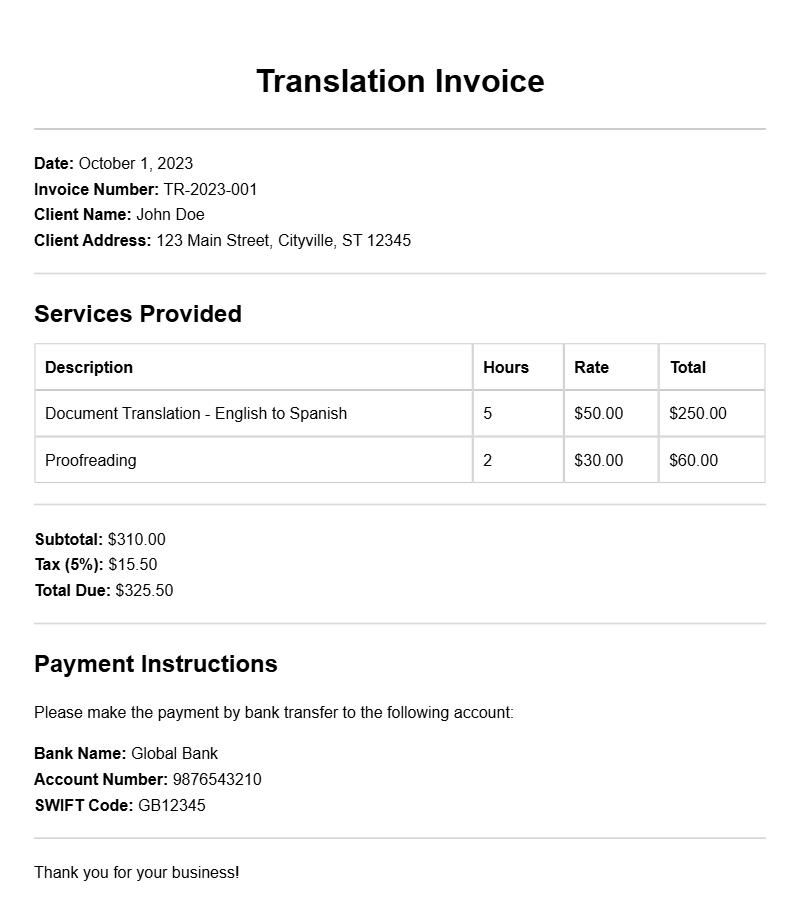
If you’re a translator, you know that getting paid for your hard work is essential. One way to ensure you get your dues is by using a clear and professional invoice. Translator invoice templates can make this task easier, allowing you to focus on what you do best—translating. This guide will help you understand what a translator invoice template is, when to use it, and how to create one that works for you.
WHAT IS A TRANSLATOR INVOICE TEMPLATE?
A translator invoice template is a pre-designed document that you can fill out with your specific billing information. It typically includes your name, contact information, the client’s details, a breakdown of services rendered, and the total amount due. Using a template saves you time and ensures you don’t miss any important details.
WHEN TO USE A TRANSLATOR INVOICE TEMPLATE
You should use an invoice template after you’ve completed a translation project and are ready to bill your client. Whether you’re working on a one-off project or a long-term contract, having a professional invoice can help streamline the payment process.
KEY COMPONENTS OF A TRANSLATOR INVOICE
When creating your invoice, be sure to include these essential components:
- Your Information: Name, address, email, and phone number.
- Client Information: The client’s name and contact details.
- Invoice Number: A unique number for tracking purposes.
- Date of Issue: The date you send the invoice.
- Due Date: When payment is expected.
- Description of Services: Clear details about the translation work completed.
- Rates: Your fees, whether hourly, per word, or per project.
- Total Amount Due: The total cost of services rendered.
- Payment Instructions: How the client can pay you (e.g., bank transfer, PayPal).
STEP-BY-STEP GUIDE TO WRITING A TRANSLATOR INVOICE
Here’s how to create your invoice using a template:
- Choose a Template: Find a template that fits your style. You can use free online resources or create your own.
- Fill in Your Information: Start by entering your details at the top of the invoice.
- Add Client Information: Include your client’s name and contact details directly beneath yours.
- Include Invoice Number and Dates: Make sure to assign an invoice number and include the issue and due dates.
- Detail Your Services: Clearly list the translation services you provided, including any specifics like word count or project scope.
- State Your Fees: Clearly present your rates and calculate the total amount due.
- Payment Instructions: Provide clear instructions on how the client can pay.
- Review and Send: Double-check for errors and send the invoice to your client.
REALISTIC EXAMPLES OF TRANSLATOR INVOICE TEMPLATES
Here’s a simple invoice template snippet to get you started:
Your Name
Your Address
Your Email
Your Phone Number
Client Name
Client Address
Invoice Number: 001
Date of Issue: [Insert Date]
Due Date: [Insert Due Date]
Description of Services:
– Translation from English to Spanish: 1500 words @ $0.10/word
– Proofreading: 1500 words @ $0.05/word
Total Amount Due: $175.00
Payment Instructions: Please make payment via PayPal to your-email@example.com.
COMMON MISTAKES TO AVOID
When creating invoices, be mindful of these common pitfalls:
- Forgetting to include your invoice number.
- Not being clear about payment terms.
- Failing to provide detailed descriptions of services.
- Omitting your contact information, making it hard for clients to reach you.
TIPS FOR CUSTOMIZATION
To make your invoice stand out, consider these customization options:
- Add your logo for branding.
- Use a consistent color scheme that matches your business identity.
- Include a personal touch, like a thank-you note for the client’s business.
If you’re also interested in other types of invoice templates, check out resources for babysitters, net 60 invoices, drone photographers, online tutors, and massage therapists.
Practical Document Examples