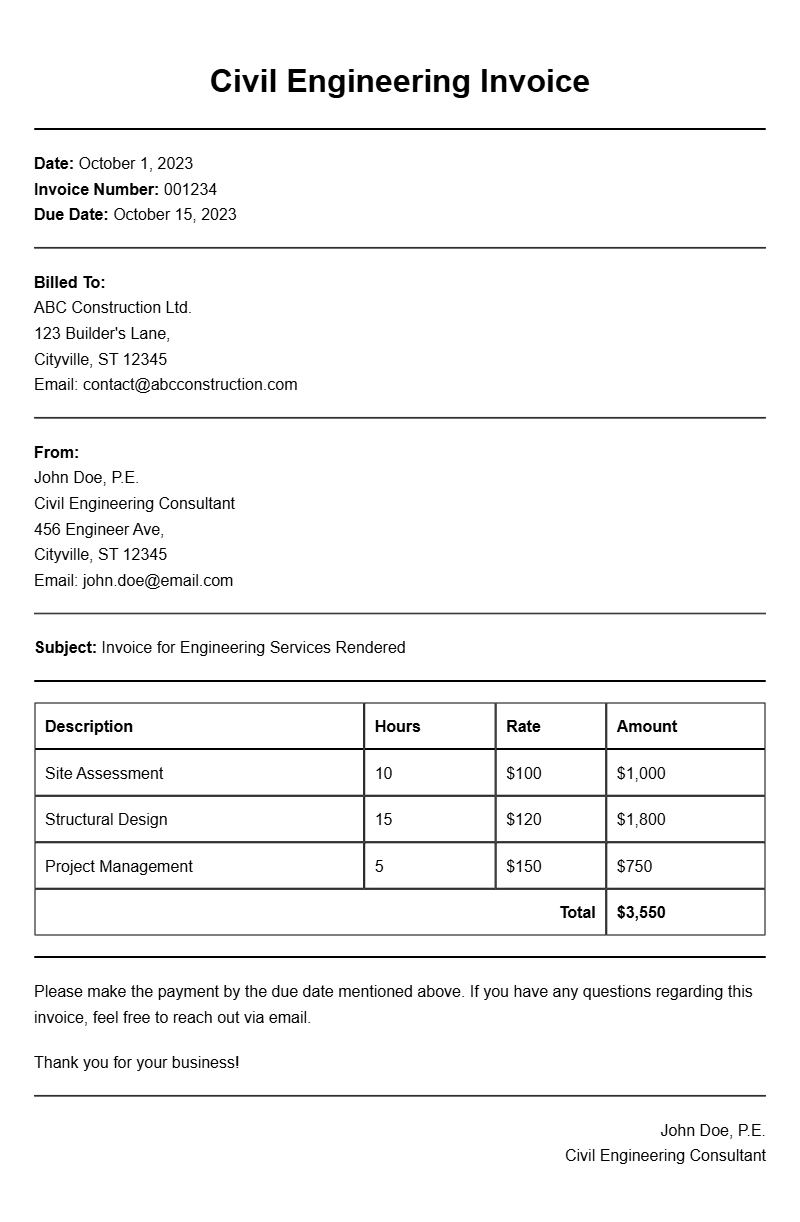
Creating invoices can often feel like a daunting task for civil engineers, especially when you want to ensure that your billing process is both professional and straightforward. If you’re looking for civil engineer invoice samples, you’ve come to the right place. This guide will help you understand what an invoice is, when to use it, and provide practical examples and customization tips to make your invoicing process smoother.
What is a Civil Engineer Invoice?
A civil engineer invoice is a document that outlines the services provided by a civil engineer to a client, along with the associated costs. It serves as a formal request for payment and provides a record of the transaction for both parties. This document not only helps you get paid but also maintains professionalism in your dealings.
When is it Used?
You typically use an invoice after completing a project, reaching a milestone, or on a scheduled basis (like monthly). For instance, if you’ve just finished a site assessment or design work, it’s time to send an invoice to ensure prompt payment. Keeping track of your invoices can help manage your cash flow effectively.
Key Components of a Civil Engineer Invoice
A well-structured invoice should include the following sections:
- Your Information: Name, address, contact information, and business name.
- Client Information: Name, address, and contact details of the client.
- Invoice Number: A unique identifier for tracking purposes.
- Invoice Date: The date when the invoice is issued.
- Payment Due Date: When the payment should be made.
- Services Provided: A detailed description of the services rendered, including dates and hourly rates.
- Total Amount Due: The total cost for the services provided.
- Payment Instructions: How the client can pay you, including bank details or payment platforms.
Step-by-Step Writing Guide
Creating your invoice can be straightforward if you follow these steps:
- Gather Your Information: Compile all necessary details about your business and the client.
- Choose a Template: Select an invoice template that fits your style. There are many online resources available.
- Fill in the Details: Input your information, client details, and a breakdown of services.
- Review and Edit: Double-check for accuracy. Ensure that all figures are correct and that descriptions are clear.
- Send the Invoice: Deliver the invoice via email or post, depending on your client’s preference.
Realistic Examples and Templates
Here’s a simple template you can customize:
Your Name
Your Address
Your City, State, ZIP
Your Email
Your Phone Number
Date: [Invoice Date]
Invoice Number: [Unique Invoice Number]
Bill To:
Client Name
Client Address
Client City, State, ZIP
Description of Services:
1. Site Assessment – [Date] – [Hours] @ [Rate] = [Amount]
2. Project Design – [Date] – [Hours] @ [Rate] = [Amount]
Subtotal: [Subtotal Amount]
Tax: [Tax Amount]
Total Due: [Total Amount]
Payment Instructions: [Bank Details or Payment Method]
Feel free to modify this template according to your needs. You can also find more examples tailored to different professions, like spa events or roof repairs.
Common Mistakes to Avoid
Here are a few pitfalls to steer clear of:
- Missing or incorrect details can lead to payment delays.
- Failing to provide clear descriptions of services may confuse clients.
- Not following up on unpaid invoices can hurt cash flow.
Tips for Customization
To make your invoices stand out:
- Use your company branding, including logos and colors.
- Consider adding a personal note thanking the client for their business.
- Make sure to adjust the template for different projects or clients as necessary.
Creating and managing invoices doesn’t have to be a hassle. By utilizing these civil engineer invoice samples and tips, you can ensure your invoicing process is efficient and professional. Start customizing your invoice today to get paid for your hard work!
Ready-to-Use Document Samples