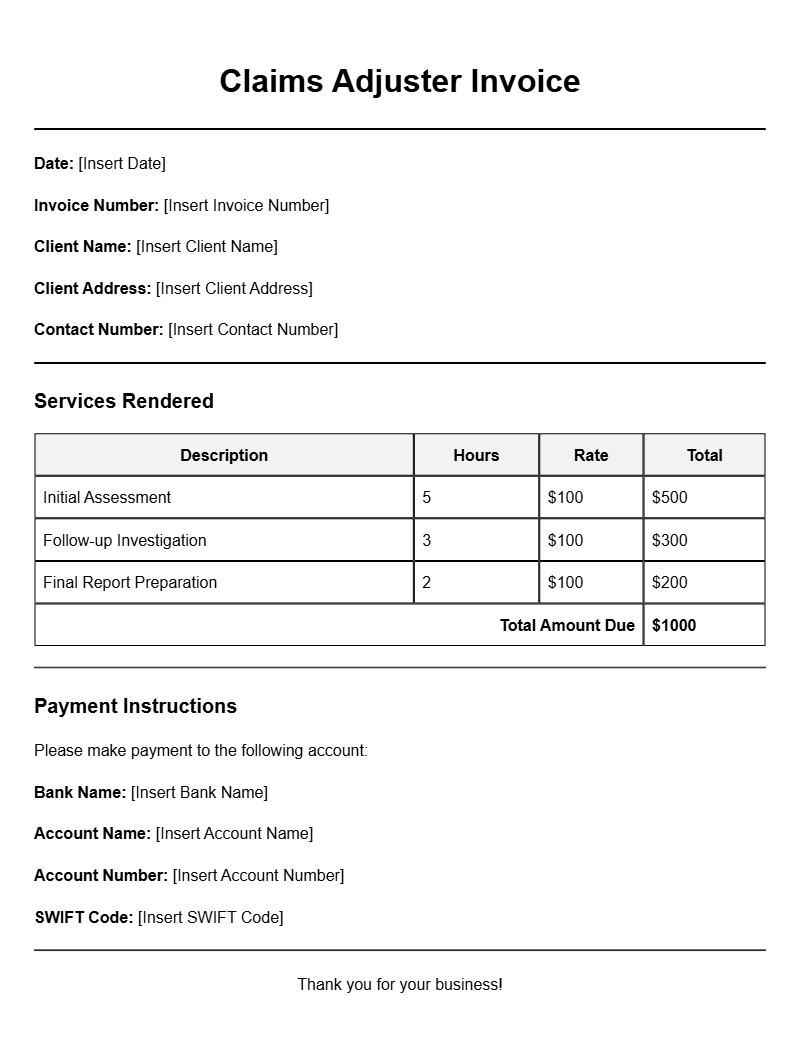
When it comes to managing insurance claims, having a clear and organized claims adjuster invoice template can make all the difference. These templates streamline the billing process, ensuring that all necessary information is captured and presented in a professional manner. Whether you’re a freelancer, an independent contractor, or part of a larger firm, using a well-structured invoice can help you get paid on time and maintain great relationships with clients.
What is a Claims Adjuster Invoice Template?
A claims adjuster invoice template is a standardized document used to bill clients for services related to assessing and managing insurance claims. This template typically includes details such as the services provided, dates of service, and total amounts due. Having a template saves time and reduces errors, allowing for a consistent presentation of billing information.
When is it Used?
This invoice template is used whenever a claims adjuster completes work on behalf of an insurance company or a policyholder. Common scenarios include:
- After an inspection or assessment of damages.
- Following consultations with clients regarding their claims.
- When submitting reports that outline the findings and recommendations regarding a claim.
Key Components of a Claims Adjuster Invoice
When creating your invoice, be sure to include these essential components:
- Your Contact Information: Name, address, phone number, and email.
- Client Information: The client’s name and address, including a contact person if applicable.
- Invoice Number: A unique identifier for tracking purposes.
- Invoice Date: The date the invoice is issued.
- Service Description: A detailed list of services performed, including dates and hours worked.
- Fees: Breakdown of costs associated with each service.
- Total Amount Due: The total sum that needs to be paid.
- Payment Instructions: Accepted payment methods and due date.
Step-by-Step Writing Guide
Creating your invoice template can be straightforward. Here’s how to do it:
- Choose a Format: Decide if you want a digital or printed invoice.
- Gather Your Information: Prepare your contact details and any client information you may need.
- Draft the Invoice: Use a word processor or spreadsheet software to layout your template, following the key components listed above.
- Add Details: Fill in specific details about the services you provided.
- Review and Edit: Check for accuracy and clarity before finalizing.
Realistic Examples/Templates
Here’s a simple template snippet to illustrate what your invoice might look like:
Your Name
Your Address
City, State, Zip
Phone: (123) 456-7890
Email: youremail@example.com
Client Name
Client Address
City, State, Zip
Invoice Number: 001
Invoice Date: [Date]
Description of Services:
– Claims Assessment: $150.00
– Consultation: $75.00
Total Amount Due: $225.00
Payment Method: [Details]
Due by: [Date]
Common Mistakes to Avoid
When creating your claims adjuster invoice, steer clear of these pitfalls:
- Omitting essential information like the invoice number or your contact details.
- Using vague descriptions for services rendered.
- Failing to proofread for typos or errors.
Tips for Customization
Make your invoice template truly yours with these customization tips:
- Incorporate your branding elements, like a logo or specific color scheme.
- Adjust the layout to fit your style while keeping it professional.
- Consider adding a personal note or a thank you message for added warmth.
Having a reliable claims adjuster invoice template can significantly enhance your billing process. By following these guidelines, you’ll not only ensure clarity and professionalism but also make it easier for clients to process your invoices. If you’re looking for more invoice samples, check out our upholstery cleaning invoice templates or drywall installation invoice templates for additional inspiration.
Template Variations & Sample Formats