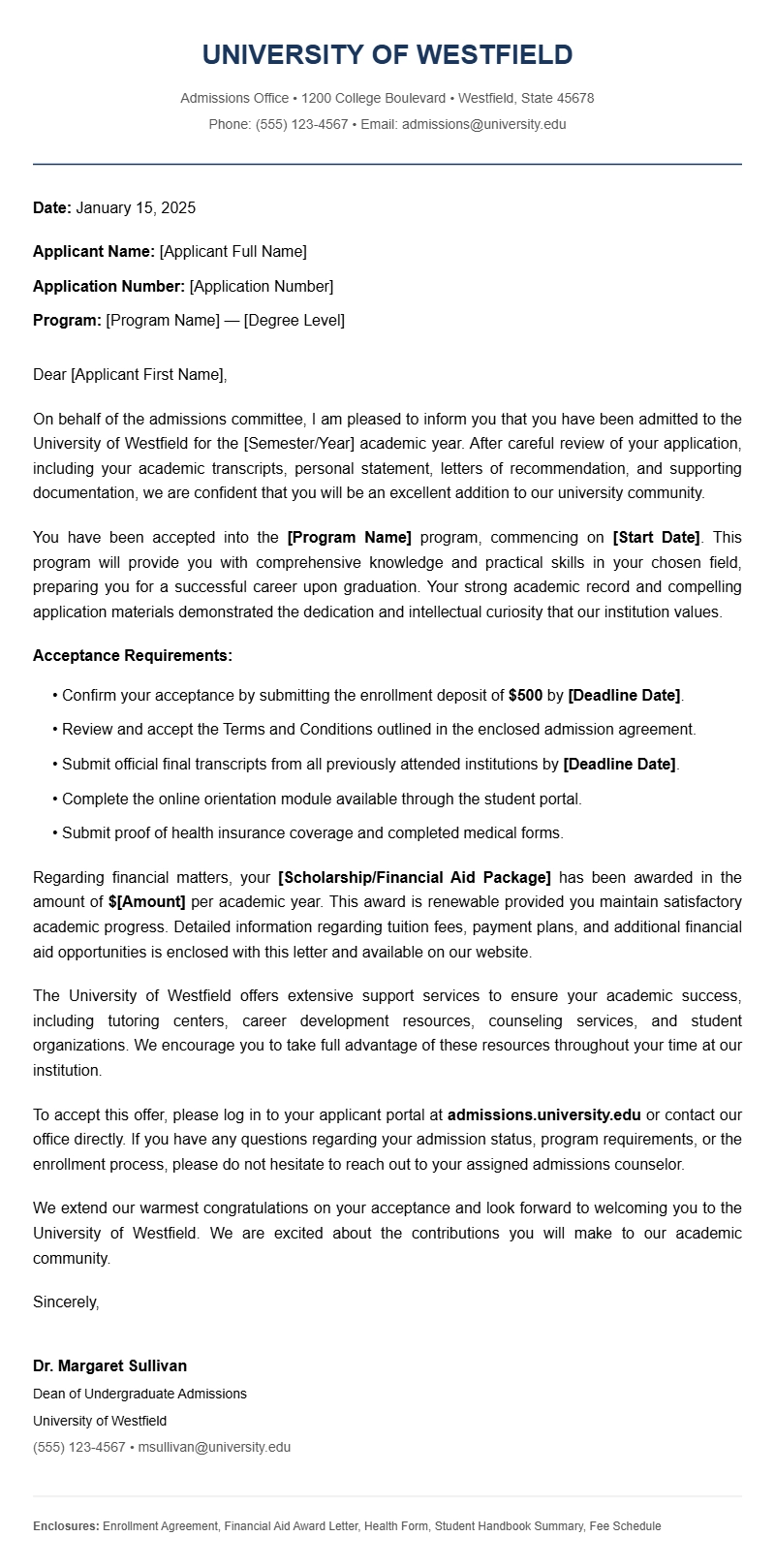
You’ve got a deadline approaching and a blank screen staring back at you. The college you want to attend asks for an admission letter, and you have no idea where to start. Maybe you’ve drafted three versions already and deleted all of them. That’s completely normal. This kind of letter matters, but it doesn’t have to feel impossible. In this guide, I’ll walk you through everything you need to know about using college admission letter templates effectively, from understanding what makes them work to customizing one for your own situation.
What Is a College Admission Letter?
A college admission letter is a formal written communication you send to an educational institution as part of your application. It introduces you, explains why you’re applying, and highlights what makes you a strong candidate. Some schools call this a statement of purpose, a personal essay, or a motivation letter. The naming varies, but the function stays the same: it’s your chance to speak directly to the admissions team when your grades and test scores can’t tell the whole story.
These letters differ from standard cover letters you might use when applying for jobs. A cover letter template you find online won’t suit this purpose because admission letters follow different conventions and expectations. Your audience isn’t an employer evaluating your skills for a role. They’re educators looking for students who will contribute meaningfully to their campus community.
When Do You Actually Need This Letter?
Most undergraduate programs ask for some form of admission letter when you submit your application. Graduate programs almost always require one. Some schools make it optional, but that doesn’t mean you should skip it. A thoughtful letter can tip the scales in your favor, especially when competing against applicants with similar academic profiles.
Beyond initial admission, you might need similar letters when applying for scholarships, residency programs, or transfer opportunities. The student transfer request letter templates you find online follow similar structures because the underlying purpose stays consistent: you’re making a case for why you belong in a specific educational environment.
Key Components Every Admission Letter Should Include
Strong admission letters share common elements. Here’s what yours needs to contain:
- Opening hook that captures attention without being dramatic or false
- Your academic and personal background in a way that connects to the program
- Specific reasons for choosing this school over others
- Your goals and how the program helps you reach them
- What you bring to the table as a potential student and campus member
- A closing that reinforces your interest without begging or demanding
Skip the list of grades or test scores. Your application form already contains that information. Instead, focus on the story that numbers can’t tell.
A Step-by-Step Guide to Writing Your Letter
1. Start with your real motivation
Before you write anything, answer this question in one or two sentences: why do you genuinely want to attend this specific program? Not the generic answer you think they want to hear. The real one. Write it down and keep it visible. Every paragraph you draft should connect back to that core reason.
2. Identify two or three key experiences
You don’t need to catalog every achievement. Pick experiences that shaped you, taught you something specific, or reveal a pattern relevant to your goals. A single meaningful story beats a list of accomplishments every time. For example, you might describe how managing a school club project taught you about collaboration under pressure, and how that experience drives your interest in the business program you’re applying to.
3. Research the program specifically
Generic letters get rejected. Before you use any template, spend time on the program’s website. Look at faculty members, course offerings, research opportunities, and campus culture. Then write something specific that shows you actually looked. If you’re applying to a chemistry program, mention a professor’s work. If you’re interested in a creative writing program, reference a specific course or visiting author series.
4. Draft the opening paragraph
Your first paragraph sets the tone. Skip the phrase “I am honored to apply” or any variation of it. Those openings sound stiff and don’t tell the reader anything about you. Instead, start with a specific moment, a question, or a concise statement that makes them want to keep reading. Here’s an example of a stronger opening:
“The first time I realized I wanted to study environmental science, I was standing in my grandmother’s garden watching a drought destroy crops she had tended for thirty years. That experience sent me on a path toward understanding climate systems, and now I’m looking for a program that lets me turn that understanding into action.”
5. Build your middle sections around themes
Organize your letter into two or three paragraphs that each explore a different theme. Maybe one covers your academic interests, another covers your community involvement, and a third discusses your future goals. Use transitions that feel natural rather than formulaic. Avoid starting every paragraph with “First,” “Second,” or “Additionally.”
6. Write a closing that sticks
End with confidence, not desperation. Restate your interest, but frame it around what you plan to contribute rather than what you hope to gain. Admissions committees remember the last thing they read. Make sure yours leaves them thinking about your potential, not your anxiety about getting in.
Example Template You Can Adapt
Below is a basic template structure. Replace the bracketed sections with your own information. Don’t copy this word-for-word and expect it to work for your situation.
[Opening hook – a specific moment, question, or statement that connects to your interest in this field]
[First body paragraph – describe an experience or background element that shaped your interest. Include specific details, not just general claims.]
[Second body paragraph – discuss what draws you to this specific program. Mention specific faculty, courses, research opportunities, or campus elements.]
[Third body paragraph – explain your goals after graduation and how this program prepares you to reach them. Also briefly note what you bring to the community.]
[Closing paragraph – restate your enthusiasm, thank the reader for their time, and leave them with something memorable to consider.]
Remember that the best templates work as starting points, not finished products. The company-to-supplier letter samples you might find follow a similar principle: structure guides you, but your specific content makes it real.
Common Mistakes That Hurt Your Letter
Being too vague about why this school
Admissions readers can tell when you’ve copy-pasted the same paragraph into twelve different applications. They read letters that say “your prestigious institution” and “outstanding reputation” constantly. Be specific. Name the professor you want to work with. Reference the lab equipment you want to use. Describe the program structure that appeals to you. Specificity shows genuine interest.
Focusing only on yourself without connection
It’s your letter, so you should talk about yourself. But if every sentence starts with “I” and never connects your experience to the program’s community, you’ll sound self-centered. Balance your narrative with references to how you’d engage with what they offer.
Ignoring the word count guidelines
Most programs specify a length. If they ask for 500 words and you submit 1,200, you haven’t shown enthusiasm. You’ve shown you can’t follow instructions. Stay within the range they provide, and if no range is specified, aim for 400 to 600 words. That’s enough to tell your story without losing the reader’s attention.
Forgetting to proofread
A single typo won’t sink your application, but multiple errors suggest carelessness. Read your letter out loud before submitting. Ask someone else to read it too. Errors you stop seeing because you’ve read the letter ten times will jump out at a fresh reader.
Using an outdated or irrelevant template
Not all admission letters follow the same expectations. A letter for a graduate program differs from one for an undergraduate application. A letter for a US university differs from one for a UK or European institution. Make sure your template matches the actual requirements of where you’re applying. The employee suspension letter samples demonstrate how context changes everything in professional correspondence, and academic letters work the same way.
Tips for Customizing Any Template
If you find a template that works structurally, don’t stop there. Customization is where your letter becomes yours.
Research the institution’s values. Some schools emphasize community engagement. Others prioritize research innovation. Your letter should reflect the values that actually matter at that specific place.
Match your tone to the program. A creative writing program appreciates voice and style. A scientific research program values precision and clarity. Let the subject matter guide how you express yourself.
Use specific details from your own life. Templates give you structure. Only you can provide the content that makes it genuine. Describe your actual experiences, not hypotheticals or things you think they want to hear.
Have someone in your target field review it. If you’re applying to a psychology program, ask a psychology professor or graduate student to read your letter. They can spot moments where you’ve oversimplified or made claims that don’t match how professionals in the field actually think.
Keep multiple versions organized. If you’re applying to five different schools, you’ll customize the same base template five times. Keep a master document where you track which version goes to which school so you don’t accidentally send the wrong letter.
What Happens After You Submit
After you send your admission letter, the waiting begins. You can’t control what happens after submission, but you can control what you submit. A clear, specific, genuine letter won’t guarantee admission, but it removes one variable that could work against you. Admissions committees read thousands of letters. Yours needs to stand out by being authentic, organized, and targeted.
If you’re rejected, don’t assume your letter failed you. Admissions decisions involve factors beyond your control, including institutional priorities, available seats, and applicant pool strength. What you can control is presenting yourself as clearly and honestly as possible. That’s what a good template helps you do.
The pressure around college applications is real, and it’s okay to feel overwhelmed by it. But writing your admission letter doesn’t have to feel like pulling teeth. Start with something specific about yourself. Build outward from there. Use structure to stay organized, but let your actual voice carry the message. That’s what admissions readers remember.
Document Structure & Example Models