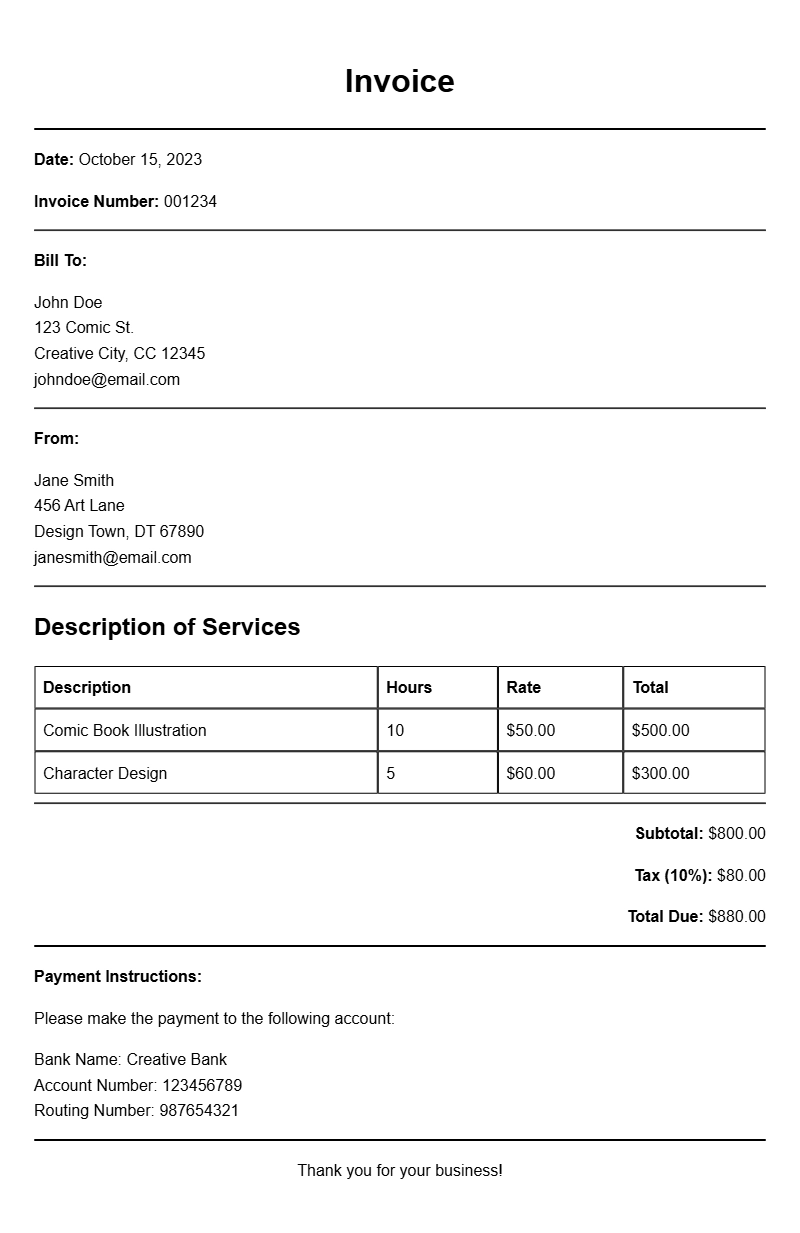
As a comic artist, managing your finances can feel overwhelming, especially when it comes to getting paid for your work. One essential tool in your arsenal is the comic artist invoice. This document not only helps you get paid promptly, but it also serves as a record of your work and agreements with clients. In this guide, we’ll explore what a comic artist invoice looks like, when to use it, and how to create one that meets your needs.
What Is a Comic Artist Invoice?
A comic artist invoice is a formal document that details the services you’ve provided to a client and requests payment for those services. It includes specific information about the work completed, payment terms, and other relevant details. Think of it as a professional way to communicate what you did and how much it costs.
When to Use a Comic Artist Invoice
Use an invoice whenever you complete a project or a milestone in a larger project. This could be after finishing a comic page, a cover illustration, or an entire graphic novel. If you’re working on a commission basis, sending an invoice ensures that you get paid for your time and effort.
Key Components of a Comic Artist Invoice
- Your Contact Information: Include your name, address, phone number, and email.
- Client’s Information: The name and contact details of the person or organization you’re invoicing.
- Invoice Number: A unique identifier for each invoice, which helps in tracking payments.
- Date of Issue: The date you’re issuing the invoice.
- Description of Services: A detailed list of what you did, including the number of pages or illustrations.
- Payment Terms: Specify how and when you expect to be paid.
- Total Amount Due: Clearly state the total amount the client owes.
Step-by-Step Writing Guide
Creating an invoice is straightforward. Follow these steps:
- Choose a Template: Start with a simple invoice template that fits your style.
- Fill in Your Information: Add your name and contact details at the top.
- Add Client Information: Include your client’s name and contact details.
- List Your Services: Write a brief description of the services provided, including the price for each item.
- Set Payment Terms: State your payment methods (e.g., PayPal, bank transfer) and due dates.
- Total Your Amount: Clearly add up the total cost and make it stand out.
Realistic Examples/Templates
Here’s a basic snippet of what your invoice might look like:
Your Name
Your Address
Your City, State, Zip
Your Email
Your Phone Number
Client Name
Client Address
Client City, State, Zip
Invoice Number: 001
Date of Issue: [Insert Date]
Description of Services Provided:
– 5 Comic Pages: $300
– Cover Art: $150
Total Amount Due: $450
Payment Terms: Due within 30 days via PayPal.
Common Mistakes to Avoid
- Not Including Invoice Numbers: Without this, tracking payments can become a hassle.
- Vague Descriptions: Be specific about what you’re charging for; it helps avoid confusion.
- Forgetting Payment Terms: Clearly state when you expect payment to avoid delays.
Tips for Customization
Make your invoice stand out by adding your personal touch:
- Branding: Incorporate your logo or unique design elements to reflect your artistic style.
- Color Scheme: Use colors that match your artwork for a cohesive look.
- Personal Message: Add a thank-you note or a brief message to make it feel more personal.
Creating a professional comic artist invoice is essential for your business. It not only ensures you get paid, but it also establishes your credibility with clients. By following these guidelines, customizing your invoice, and avoiding common mistakes, you’ll streamline your billing process and keep your focus on creating amazing art.
If you’re looking for more invoice templates tailored to different professions, check out these great resources for spa owners, veterinary services, occupational therapists, and online courses.
Document Structure & Example Models