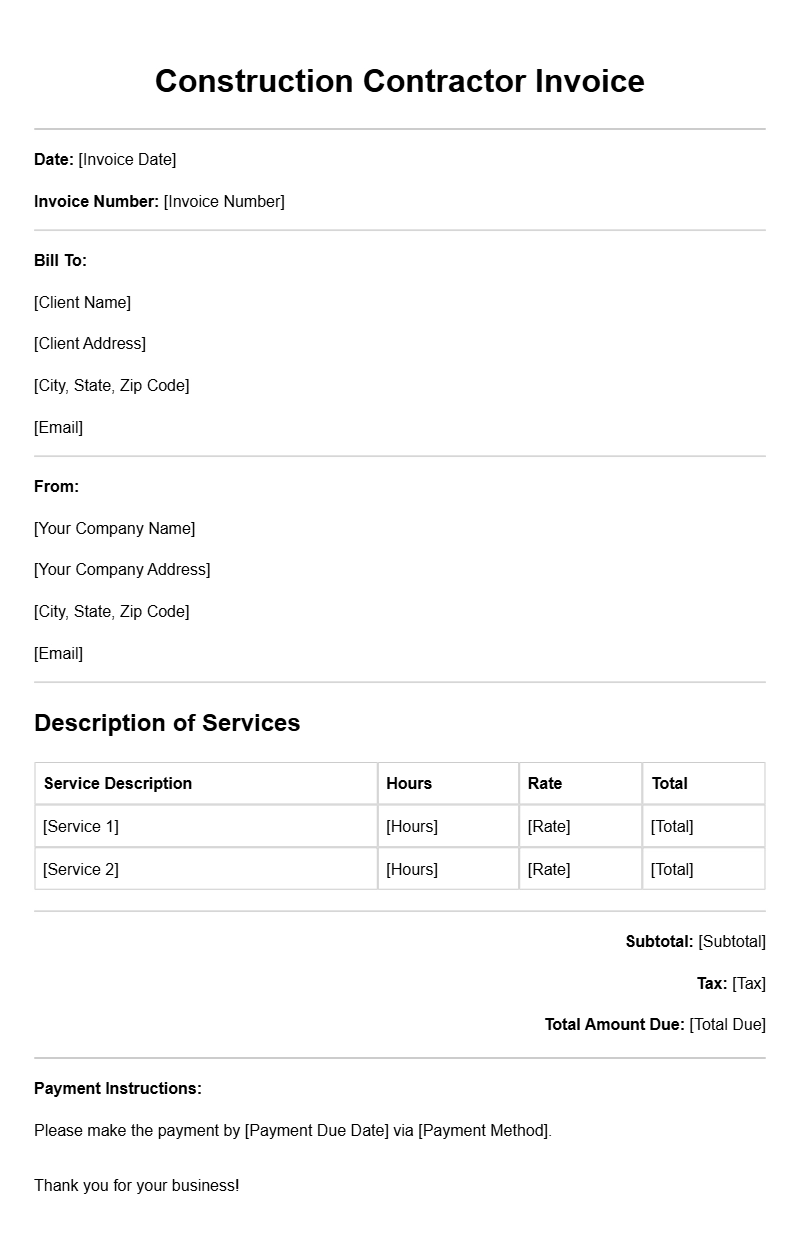
When you’re a construction contractor, managing finances can feel like a juggling act. One essential element that can help keep things organized is a well-crafted invoice. If you’re looking for construction contractor invoice templates, you’re in the right place. These templates not only save time but also ensure you capture all necessary details, making it easier for clients to process your payments.
WHAT IS A CONSTRUCTION CONTRACTOR INVOICE TEMPLATE?
A construction contractor invoice template is a pre-designed document that outlines the services rendered, costs, and payment terms associated with a construction project. It serves as a formal request for payment from clients after work has been completed. Using a template can streamline your billing process, allowing you to focus more on your projects rather than the paperwork.
WHEN IS IT USED?
Contractor invoices are typically used at the end of a project or at predetermined milestones, especially in larger projects. For example, if you’re renovating a kitchen, you might send an invoice after the demolition phase, after installation, and once the project is fully completed. This keeps your cash flow steady and your clients informed.
KEY COMPONENTS OF AN INVOICE
A good construction contractor invoice should include the following key sections:
- Header: Your business name, logo, and contact information.
- Client Information: Name, address, and contact details of the client.
- Invoice Number: A unique identifier for tracking purposes.
- Date of Issue: The date the invoice is created.
- Payment Due Date: When payment is expected.
- Itemized List of Services: Detailed descriptions of the work completed, including costs for each service.
- Total Amount Due: The total cost that the client needs to pay.
- Payment Instructions: How and where to send payment.
STEP-BY-STEP WRITING GUIDE
Creating your invoice can be straightforward if you follow these steps:
- Choose a Template: Find a template that suits your style. You can create one from scratch or modify an existing one.
- Add Your Branding: Insert your business name and logo at the top to make it professional.
- Fill in Client Details: Add the client’s name and contact information accurately.
- List Services: Clearly describe each service, along with the corresponding charges.
- Calculate Total: Sum up all costs and add any taxes if applicable.
- Specify Payment Terms: Include due dates and payment methods.
REALISTIC EXAMPLES/TEMPLATES
Here’s a simple structure you might follow:
[Your Business Name]
[Your Logo]
[Your Contact Information]
[Client Name]
[Client Address]
Invoice Number: [#]
Date: [Issue Date]
Due Date: [Payment Due Date]
Description | Quantity | Unit Price | Total
————————————————
Service 1 | 1 | $XXX | $XXX
Service 2 | 2 | $XXX | $XXX
————————————————
Total Due: $XXX
Payment Instructions: [Bank details or payment method]
COMMON MISTAKES TO AVOID
When drafting your invoice, keep an eye out for these common pitfalls:
- Not itemizing services clearly, which can confuse clients.
- Forgetting to include your payment terms, leading to delayed payments.
- Making spelling or calculation errors that can undermine professionalism.
TIPS FOR CUSTOMIZATION
Every business has its own brand, so customize your invoice to reflect yours:
- Adjust colors and fonts to match your branding.
- Add a personal note or thank-you message to strengthen client relationships.
- Consider including a due date reminder feature for repeat clients.
Creating effective construction contractor invoice templates can significantly streamline your billing process. Remember that clarity and professionalism go a long way in ensuring timely payments. For more specific examples, check out insurance agent invoice templates or delivery service invoice samples. These resources can provide additional insights into crafting the right document for your needs.
Document Structure & Example Models