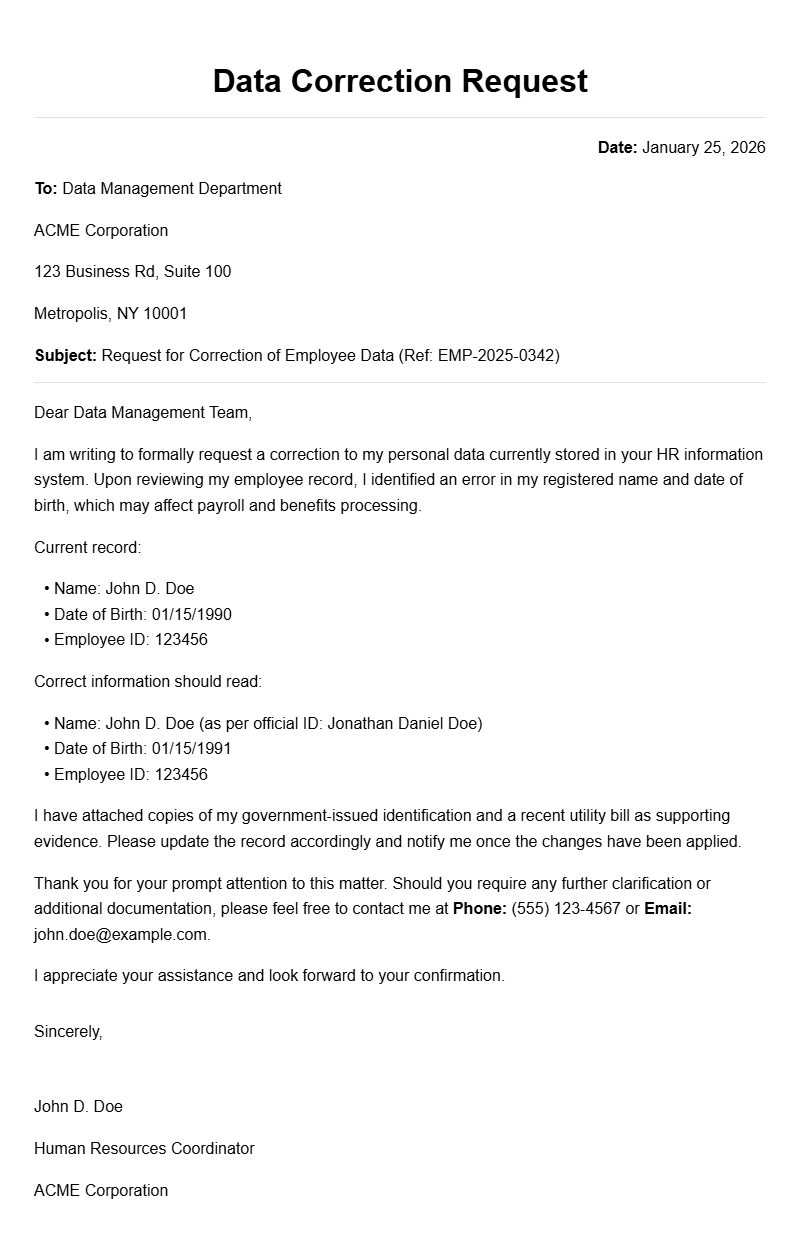
It can be frustrating to find a typo or outdated detail in a record that a company or government agency keeps about you. Whether it’s a wrong address on a credit report, an incorrect date of birth in a medical file, or an outdated job title in an employment database, you have the right to ask for a correction. A data correction request letter is a short, formal note that tells the data controller exactly what needs to be fixed and provides proof to back up your request. The guide below walks you through the purpose of the letter, when to use it, the essential parts you should include, and ready‑to‑copy templates you can adapt today.
What Is a Data Correction Request Letter?
A data correction request letter is a written request you send to an organization that holds personal information about you, asking them to update or correct inaccurate details. It’s commonly used under privacy laws such as GDPR, the California Consumer Privacy Act, or other data‑protection regulations that give individuals the right to request corrections. The letter should be clear, polite, and include supporting evidence so the recipient can process the request without delays.
When You Might Need to Send One
You’ll want to use this type of letter whenever you spot an error in a record that affects your rights, finances, or health. Typical situations include:
- Errors on a credit report that could impact loan approvals.
- Incorrect personal details in a medical record that could affect treatment.
- Outdated contact information in an employee database after a job change.
- Mistakes in a government file that could influence benefits or legal status.
If you also handle other HR or internal communications, you might find our employee appreciation letter templates useful for drafting complementary notes to staff.
Key Elements That Should Appear in the Letter
Most effective data correction request letters share a simple structure. Including these sections helps the recipient understand exactly what you’re asking for:
- Your contact information – full name, address, phone number, and email.
- Date – the day you’re sending the request.
- Recipient’s details – name, title, company or agency, and address.
- Subject line – a concise statement such as “Request for Correction of Personal Data.”
- Clear statement of the request – a sentence that says you are asking for a correction.
- Description of the error – specify what information is wrong and, if possible, quote the inaccurate entry.
- Proposed correction – state what the correct information should be.
- Supporting documents – list any proof you’re attaching (e.g., copy of ID, bank statement, medical record).
- Deadline for response – a reasonable time frame (often 15‑30 days) as allowed by law.
- Signature – handwritten or electronic, plus printed name.
Step‑by‑Step Guide to Writing Your Letter
Follow these steps to produce a professional request that gets noticed:
<
Sample Documents for Multiple Use Cases