When you need to ask for money, products, or time, a well‑crafted donation request letter can be the difference between a warm “yes” and a polite “no.” Whether you’re a small community group, a school club, or a nonprofit looking to rally support, the way you present your ask shapes how donors feel about contributing.
What a Donation Request Letter Actually Does
A donation request letter isn’t just a formal note asking for money. It tells a story, explains why the cause matters, and gives the reader a clear, simple way to help. Think of it as a bridge between your mission and the donor’s desire to make a positive impact.
When to Use This Type of Letter
You’ll typically send a donation request when you’re launching a new project, responding to an urgent need, or building a recurring fundraising campaign. For example, a school might ask local businesses to sponsor a science fair, while a food bank might request canned goods for a holiday drive. The letter works for both monetary gifts and in‑kind donations.
If you also handle personnel communications, you might appreciate our probation extension letter templates for a different type of formal request.
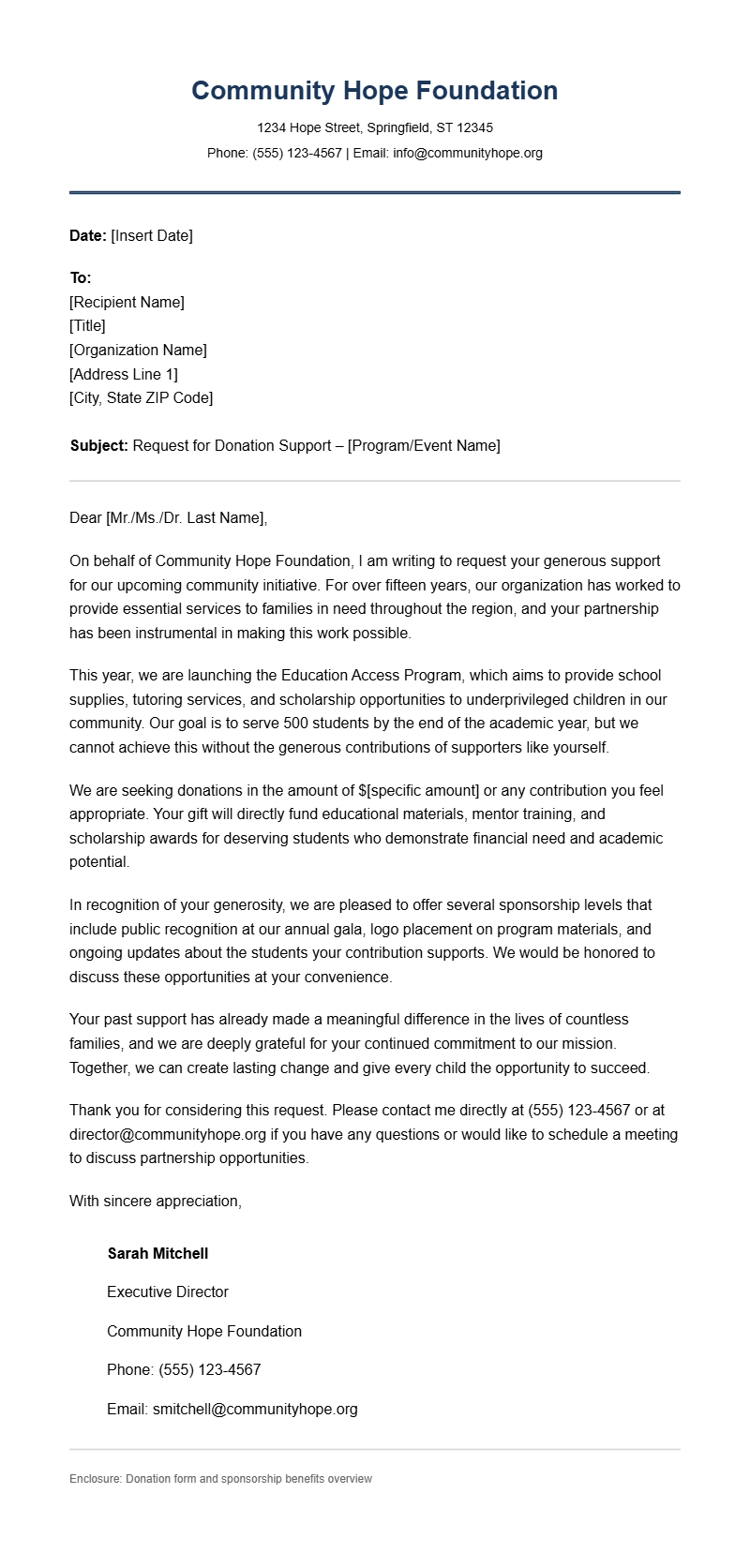
Key Sections Every Donation Request Letter Needs
- Organization header – logo or name and contact info.
- Date and recipient address – personalize when possible.
- Subject line (if using email) – clear, concise, and action‑oriented.
- Greeting – use the donor’s name to set a friendly tone.
- Opening paragraph – state who you are and why you’re writing.
- Explanation of the cause – keep it brief, focusing on the impact.
- Specific ask – amount, item, or service you need.
- Call‑to‑action – how to donate (online link, phone number, mailing address).
- Closing and thank‑you – express gratitude and offer a next step.
- Signature – name, title, and a personal touch.
How to Write a Donation Request Letter in 6 Steps
- Identify the purpose. Are you raising funds for equipment, a program, or emergency relief? Knowing the exact goal shapes every sentence.
- Know your audience. A local bakery will respond to a different tone than a corporate sponsor. Research their past giving history if you can.
- Draft the hook. Start with a relatable scenario or a short story that shows why the need is urgent.
- Explain the impact. Use concrete details: “Your $50 donation will buy a backpack filled with school supplies for a child in need.” Numbers and stories stick.
- Make the ask clear. State exactly what you need, how much it costs, and the deadline if there is one.
- Proofread and personalize. Double‑check names, titles, and any donor‑specific details. A quick read‑aloud can catch awkward phrasing.
If you also need to communicate disciplinary actions to volunteers, our disciplinary warning letter templates offer a straightforward outline for clear, respectful messaging.
Ready‑to‑Use Template Snippet
The structure below works for most requests. Copy it into your word processor and replace the placeholders (shown in brackets) with your specifics.
Subject: Help Us Build a New Playground – Your Donation Makes It Possible
Dear Ms. Rivera,
I’m writing from the Maplewood Elementary Parent‑Teacher Association (PTA). Our school is planning to replace the old playground equipment so children can play safely after class. We need $5,000 to purchase new swings, slides, and rubber surfacing.
A gift of any size will directly improve the lives of over 300 students. For instance, a $100 donation covers the cost of a new climbing wall, while $1,000 funds the entire safety surface for the toddler zone. You can give online at www.maplewoodelementary.org/donate or mail a check to the address below.
Please let us know if you’d like a tour of the site or a personal thank‑you video from the kids. Thank you for considering this opportunity to make a lasting difference in our community.
Warm regards,
Maria Lopez
PTA President
(555) 123‑4567
maria@maplewoodelementary.org
You can adapt this layout for in‑kind donations, too. Just replace the monetary amounts with the specific items you need, such as “20 laptops” or “200 cans of soup.”
Common Mistakes That Undermine Your Ask
- Generic greeting – “Dear Sir/Madam” feels impersonal. Whenever possible, use the recipient’s name.
- Vague purpose – If donors can’t picture exactly what their contribution does, they may hesitate.
- Missing call‑to‑action – Not telling people how to donate is the fastest way to lose a potential gift.
- Over‑explaining – Keep the letter to one page. Long paragraphs can cause readers to skim.
- Skipping the thank‑you – Even in a request, a genuine “thank you for your time” leaves a positive impression.
Ways to Tailor Your Letter for Different Audiences
If you’re reaching out to a local business, mention how their support can be featured on your website or at an event. For individual donors, share a short story about a person who benefits from the cause. A quick personalization shows you see them as a partner, not just a wallet.
For community groups that also handle security matters, our security notice letter templates can help you communicate updates clearly.
Quick Checklist Before You Hit Send
- Recipient name is spelled correctly.
- Organization name and logo appear at the top.
- Purpose and impact are stated in one or two sentences.
- The ask is specific (dollar amount, item, or service).
- Donation instructions (link, phone, address) are clear.
- Closing includes a sincere thank‑you and signature.
- No spelling or grammar errors.
Before you finalize, you might also review other sample letters for context. Our student club invitation letter templates show how to craft friendly, engaging messages for similar community outreach.
If you’re looking for inspiration on how donors and supporters communicate back, our