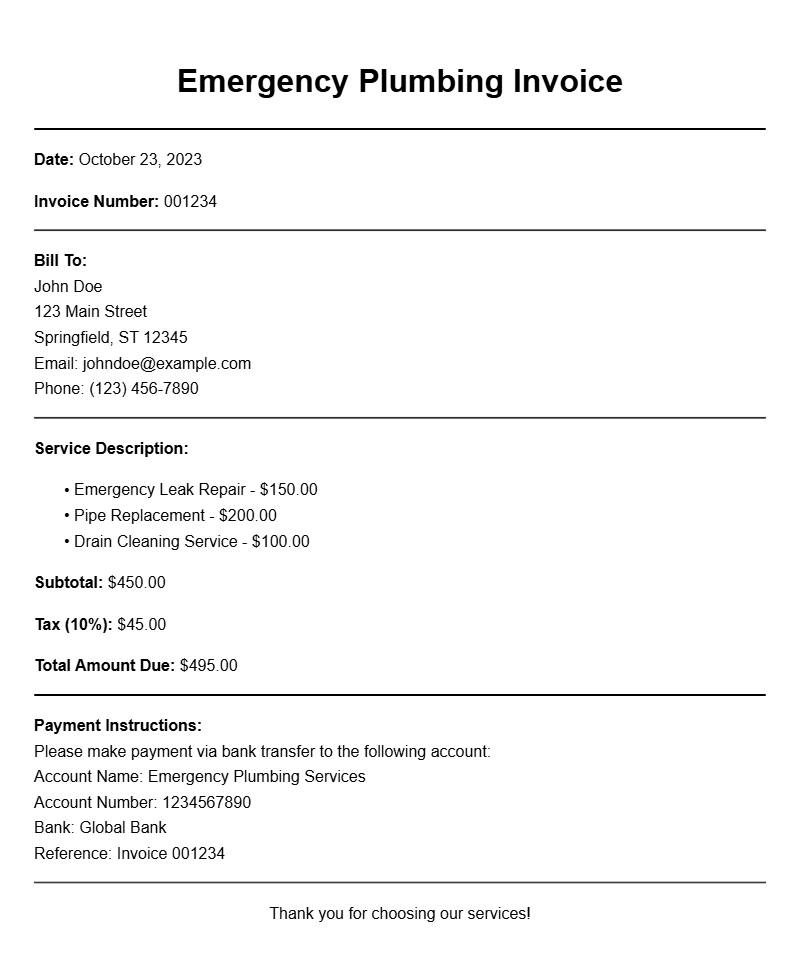
When a plumbing emergency strikes, the last thing you want to worry about is paperwork. However, an emergency plumbing invoice is essential for keeping track of services rendered and ensuring you get paid. This article will guide you through understanding what an emergency plumbing invoice is, when to use it, its key components, and how to create one that meets your needs.
What is an Emergency Plumbing Invoice?
An emergency plumbing invoice is a document that outlines the services provided by a plumber during an urgent situation. Unlike regular invoices, these documents often require immediate payment due to the nature of emergency services. They help both the plumber and the client keep a record of the work completed, materials used, and costs incurred.
When is it Used?
You typically need an emergency plumbing invoice in situations where urgent repairs are necessary, such as:
- A burst pipe causing flooding
- Severe leaks that could lead to property damage
- Blocked drains that require immediate attention
- Water heater failures that impact daily living
In these cases, having a clear invoice helps streamline billing and provides transparency for the customer.
Key Components of an Emergency Plumbing Invoice
To be effective, an emergency plumbing invoice should include:
- Contact Information: Your business name, address, phone number, and email.
- Client Details: The customer’s name, address, and contact info.
- Invoice Number: A unique identifier for tracking purposes.
- Date of Service: When the plumbing service was performed.
- Description of Services: A detailed list of the work completed.
- Materials Used: Any parts or supplies that were necessary.
- Costs: Separate line items for labor, materials, and any taxes.
- Total Amount Due: The overall cost to be paid.
Step-by-Step Writing Guide
Creating your emergency plumbing invoice can be straightforward. Follow these steps:
- Choose a Template: Start with a basic invoice template or create one from scratch.
- Fill in Your Information: Add your business and client details at the top.
- Add Invoice Number and Date: Make sure to keep track of invoices with unique numbers.
- Detail the Services: Clearly describe what you did, including any issues addressed.
- List Materials: Include every part or supply used with corresponding costs.
- Calculate the Total: Sum up the costs and provide the total amount due.
- Review: Double-check all information for accuracy.
- Send It Out: Provide the invoice to your client as soon as possible.
Realistic Examples/Templates
Here’s a simple template you can adapt:
Invoice Number: 00123
Date: [Insert Date]
From:
[Your Business Name]
[Your Address]
[Your Phone Number]
To:
[Client’s Name]
[Client’s Address]
Description of Services:
– Emergency leak repair
– Replacement of damaged pipe
Materials Used:
– Pipe: $50
– Fittings: $20
Labor:
– 2 hours at $75/hour: $150
Total Amount Due: $220
Common Mistakes to Avoid
When creating your emergency plumbing invoice, steer clear of these pitfalls:
- Leaving out essential contact information.
- Not itemizing costs, which can lead to confusion.
- Failing to include a unique invoice number.
- Not sending the invoice promptly after service.
Tips for Customization
While templates are helpful, you can personalize your invoice to fit your business style:
- Add your logo for branding.
- Use colors that match your business theme.
- Include payment terms for clarity.
- Consider adding a thank-you note for customer appreciation.
Crafting an emergency plumbing invoice doesn’t have to be daunting. With the right template and attention to detail, you can create invoices that help streamline your business operations and keep your customers informed. Remember, an accurate invoice is not just a bill; it’s a record of the service you’ve provided and a way to build trust with your clients.
Standard Format & Layout Reference