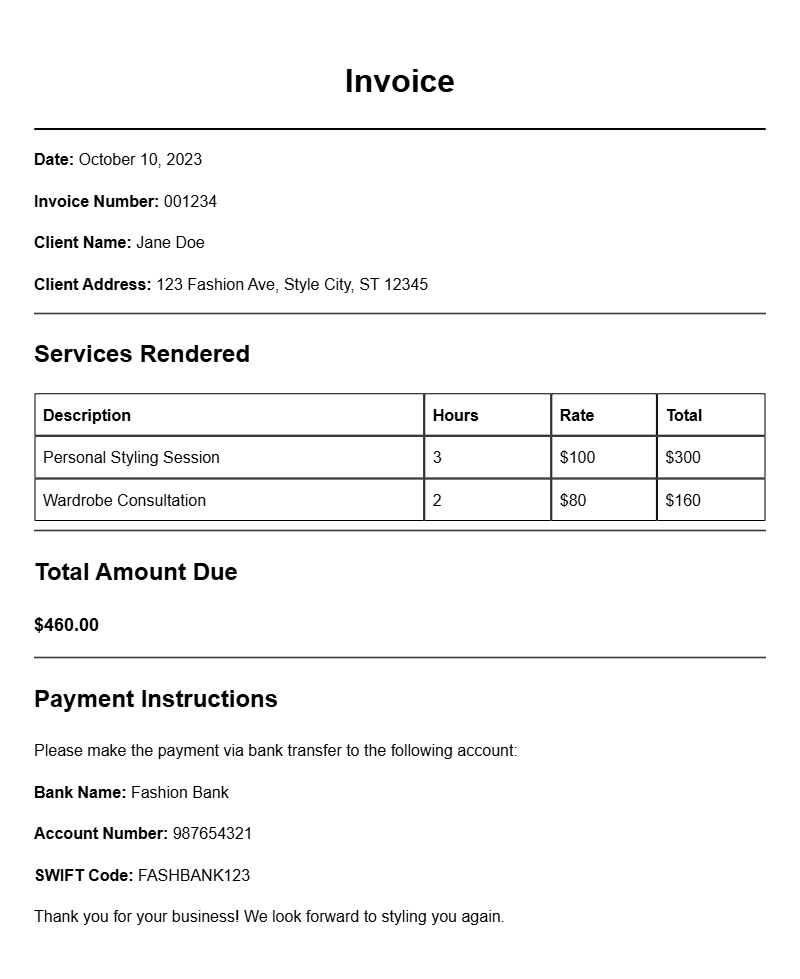
As a fashion stylist, keeping your business organized is key to maintaining professionalism and ensuring smooth transactions with clients. One essential tool in your toolkit is the fashion stylist invoice. This document not only helps you get paid for your services but also serves as a record of what was provided. If you’re looking for fashion stylist invoice samples, you’re in the right place. Here’s a guide to understanding, creating, and customizing effective invoices for your styling work.
WHAT IS A FASHION STYLIST INVOICE?
A fashion stylist invoice is a detailed document that outlines the services provided to a client, along with the corresponding fees. It typically includes information such as your business name, contact information, the client’s details, service descriptions, and payment terms. This invoice acts as a formal request for payment and ensures both you and your client have a clear understanding of the transaction.
WHEN IS IT USED?
This document is used after you’ve completed a styling project, whether it’s a personal shopping experience, wardrobe consultation, or fashion show styling. It’s important to send an invoice promptly after the services are rendered to maintain cash flow and keep the project fresh in both your and your client’s minds.
KEY COMPONENTS OF A FASHION STYLIST INVOICE
- Your business name and logo: Make your invoice professional by including your branding.
- Client’s information: Include the client’s name and contact details.
- Invoice number: A unique number to track the invoice easily.
- Date of issue: The date when the invoice is created.
- Description of services: Clear descriptions of the services provided.
- Costs: Itemized list of fees for each service.
- Total amount due: Clearly state the total cost.
- Payment terms: Include due dates and accepted payment methods.
STEP-BY-STEP WRITING GUIDE
- Start with your business details: At the top of the invoice, include your name, address, phone number, and email, along with your logo.
- Add client information: Below your details, write the client’s name and contact information.
- Include the invoice number and date: Make sure it’s easy to reference.
- List the services you provided: Be specific. For example, instead of simply stating “Styling,” you might say “Personal Shopping Session on October 5, 2023.”
- Break down the costs: If you charged $200 for the shopping session, list it clearly. Total up all fees at the bottom.
- Specify payment terms: State when the payment is due and how it can be made.
REALISTIC EXAMPLES/TEMPLATES
Here’s a simple invoice template you can start with:
[Your Business Name]
[Your Address]
[Your Phone Number]
[Your Email]
[Logo]
Invoice Number: [#001]
Date: [MM/DD/YYYY]
Bill To:
[Client’s Name]
[Client’s Address]
[Client’s Email]
Description of Services Amount
————————————————-
Personal Shopping Session $200.00
Wardrobe Consultation $150.00
————————————————-
Total Amount Due $350.00
Payment Terms: Due by [MM/DD/YYYY]. Accepted methods: [Credit Card, PayPal, etc.].
COMMON MISTAKES TO AVOID
- Omitting details: Always include all relevant information. Missing details can lead to confusion.
- Not numbering invoices: This makes tracking payments difficult.
- Forgetting terms: Clearly state payment terms to avoid misunderstandings.
TIPS FOR CUSTOMIZATION
Make your invoice unique to your brand. Here are a few ideas:
- Use colors and fonts that match your branding.
- Add a personal note thanking your client for their business.
- Incorporate a watermark of your logo for a professional touch.
Creating a well-structured fashion stylist invoice is essential for managing your business effectively. With the right components and a clear layout, you’ll not only make it easy for clients to pay you but also establish professionalism in your styling services. If you’re looking for more templates, consider checking out other resources like removal service invoices, online course invoices, or nail appointment invoices.
Practical Document Examples