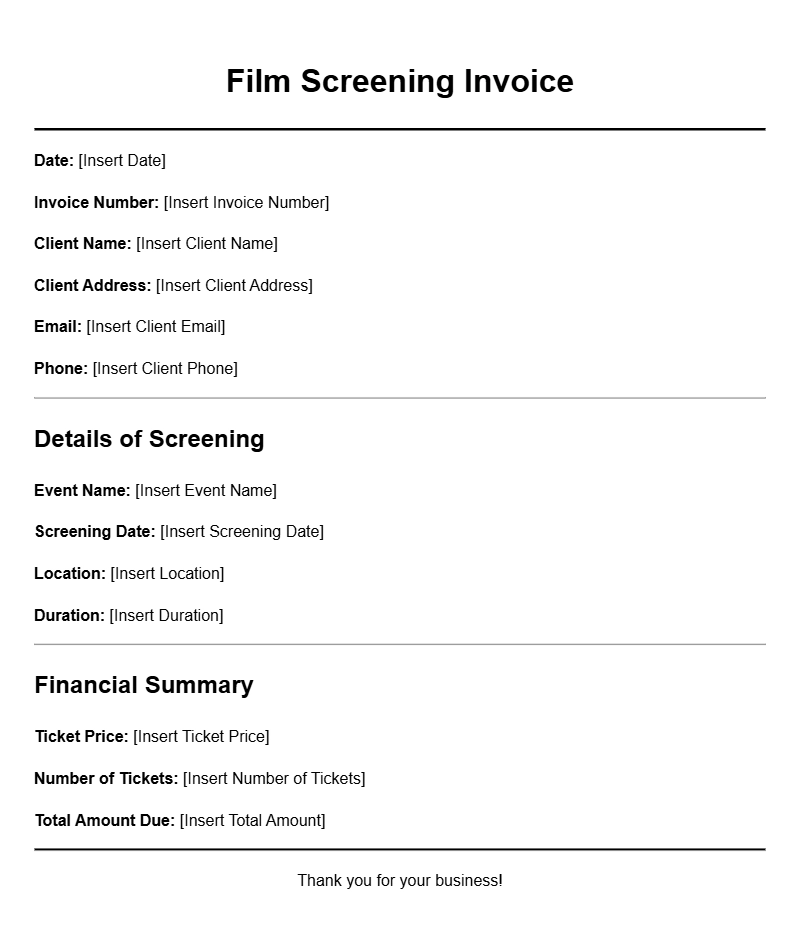
When you’re organizing a film screening, whether it’s for a festival, a private event, or a community gathering, keeping track of expenses and payments is essential. This is where film screening invoice templates come into play. They help you manage finances efficiently and ensure all parties involved are on the same page regarding costs and services.
WHAT IS A FILM SCREENING INVOICE TEMPLATE?
A film screening invoice template is a preformatted document used to outline the costs associated with hosting a film screening. It typically includes details like the venue, licensing fees, equipment rentals, and any additional services like catering or marketing. By using a template, you save time and ensure that all necessary information is included in a clear and professional manner.
WHEN IS IT USED?
This type of invoice is primarily used when you need to bill clients or sponsors for various services related to a film screening. For instance, if you’re charging a venue for a screening event, or if you need to bill your production team for expenses incurred during the process. You might also use it for tracking payments when collaborating with other filmmakers or event organizers.
KEY COMPONENTS OF A FILM SCREENING INVOICE
A well-structured film screening invoice should include the following key components:
- Header: Your business name, logo, and contact information.
- Invoice Number: A unique identifier for tracking purposes.
- Date of Issue: When the invoice is generated.
- Client Information: Details about the client or organization being billed.
- Description of Services: A breakdown of what you’re charging for (e.g., film license, venue rental).
- Payment Terms: Specify when the payment is due and acceptable payment methods.
- Total Amount Due: Clearly state the total cost to avoid any confusion.
STEP-BY-STEP WRITING GUIDE
Creating your own film screening invoice can be straightforward. Here’s how you can do it:
- Choose a Template: Start with a basic template that fits your needs. You can find many free options online.
- Add Your Information: Fill in your business details at the top.
- Include Client Details: Write the client’s name and contact information.
- List Services: Provide a detailed list of services and their costs. Be specific about each item.
- Set Payment Terms: Indicate when payment is due and how it can be made.
- Review and Send: Double-check for any errors before sending the invoice to your client.
REALISTIC EXAMPLES AND TEMPLATES
Here’s a simple example of what a film screening invoice might look like:
[Your Business Name]
[Your Logo]
[Your Address]
[Your Email]
[Your Phone Number]
Invoice #001
Date: [Insert Date]
Bill To:
[Client’s Name]
[Client’s Address]
[Client’s Email]
[Client’s Phone Number]
Description of Services
————————————————–
1. Film License Fee $500.00
2. Venue Rental $300.00
3. Equipment Rental $200.00
————————————————–
Total Amount Due $1000.00
Payment Due By: [Insert Due Date]
COMMON MISTAKES TO AVOID
When creating your invoice, watch out for these common pitfalls:
- Missing Information: Ensure all necessary details are included to prevent delays in payment.
- Unclear Descriptions: Be specific in your descriptions to avoid confusion about what each charge is for.
- Typos: Proofread your document to maintain professionalism and accuracy.
TIPS FOR CUSTOMIZATION
Make your invoice stand out by customizing it to fit your brand. Here are some tips:
- Use your brand colors and fonts to make the invoice visually appealing.
- Add a personal touch by including a thank-you note or a brief message.
- Consider including links to your website or social media for additional engagement.
By using a film screening invoice template effectively, you can streamline your billing process and ensure that all parties involved are clear about the financial aspects of your event. For more ways to manage your invoices, check out resources on exterior painting invoices, advertising invoices, networking event invoices, corporate photoshoot invoices, and rug cleaning invoices.
Sample Documents for Multiple Use Cases