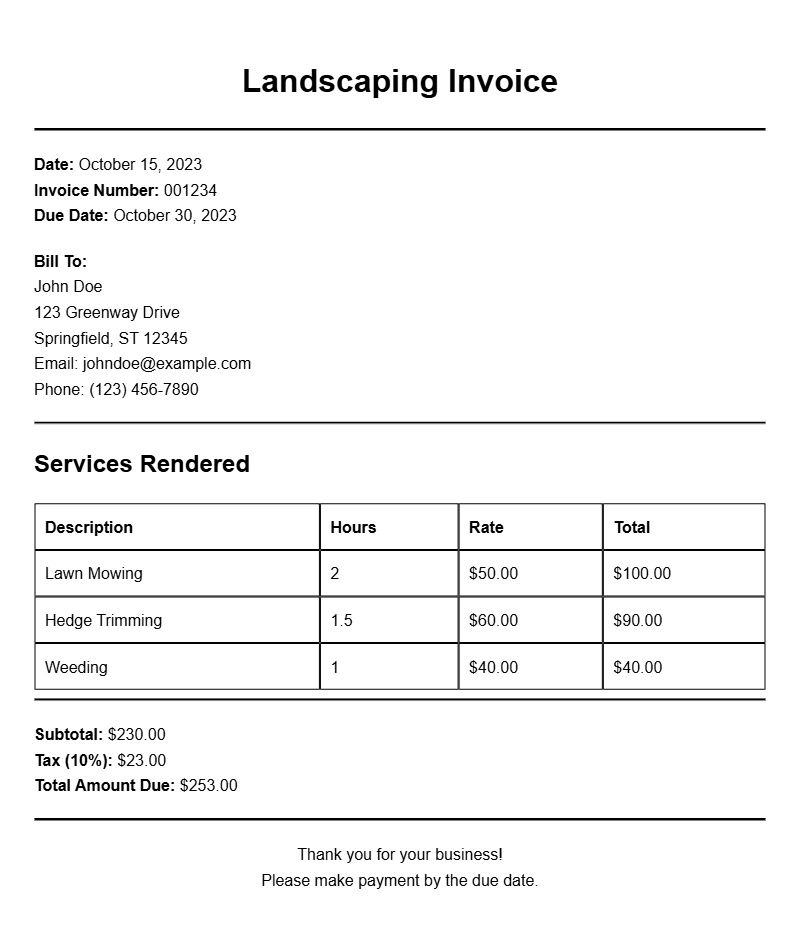
Creating a professional invoice is essential for landscapers to ensure prompt payment and maintain good client relationships. Whether you’re just starting out or have been in the business for years, having a solid invoice template can save you time and reduce errors. This article will guide you through the world of landscaper invoice samples, helping you craft a document that meets your needs and those of your clients.
What is a Landscaper Invoice?
A landscaper invoice is a document that itemizes the services you’ve provided to a client, detailing the work done, materials used, and the total amount owed. This document is not just a bill; it serves as a record of the services rendered and can help prevent disputes down the line.
When to Use a Landscaper Invoice
You should issue an invoice after completing a job, or at predetermined milestones for larger projects. It’s also common practice to provide an invoice for recurring services, such as regular lawn care or seasonal maintenance. Sending an invoice promptly helps ensure that you get paid on time and keeps your financial records organized.
Key Components of a Landscaper Invoice
- Contact Information: Include your business name, address, phone number, and email. Don’t forget your client’s details as well.
- Invoice Number: Assign a unique number to each invoice for tracking purposes.
- Date of Issue: The date you are sending the invoice.
- Description of Services: A clear breakdown of the work performed, including materials used and labor hours.
- Payment Terms: State the expected payment date and acceptable payment methods.
- Total Amount Due: Clearly state the total sum owed, including any taxes or additional fees.
Step-by-Step Guide to Writing a Landscaper Invoice
- Choose a Template: Start with a simple template. You can find many land clearing invoice templates online to use as a base.
- Fill in Your Information: Add your business name, address, and contact details at the top.
- Add the Client’s Details: Include the client’s name and address to personalize the invoice.
- Assign an Invoice Number: This helps both you and your client keep track of payments.
- List Services Provided: Clearly describe each service, including quantities and rates, to avoid confusion.
- Calculate the Total: Ensure all calculations are accurate, including taxes and discounts if applicable.
- Specify Payment Terms: Mention when payment is due and how it should be made.
Realistic Invoice Example
Here’s a simple example of what your invoice might look like:
[Your Business Name]
[Your Address]
[Your Phone Number]
[Your Email]
Invoice Number: 001
Date: [Date]
Bill To:
[Client’s Name]
[Client’s Address]
Description of Services:
– Lawn Mowing (5 hours @ $50/hour): $250
– Mulching (3 bags @ $15/bag): $45
Subtotal: $295
Tax (8%): $23.60
Total Amount Due: $318.60
Payment Due By: [Due Date]
Common Mistakes to Avoid
- Not including all necessary details can lead to payment delays.
- Forgetting to proofread for errors in calculations or client details.
- Using vague descriptions that don’t clearly convey what services were provided.
Tips for Customization
Feel free to adjust your invoice template based on your brand. Use your logo, select colors that match your business, and tweak the layout to align with your style. Adding personal touches can enhance professionalism and make your invoices more recognizable.
Whether you’re a new business or a seasoned landscaper, having a reliable invoice template can make your billing process smoother. Take the time to customize your invoices and keep them organized. This not only helps you get paid faster but also builds trust with your clients.
Common Document Templates & Previews