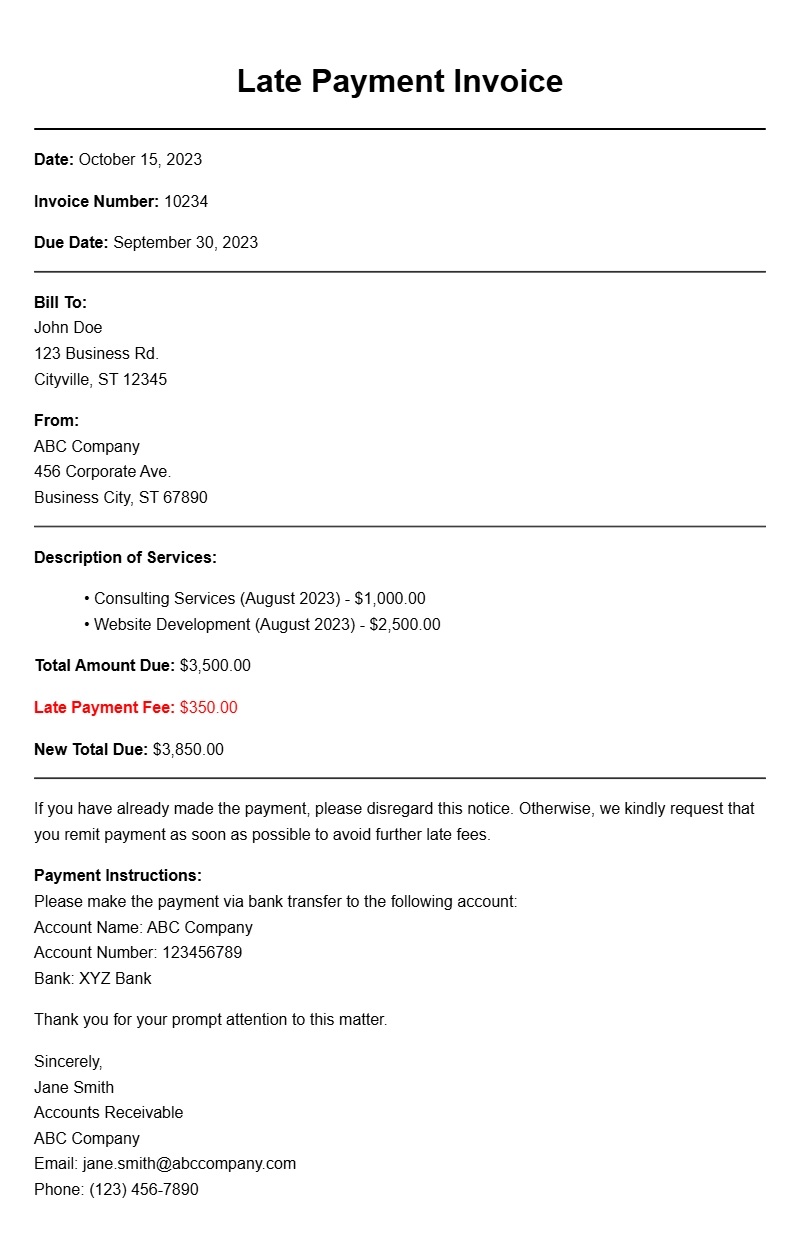
Managing cash flow can be tricky, especially when clients miss payment deadlines. Late payment invoices are essential tools to remind clients of their obligations. If you’re looking for practical late payment invoice samples, you’re in the right place. This guide will help you understand what these invoices are, when to use them, and how to craft your own.
What is a Late Payment Invoice?
A late payment invoice is a document sent to clients who have not paid on time. It serves as a reminder of the outstanding balance and typically includes additional details such as late fees or interest charges, if applicable. This type of invoice helps maintain professionalism while encouraging timely payment.
When to Use a Late Payment Invoice
You should consider sending a late payment invoice if:
- A client has missed the payment deadline outlined in your original invoice.
- You have not received any communication from the client regarding the delay.
- A follow-up reminder has been ignored.
Key Components of a Late Payment Invoice
When crafting your late payment invoice, make sure to include:
- Your business information: Name, address, phone number, and email.
- Client information: Name, address, and any relevant account numbers.
- Invoice number: A unique identifier for tracking purposes.
- Original invoice details: Reference the original invoice, including the due date and amount due.
- Late fees: Specify any additional charges for overdue payments.
- Payment options: Explain how the client can settle their balance.
- Contact information: Encourage the client to reach out if they have questions.
Step-by-Step Guide to Writing a Late Payment Invoice
- Start with your business information at the top.
- Include the client’s details below yours.
- Reference the original invoice details, including the due date.
- Clearly state the overdue amount and any late fees.
- Provide a payment deadline to instill urgency.
- Encourage communication by inviting questions or concerns.
Realistic Examples of Late Payment Invoices
Here’s a simple template you can customize:
Your Company Name
Your Address
City, State, Zip
Email: your@email.com
Phone: (123) 456-7890
Date: [Insert Date]
Bill To:
Client Name
Client Address
City, State, Zip
Invoice Number: [Insert Invoice Number]
Original Due Date: [Insert Original Due Date]
Dear [Client Name],
This is a friendly reminder that your payment of [Insert Amount] for invoice #[Insert Original Invoice Number] was due on [Insert Original Due Date]. As of today, we have not received this payment.
Please note that a late fee of [Insert Late Fee, if applicable] has been applied. The total amount due is now [Insert Total Due].
We kindly request that you make the payment by [Insert New Deadline]. You can pay via [Insert Payment Options].
If you have any questions or need assistance, feel free to reach out.
Thank you for your attention to this matter.
Best regards,
Your Name
Your Position
Common Mistakes to Avoid
- Failing to include clear deadlines for payment can lead to further delays.
- Using vague language may confuse your client about what is owed.
- Not following up after sending the invoice can allow the issue to linger.
Tips for Customization
Make your late payment invoices more effective by:
- Using a friendly yet firm tone—this helps maintain your relationship with the client.
- Including personalized notes to show you value their business.
- Offering flexible payment plans if appropriate, to encourage resolution.
By using late payment invoices effectively, you can encourage timely payments while preserving client relationships. Customize the provided template to fit your needs and keep your cash flow healthy.
Template Variations & Sample Formats