Writing a letter from a mentor to a student can be a thoughtful way to share guidance, encouragement, and wisdom. Whether you’re a teacher, a coach, or a professional in your field, these letters can help students feel supported and motivated. This article will provide you with practical mentor to student letter templates, explain when to use them, and offer tips to make your letters meaningful and personalized.
What is a Mentor to Student Letter?
A mentor to student letter is a written communication where a mentor shares insights, advice, and encouragement with a student. This type of letter can serve various purposes, such as providing support during challenging times, celebrating achievements, or offering guidance on future opportunities.
When is it Used?
These letters are often used in academic settings, during internships, or in any situation where a mentor-student relationship is established. You might write one when:
- A student is facing a tough decision or challenge.
- A student has achieved a significant milestone and deserves recognition.
- You want to encourage a student to pursue further education or career opportunities.
Key Components of a Mentor to Student Letter
To make your letter effective, consider including the following sections:
- Greeting: Start with a warm greeting that addresses the student by name.
- Personal Connection: Mention your relationship and any relevant experiences you’ve shared.
- Core Message: Share your insights, advice, or encouragement.
- Closing Thoughts: End with an encouraging note and a call for future connection.
Step-by-Step Writing Guide
Follow these steps to craft a thoughtful mentor to student letter:
- Identify the Purpose: Know why you’re writing the letter. Is it to inspire, congratulate, or guide?
- Reflect on Your Experiences: Think about your relationship with the student and any relevant experiences that can enrich your message.
- Draft the Letter: Use the components outlined above to structure your letter.
- Edit for Clarity: Review your letter for clarity and tone. Make sure it sounds authentic and personal.
- Deliver with Care: Choose how you’ll send the letter, whether by email or handwritten for a personal touch.
Realistic Examples/Templates
Here are a couple of templates you can adapt:
Example 1: General Encouragement
Dear [Student’s Name],
I hope this message finds you well! Reflecting on our time together in [specific class or project], I want to take a moment to commend your hard work and dedication.
Remember, challenges are just stepping stones toward your growth. I believe in your potential to achieve great things, and I encourage you to keep pushing forward, even when things get tough.
Feel free to reach out if you need someone to bounce ideas off or if you just want to chat.
Warm regards,
[Your Name]
Example 2: Milestone Celebration
Dear [Student’s Name],
Congratulations on your recent achievement in [specific achievement]! It’s truly inspiring to see how far you have come.
This milestone is just the beginning. Keep striving for excellence and never hesitate to seek support when needed. I’m excited to see what you will accomplish next!
Best wishes,
[Your Name]
Common Mistakes to Avoid
When writing your letter, be mindful of these common pitfalls:
- Being Generic: Avoid clichés and make your message personal to the student.
- Neglecting Tone: Ensure that your tone matches the relationship you have with the student.
- Skipping the Edit: Always review your letter to catch any errors or unclear phrases.
Tips for Customization
To make your letter resonate more:
- Use specific examples from your experiences with the student.
- Consider the student’s personality and preferences when choosing your tone.
- Personalize the closing with an offer to meet or talk further.
Writing a mentor to student letter can be a rewarding experience. By following these templates and tips, you can provide meaningful support and guidance to your students. Remember, your words can have a lasting impact, so make them count!
Document Examples & Template Samples
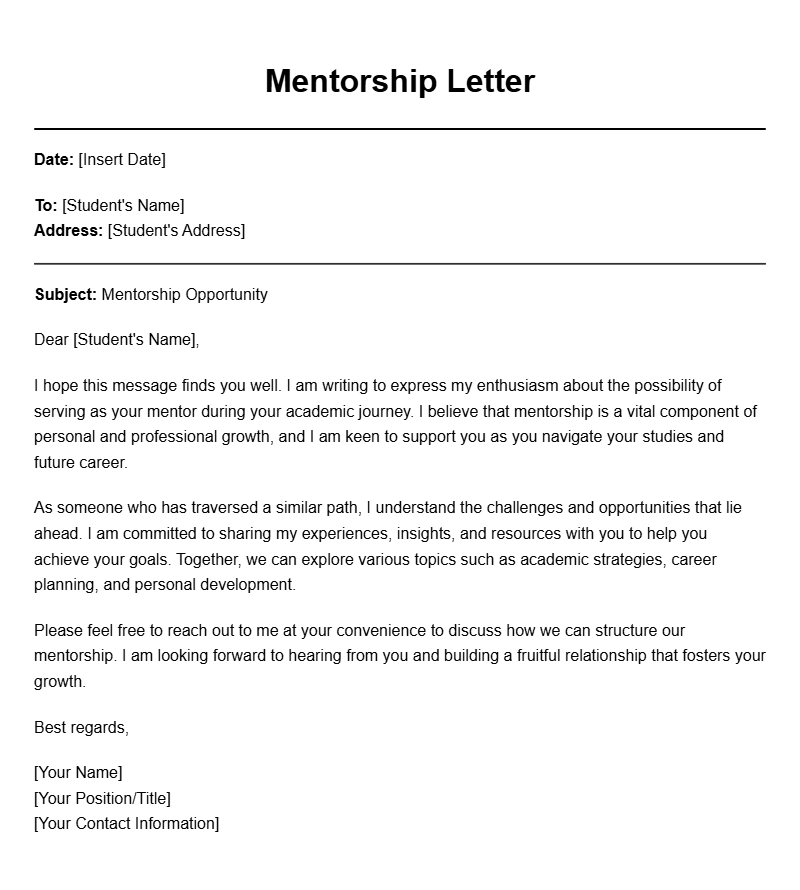
Encouragement and Guidance
Dear [Student’s Name],
I hope this letter finds you well. As your mentor, I want to take a moment to encourage you in your academic pursuits. Your dedication and hard work have not gone unnoticed, and I believe you have the potential to achieve great things.
Remember, challenges are a part of growth. Embrace them and seek help when needed. I am here to support you every step of the way.
Best regards,
[Your Name]
[Your Title]
Setting Goals Together
Dear [Student’s Name],
As we embark on this journey together, I would like to discuss your goals for the upcoming semester. Setting clear, attainable objectives will help you maintain focus and motivation.
Please consider the following points:
- Identify specific academic subjects you want to improve.
- Set a timeline for achieving your goals.
- Think about any extracurricular activities that interest you.
Let’s schedule a meeting to discuss your thoughts.
Sincerely,
[Your Name]
[Your Title]
Reflecting on Your Progress
Dear [Student’s Name],
As we reach the midpoint of the semester, it’s a great time to reflect on your progress. I encourage you to take stock of what you have achieved so far and identify areas for improvement.
Consider the following questions:
- What accomplishments are you proud of?
- What challenges have you faced?
- How can I assist you moving forward?
Looking forward to our discussion!
Warm regards,
[Your Name]
[Your Title]
Celebrating Achievements
Dear [Student’s Name],
Congratulations on completing your recent project! Your hard work and creativity truly shined through. I am proud of your effort and the skills you demonstrated.
Achievements like these are stepping stones to your future success. Keep aiming high and continue to push your boundaries.
Best wishes,
[Your Name]
[Your Title]
Providing Constructive Feedback
Dear [Student’s Name],
I wanted to take a moment to provide some feedback on your recent assignment. You showed great insight in your analysis, but there are areas where improvement can be made.
Consider the following suggestions:
- Clarify your main arguments to enhance understanding.
- Incorporate more examples to support your points.
- Proofread for grammatical accuracy.
Let’s discuss this further during our next meeting.
Best regards,
[Your Name]
[Your Title]
Encouraging Independent Learning
Dear [Student’s Name],
As your mentor, I encourage you to explore independent learning opportunities. Taking initiative in your education will enhance your skills and knowledge.
Here are some suggestions:
- Enroll in online courses that interest you.
- Join study groups or academic clubs.
- Read books or articles related to your field of study.
Let me know how I can assist you in this journey.
Sincerely,
[Your Name]
[Your Title]
Discussing Career Aspirations
Dear [Student’s Name],
I would like to discuss your career aspirations. Understanding your goals is essential for guiding your educational path effectively.
Please think about the following:
- What fields are you interested in?
- What skills do you want to develop?
- Are there specific internships or experiences you seek?
Looking forward to our conversation!
Best,
[Your Name]
[Your Title]
Offering Resources for Success
Dear [Student’s Name],
As we continue this mentorship, I want to ensure you have access to valuable resources that can aid your studies.
Here are some resources you might find helpful:
- Online databases for research articles.
- Tutoring services available on campus.
- Workshops for skill development.
If you need help accessing these, please let me know.
Warm regards,
[Your Name]
[Your Title]
Preparing for Exams
Dear [Student’s Name],
As exam season approaches, I want to share some strategies to help you prepare effectively.
Consider these tips:
- Start early and create a study schedule.
- Review past exams and practice questions.
- Form study groups for collaborative learning.
Remember, I am here for any questions or concerns you may have.
Best of luck,
[Your Name]
[Your Title]
The Importance of Networking
Dear [Student’s Name],
Networking is a crucial skill that can open doors to future opportunities. I encourage you to actively engage with peers and professionals in your field.
Here are ways to build your network:
- Attend industry events and seminars.
- Connect with alumni from your program.
- Utilize social media platforms like LinkedIn.
Let’s discuss how I can help you in this area.
Best,
[Your Name]
[Your Title]