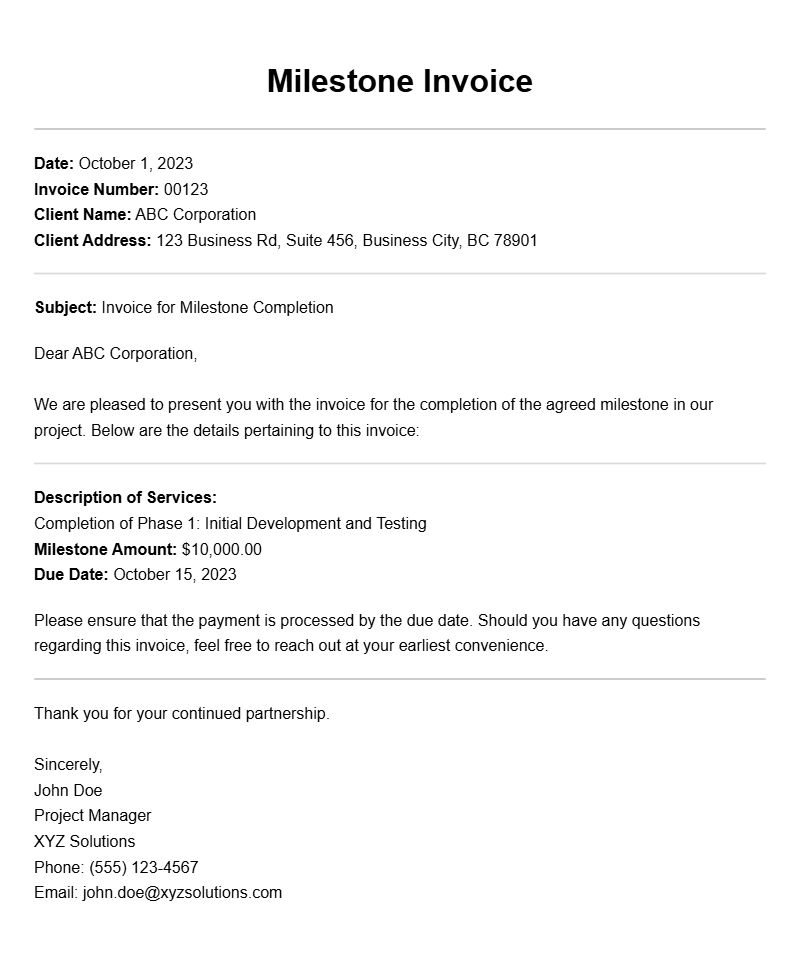
Creating milestone invoices can be a game-changer for businesses managing projects with multiple phases or deliverables. If you’re in a field where payments are tied to specific project milestones—like construction, consulting, or event planning—having a solid understanding of milestone invoices is essential. This guide will walk you through what a milestone invoice is, when to use it, and how to create one that meets your needs.
What Is a Milestone Invoice?
A milestone invoice is a billing document sent to clients when a specific phase of a project is completed. Unlike standard invoices that might request payment for ongoing services or products delivered, milestone invoices reflect significant achievements or deliverables in a project timeline. This helps maintain cash flow and ensures you get paid as you reach important checkpoints.
When Is It Used?
Milestone invoices are commonly used in industries such as:
- Construction projects, where payments are due after completing certain building stages.
- Consulting services, where clients pay after receiving specific reports or deliverables.
- Event planning, where payments might be tied to the completion of venue booking or vendor contracts.
Key Components of a Milestone Invoice
To create an effective milestone invoice, include these critical components:
- Invoice Number: A unique identifier for tracking.
- Client Information: Name, address, and contact details.
- Project Details: Description of the project and the milestone achieved.
- Payment Amount: The amount due for the completed milestone.
- Payment Terms: Due date and accepted payment methods.
- Additional Notes: Any relevant details or instructions.
Step-by-Step Writing Guide
Here’s how to craft your milestone invoice:
- Start with Your Header: Include your company name, logo, and contact information.
- Add the Client’s Information: Make sure to include their name and contact details prominently.
- List the Invoice Number: This helps both parties keep track of the document.
- Describe the Milestone: Clearly state what milestone has been achieved and any deliverables provided.
- Specify the Amount Due: Make it clear what the client is expected to pay.
- Set Payment Terms: Include the due date and acceptable payment methods.
- Include Any Additional Notes: This could be reminders about the next steps or upcoming milestones.
Realistic Examples and Templates
Here’s a simple template for a milestone invoice:
Your Company Name
Your Address
City, State, Zip Code
Email | Phone Number
Invoice Number: 001
Date: [Insert Date]
Bill To:
Client Name
Client Address
City, State, Zip Code
Project: [Project Name]
Milestone Achieved: [Description of Milestone]
Amount Due: $[Amount]
Payment Terms: Due by [Due Date]. Please make checks payable to [Your Company Name].
Notes: Thank you for your business!
Common Mistakes to Avoid
- Not specifying the milestone clearly, which can lead to confusion.
- Forgetting to include payment terms, causing delays in payment.
- Using vague descriptions or not enumerating deliverables.
Tips for Customization
Every project is unique, so tailor your milestone invoice to fit your specific needs:
- Incorporate your branding to make the invoice recognizable.
- Adjust the layout for readability; consider using tables for clarity.
- Add personalized notes or reminders to strengthen client relationships.
Creating a milestone invoice doesn’t have to be daunting. With the right components and a clear structure, you can ensure timely payments while keeping your clients informed. Start using these templates and tips today to streamline your invoicing process and maintain a healthy cash flow.
Template Variations & Sample Formats