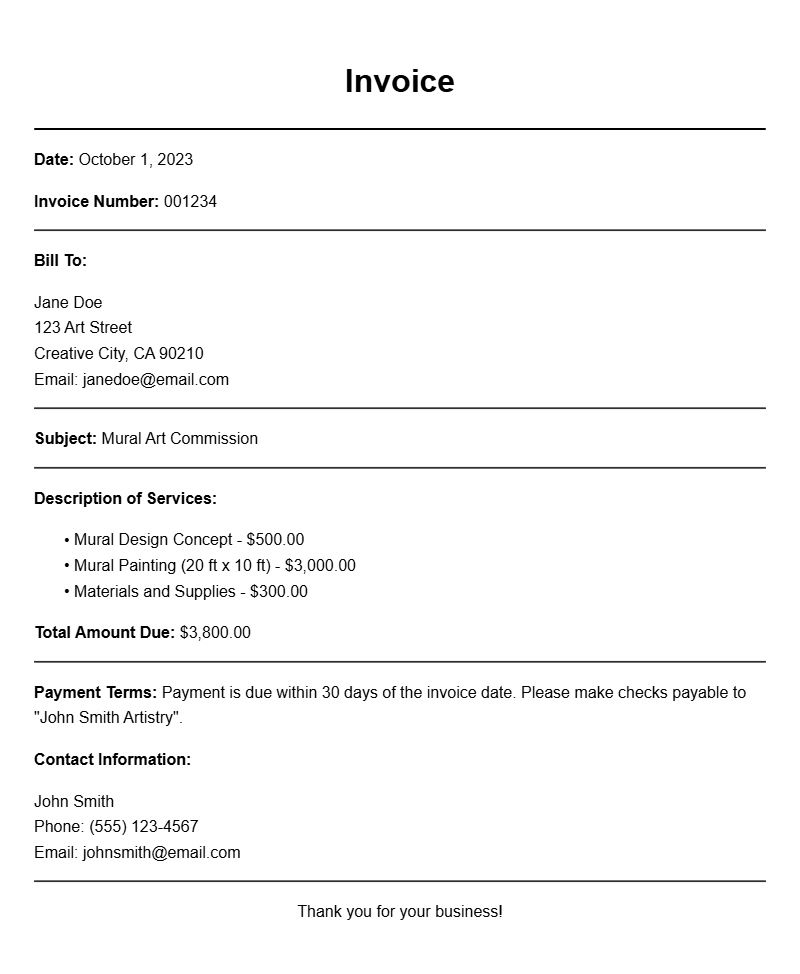
Creating an invoice as a mural artist is an essential step in getting paid for your work and maintaining a professional image. Whether you’re painting a large-scale mural for a business or a smaller piece for a private client, having a clear and detailed invoice can help avoid misunderstandings about payment and project scope. This guide will walk you through what a mural artist invoice should include, how to craft one, and provide some real examples to make the process easier.
WHAT IS A MURAL ARTIST INVOICE?
A mural artist invoice is a document that outlines the services provided, the costs associated, and the payment terms for a mural project. This document serves as a formal request for payment and is crucial for keeping your finances organized. It acts as a record for both you and your client, making sure everyone is on the same page regarding what has been completed and what is owed.
WHEN IS IT USED?
You typically use a mural artist invoice after completing a project or reaching a specific milestone where payment is due. It can also be used upfront if you require a deposit before starting the work. Having a clear invoice allows for transparency and professionalism, which can help build trust with your clients.
KEY COMPONENTS OF A MURAL ARTIST INVOICE
A well-structured invoice should include the following sections:
- Your Information: Include your name, business name (if applicable), address, phone number, and email.
- Client Information: List the client’s name, business name, address, and contact details.
- Invoice Number: Assign a unique invoice number for tracking purposes.
- Invoice Date: The date the invoice is issued.
- Payment Due Date: Specify when payment is expected.
- Description of Services: Clearly outline the work performed, including details like the mural’s size, location, and any materials used.
- Cost Breakdown: Provide a clear breakdown of costs, including labor, materials, and any additional expenses.
- Total Amount Due: State the total amount that needs to be paid.
- Payment Instructions: Include information on how the client can pay you (bank transfer, check, etc.).
STEP-BY-STEP GUIDE TO WRITING A MURAL ARTIST INVOICE
- Start with your information at the top of the invoice.
- Include the client’s details right below yours.
- Assign an invoice number to keep track of your records.
- List the invoice date and the payment due date.
- Detail the services you provided, including any relevant specifics about the mural.
- Break down the costs involved clearly.
- Calculate the total amount due.
- Provide payment instructions at the bottom.
REALISTIC EXAMPLES OF MURAL ARTIST INVOICES
Here’s a simple invoice template you can customize:
Your Name
Your Business Name
Your Address
Your Phone Number
Your Email
Client Name
Client Business Name
Client Address
Invoice Number: 001
Invoice Date: [Insert Date]
Payment Due Date: [Insert Date]
Description of Services:
– Mural Painting at [Location]
– Size: [Dimensions]
– Materials: [List any specific materials used]
Cost Breakdown:
– Labor: $[Amount]
– Materials: $[Amount]
– Additional Expenses: $[Amount]
Total Amount Due: $[Total]
Payment Instructions:
Please make payment via [Payment Method] to [Your Payment Details].
COMMON MISTAKES TO AVOID
- Not including all necessary details, leading to confusion.
- Forgetting to follow up on unpaid invoices.
- Using vague descriptions that don’t clarify the work performed.
- Not assigning unique invoice numbers for tracking.
TIPS FOR CUSTOMIZATION
Make your invoice reflect your personal style. You can add a logo, choose a color scheme, or even include a personal note thanking the client for their business. Tailoring your invoice helps establish your brand and makes it memorable.
Creating a mural artist invoice doesn’t have to be daunting. By following these guidelines and using the examples provided, you can craft an effective invoice that represents your work professionally. If you’re looking for more specific templates, consider checking out examples for other creative services like event balance invoices or tattoo artist invoices. Each creative field has unique needs, and having the right template can save you time and stress.
Ready-to-Use Document Samples