Getting a pet permission letter together can feel overwhelming if you’ve never had to write one before. Maybe your landlord is asking for proof, or you need to register your dog with a new apartment complex. Perhaps you’re traveling and need to authorize someone else to care for your pet temporarily. Whatever the situation, you’re probably looking for something practical you can customize without spending hours figuring out where to start.
This guide walks you through everything you need to know about pet permission letter templates, including real examples you can adapt, common mistakes to dodge, and tips for making the document actually work for your specific situation.
What Is a Pet Permission Letter?
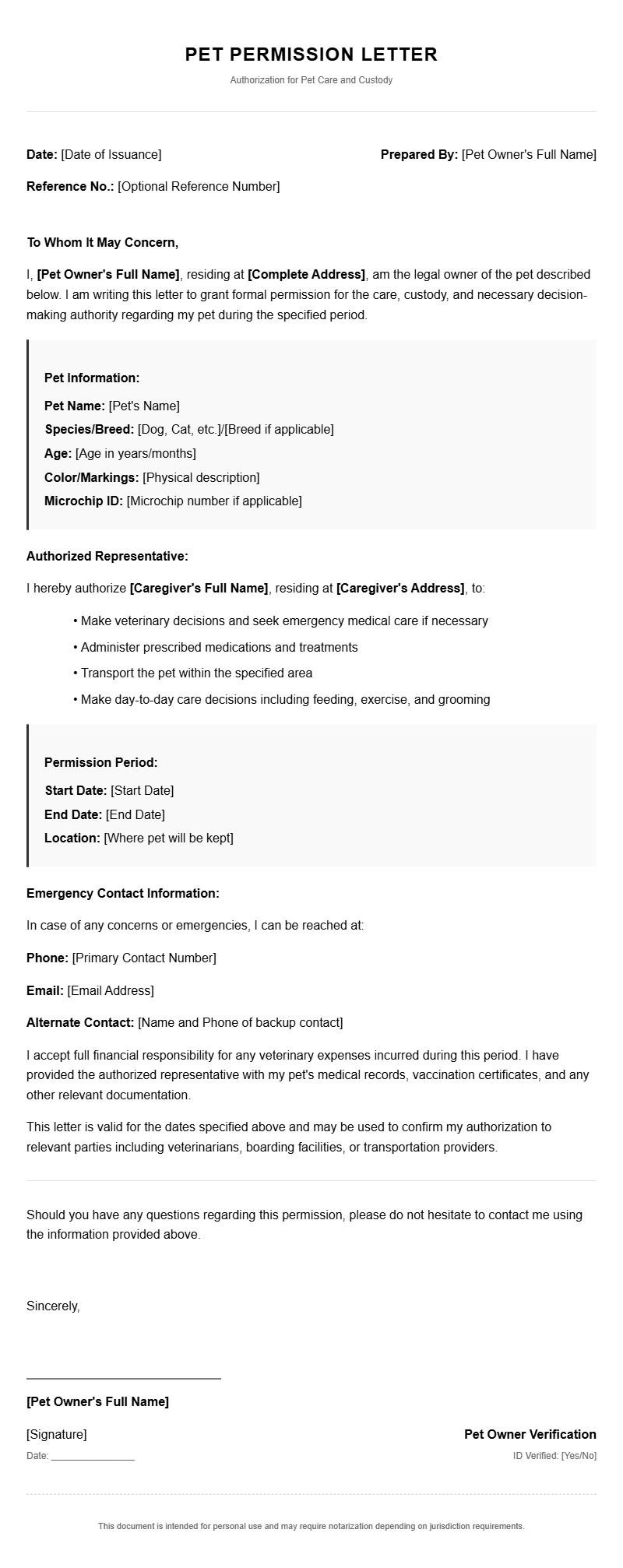
A pet permission letter is a written document that grants someone else the authority to manage, transport, or make decisions about your pet. It’s not the same as a veterinary release form or an adoption agreement. Think of it as a temporary authorization that proves you’re okay with someone else handling your animal in specific circumstances.
These letters typically include your contact information, your pet’s details, what permissions you’re granting, and how long those permissions last. They serve as a bridge between you and whoever needs reassurance that you actually own or are responsible for the animal.
You might find similar letter-writing approaches in other contexts, like photography booking templates or media partnership agreements, where clear authorization language matters. The core idea is the same: spell out who can do what, when, and under what conditions.
When Would You Actually Need One?
Most people encounter the need for a pet permission letter in one of these situations:
Rental housing applications: Landlords often require proof that your pet is authorized, even if you’re applying to a pet-friendly property. A permission letter can confirm vaccination status, spay/neuter status, and your responsibility as a pet owner.
Airline travel: Some airlines require a letter from the pet owner confirming they’ve authorized someone else to transport their animal, especially for international flights where customs documentation is stricter.
Temporary care arrangements: If you’re hospitalized or traveling long-term, you might need to formally authorize a friend, family member, or pet sitter to make veterinary decisions on your behalf.
Boarding facilities: Some dog daycares and boarding facilities ask for permission letters, particularly if you’re dropping off an animal that belongs to a household member other than the person dropping them off.
Community rules andHOA compliance: Homeowners associations sometimes require documented proof that a pet is registered and permitted within the community.
Key Components Every Pet Permission Letter Needs
Before you copy any template, understand what makes these letters actually useful. A solid pet permission letter template should contain:
- Your full legal name and contact information: Phone number, email address, and current address so the recipient can reach you if needed.
- Date the letter is written: This matters for expiration tracking and verifying the document is current.
- Recipient information: Who you’re directing this letter to, whether that’s a landlord, airline, veterinarian, or boarding facility.
- Pet details: Name, species/breed, color, approximate age, and any identifying features like microchip number or distinctive markings.
- Specific permissions granted: Be explicit about what you’re allowing. “Permission to obtain veterinary care up to $500” reads differently than “Permission to make all medical decisions.”
- Time period: Start date and end date, or conditions under which the permission expires.
- Emergency contact information: Who should be called if you can’t be reached?
- Your signature: A typed name alone isn’t enough in most cases. Print the document and sign it if possible, or use a digital signature tool.
Step-by-Step: How to Write Your Own Pet Permission Letter
If you’re starting from scratch rather than using a template, here’s the process:
Step 1: Identify the exact purpose. Are you giving someone permission to pick up your dog from daycare? Transport your cat to the vet? Register your pet with a new apartment complex? The purpose determines what information matters most.
Step 2: Gather your pet’s information. Having your pet’s registration number, vaccination records, and any licensing information ready will speed things up. If you’re writing a landlord letter, include proof of vaccinations since that’s what they’re really after.
Step 3: Decide on permission scope. Do you want to grant broad authority (any medical decisions) or specific narrow authority (just this one vet visit)? Be precise. Broad permissions work for trusted family members, while narrow permissions work better for professional services like pet sitters or boarding facilities.
Step 4: Set clear time boundaries. Open-ended permission letters cause confusion. Specify whether this covers a single event, a date range, or ongoing until you revoke it in writing.
Step 5: Sign and date. Unsigned letters get questioned or rejected. If you’re mailing this, keep a copy for your records.
Pet Permission Letter Templates You Can Use Right Now
Here are a few real-world templates depending on your specific need:
Template 1: Landlord or Rental Property Letter
[Your Name]
[Your Address]
[City, State ZIP]
[Phone Number]
[Email Address]
[Date]
[Landlord/Property Manager Name]
[Property Address]
To Whom It May Concern,
I am writing to grant permission for my pet, [Pet Name], to reside at [Property Address]. I am the legal owner of this animal and accept full responsibility for any damages or disturbances caused by the pet.
Pet Information:
Type: [Dog/Cat/Bird/etc.]
Breed: [Breed Name]
Age: [Age]
Color: [Color]
I have attached copies of the following documentation:
– Current vaccination records
– Spay/Neuter certificate
– Pet license (if applicable)
– Liability insurance information
Please contact me at [Phone Number] or [Email] if you need any additional information.
Sincerely,
[Your Signature]
[Your Typed Name]
Template 2: Temporary Care Authorization
[Your Name] grants [Authorized Person’s Name] permission to provide care for my pet, [Pet Name], described as follows:
Pet Details:
Species: [Species]
Breed: [Breed]
Age: [Age]
Microchip #: [Number if applicable]
This authorization is valid from [Start Date] through [End Date].
[Authorized Person’s Name] may:
– Obtain routine veterinary care
– Administer prescribed medications
– Make emergency decisions up to [$Amount]
– Transport the pet to/from [Location]
In case of emergency, contact: [Your Phone] or [Emergency Contact Name] at [Emergency Contact Phone].
[Your Signature]
[Printed Name]
[Date]
Template 3: Pet Pickup Authorization for Daycare or Boarding
I, [Your Name], authorize [Authorized Person’s Name] to pick up my pet, [Pet Name], from [Facility Name].
Authorized Person’s Photo ID: [Last four digits]
This authorization is valid for [single use / date range].
[Your Signature]
[Date]
These templates work as starting points. Adjust the permissions section to match exactly what you need. If your situation is more complex, working from a sample letter format can help you think through what details to include.
Common Mistakes People Make
I’ve seen these trip up pet owners repeatedly:
Being too vague about permissions. “Granting full authority” sounds good but creates problems when someone has to make a real decision. Spell out what “full authority” actually means for your situation.
Forgetting to include an expiration date. Without a clear end date, permission letters can create awkward situations where someone still has “authority” months after you expected the arrangement to end.
Not providing emergency contact information. If you’re unavailable, whoever has your pet needs a way to reach you or your backup contact. This isn’t optional, especially for medical situations.
Using nicknames instead of legal names. Your landlord’s attorney will care about legal names, not “Fluffy Mom” or your Instagram handle. Use your legal first and last name on the document.
Forgetting to attach supporting documents. If your letter mentions vaccination records, actually attach them. Sending a letter that promises documentation and doesn’t deliver creates more work for everyone.
Tips for Customizing Your Template
Generic templates are starting points. Here’s how to make yours actually work:
Match the recipient’s expectations. A veterinarian might want treatment authorization specifics. A landlord might want insurance information. Ask the person asking for the letter what they need, then add it.
Add specific details about your pet. If your dog has a microchip number, include it. If your cat is on a specific medication, mention it. The more specific your letter, the harder it is to dispute or reject.
Consider your relationship with the person you’re authorizing. You might grant broader permissions to a spouse or parent than you would to a professional pet sitter you’ve hired through an app. Calibrate the scope accordingly.
Keep a digital backup. Photograph or scan your signed letter and store it where you can access it quickly. If you need to send it again or show it to someone on the fly, having a digital copy saves time.
Update when circumstances change. If your pet’s vaccination status changes, if you move, or if you want to change who has permission, write a new letter. Don’t try to edit old letters and date them as current.
Final Thoughts
A pet permission letter doesn’t need to be fancy to work. Clear information, explicit permissions, proper dates, and your signature usually cover what anyone receiving the document actually needs to see. Use the templates above as a starting point, customize them for your situation, and don’t overthink it.
If you’re handling other professional correspondence, like employee-to-boss communication templates or other formal letters, you’ll find the same core principles apply: be clear, be specific, and make sure your signature is actually there.
The goal is simple: make it obvious that you authorize what needs to be authorized, for exactly as long as it needs to be authorized, and give the recipient enough information to reach someone if questions come up. That’s it.
Common Document Templates & Previews
Pet Permission Request – Residential Lease
Dear ……