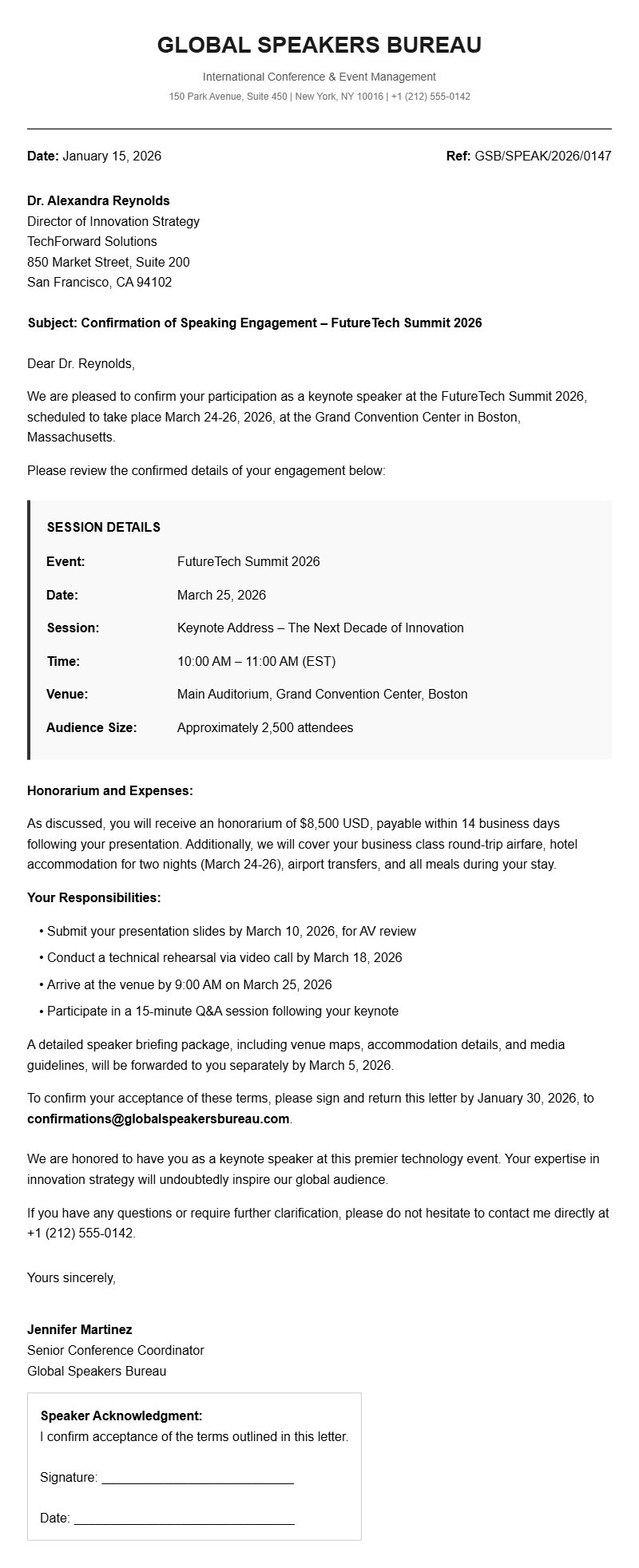
You just locked in a keynote speaker for your conference. Now you need to send them something official that covers all the logistics without sounding like a legal contract nobody will read. That’s where a speaker confirmation letter comes in. This guide walks you through what to include, how to structure it, and gives you ready-to-use templates you can customize in minutes.
What Is a Speaker Confirmation Letter?
A speaker confirmation letter is a professional document you send to a speaker after they’ve agreed to present at your event. It spells out the who, what, when, and where so everyone’s on the same page. Think of it as your official record of the agreement—it confirms the speaker’s commitment, documents key details, and serves as a reference point if questions come up later.
Unlike a simple email confirmation, this letter carries more weight. It shows you take the event seriously and that you’ve thought through the logistics. For the speaker, it provides reassurance that the event is organized and professional. You might also hear people call these speaker booking letters, event confirmation letters, or keynote engagement confirmations—same idea, different labels.
When Do You Need One?
You should send a speaker confirmation letter whenever a speaker agrees to present at your event, whether it’s a paid gig or an unpaid session. This applies to:
- Corporate conferences and industry summits
- University lectures and academic symposiums
- Webinars and virtual events
- Workshop sessions and training programs
- Panel discussions and roundtables
Basically, if you’re asking someone to speak and they’ve said yes, you need this letter. It protects both parties and ensures clear expectations from the start. If you’re also handling other event-related correspondence, you might find our seminar invitation letter samples helpful for other communications you need to prepare.
Key Components of a Speaker Confirmation Letter
A solid confirmation letter covers several bases. Here’s what you should include:
Event Details
Name of the event, date, time, and location (or virtual platform if online). Be specific—if it’s a multi-day event, note which day the speaker presents and for how long.
Speaker Information
Confirm the speaker’s full name, title, and organization. Include any bio details you’ve agreed on, especially if they’re submitting it for the event program.
Session Topic and Format
State clearly what they’re speaking about, the format (keynote, panel, workshop), and any audience size expectations. This prevents the “wait, I thought I was doing a Q&A, not a 45-minute presentation” confusion.
Compensation and Expenses
If you’re paying the speaker, state the honorarium amount, payment schedule, and who handles expenses like travel or accommodation. If it’s unpaid, be upfront about that too.
Technical and logistical needs
Note what equipment you’ll provide (projector, microphones, demo stations) and what the speaker needs to bring themselves. For virtual events, include the platform you’ll use and any accessibility tools available.
Response deadline and next steps
Give them a clear deadline to confirm receipt and ask any questions. Include who to contact if they have concerns—that’s usually you or your event coordinator.
Step-by-Step Writing Guide
Here’s how to put together your letter, one section at a time:
Step 1: Open with the confirmation
Start by confirming they’ve accepted the speaking invitation. Something like: “I’m writing to confirm your participation as a keynote speaker at the 2024 Midwest Marketing Summit.” Get this out front so there’s no ambiguity about what the letter is about.
Step 2: Lay out the event details
Add a paragraph that covers the basics—event name, date, venue, and their speaking slot. If you’ve negotiated a specific time window (say, 45 minutes plus Q&A), include that too.
Step 3: Detail the session expectations
Explain what you expect from their session. This includes the topic, format, audience size, and any mandatory elements like a Q&A portion or product demo. The more specific you are here, the fewer surprises you’ll have on event day.
Step 4: Cover compensation and logistics
State clearly what’s being paid, how, and when. If you’re covering travel, spell out the policy—do you book flights or reimburse them? What’s the accommodation budget? These details prevent awkward conversations later.
Step 5: List what you provide
Speakers want to know what they’ll get on-site. Mention the venue setup, AV equipment, speaker briefing schedule, and any green room or preparation space available.
Step 6: Add next steps and deadline
Close with what you need from them and by when. Maybe you need their bio, headshot, and a preliminary slide deck by a certain date. Be explicit about these deadlines.
Step 7: Sign off professionally
End with a thank-you note, your signature, and contact information. A simple “Looking forward to working with you” goes a long way.
Speaker Confirmation Letter Templates
Here are two templates you can adapt depending on your situation. One for paid speaking engagements and one for volunteer or unpaid speakers.
Template 1: Paid Speaker Confirmation Letter
[Your Organization Name]
[Your Address]
[City, State ZIP]
[Email] | [Phone]
[Date]
Dear [Speaker Name],
I’m pleased to confirm your participation as a [session type] speaker at [Event Name], taking place on [Date] at [Venue/Location]. Your session is scheduled for [Time], and we’re expecting approximately [audience size] attendees.
Session Details:
- Topic: [Presentation Title]
- Format: [45-minute presentation with 15-minute Q&A]
- Audience: [Description of target audience]
Compensation:
You will receive an honorarium of $[Amount] for your participation. Payment will be issued within 14 days following your presentation. We will cover economy-class round-trip airfare, ground transportation, and one hotel night at [Hotel Name or similar] if you’re traveling from outside the area.
What We Provide:
- Projection equipment and wireless lavalier microphone
- Dedicated presentation laptop with PowerPoint installed
- On-site speaker preparation room
- Speaker briefing 30 minutes before your session
Please confirm receipt of this letter and provide the following by [Deadline]:
- Current bio (150 words or less)
- High-resolution headshot
- Preliminary slide deck for AV team review
- Any A/V requirements not listed above
Travel arrangements should be submitted to [Travel Coordinator Email] by [Travel Deadline]. If you have any questions or need to discuss logistics, please contact me directly at [Your Email] or [Your Phone].
Thank you for joining us—we’re excited to have you shape the conversation at [Event Name].
Sincerely,
[Your Name]
[Your Title]
[Organization Name]
Template 2: Unpaid Speaker Confirmation Letter
[Your Organization Name]
[Your Address]
[City, State ZIP]
[Date]
Dear [Speaker Name],
Thank you for agreeing to speak at [Event Name] on [Date]. This letter confirms the details of your participation as a [session type] at our [event type or conference name].
Event Overview:
- Date: [Full date]
- Time: [Your session runs from X to Y]
- Location: [Venue address or “Virtual via Zoom”]
Your Session:
- Topic: [Presentation title or theme]
- Format: [Panel discussion, workshop, fireside chat, etc.]
- Audience: [Brief description, approximately X people]
As this is a volunteer engagement, we won’t be providing an honorarium. In return for your time, we’ll offer a complimentary event registration, spotlight your organization in our program materials, and provide recordings of all sessions for your use.
On the day of, we’ll provide the following:
- Projection and sound setup
- Speaker green room with refreshments
- On-site support from our events team
Please reply by [Deadline] to confirm you can make the scheduled time, and send along your preferred bio version (50-75 words) and any visual assets you’d like us to include in promotional materials.
I’m happy to jump on a call if you’d like to discuss your session content before the event. Feel free to reach me at [Your Email].
Looking forward to working with you.
Best regards,
[Your Name]
[Your Title]
[Organization Name]
Common Mistakes to Avoid
A weak confirmation letter can create confusion down the line. Here are the mistakes I see most often:
Being vague about timing
Don’t just say “morning session.” Specify 10:00 AM to 10:45 AM with a 15-minute Q&A. Vague timelines lead to scheduling conflicts and last-minute scrambles.
Omitting compensation details
Even if you think it’s understood, put it in writing. State the amount, the payment method, and the timeline. Ambiguity about money creates resentment.
Forgetting to mention technical setup
If you don’t tell speakers what equipment will be available, they’ll show up expecting things you don’t have. Be explicit: “We provide a Windows laptop with PowerPoint 365. If you need a Mac adapter or specific software, let us know in advance.”
No deadline for responses
Always include a “please confirm by [date]” line. Without one, speakers might sit on your letter indefinitely, and you’ll be chasing confirmations the week before the event.
Sending it and forgetting it
Don’t just send the letter and move on. Follow up if you don’t hear back within a few days. A quick “just checking you received the confirmation letter” keeps things moving. If you’re managing multiple speakers, this becomes especially important.
Tips for Customizing Your Letter
Every event is different. Here’s how to make your letter fit your situation:
Match the formality to your organization
A startup sending a letter to a casual workshop speaker can be breezy and conversational. A university confirming a keynote at an academic conference should be more formal. Adjust your tone accordingly.
Account for virtual events
For online events, add details about the platform (Zoom, Teams, etc.), whether sessions are recorded, and any interactivity features (polls, breakout rooms). Speakers presenting virtually have different needs than those showing up in person.
Include a travel and accommodation section if relevant
If you’re flying speakers in, spell out the policy: do you book flights or do they book and get reimbursed? What’s the hotel budget? Are meals included? The more detail here, the smoother the travel process goes.
Add a personal touch
Mention something specific about why you wanted this speaker. “We loved your recent article on sustainable supply chains and think your perspective would resonate with our audience.” This makes the letter feel less like a form and more like a genuine invitation.
Keep it scannable
Use bullet points and bold headers so speakers can quickly find the information they care about—usually timing, compensation, and technical setup. Long blocks of text get skimmed or ignored.
Wrapping Up
A well-written speaker confirmation letter sets the tone for your entire event relationship. It shows professionalism, clears up confusion before it happens, and gives your speakers the confidence that you’re organized and prepared. Use the templates above as a starting point, adjust them to your event’s needs, and always include clear deadlines for any follow-up information you need from them.
If you need to handle other types of professional correspondence for your organization, our collection of business thank you letter samples covers additional situations you might encounter. For related event planning documents, the merger announcement letter samples offer examples of how to communicate significant organizational news to stakeholders.
Common Document Templates & Previews