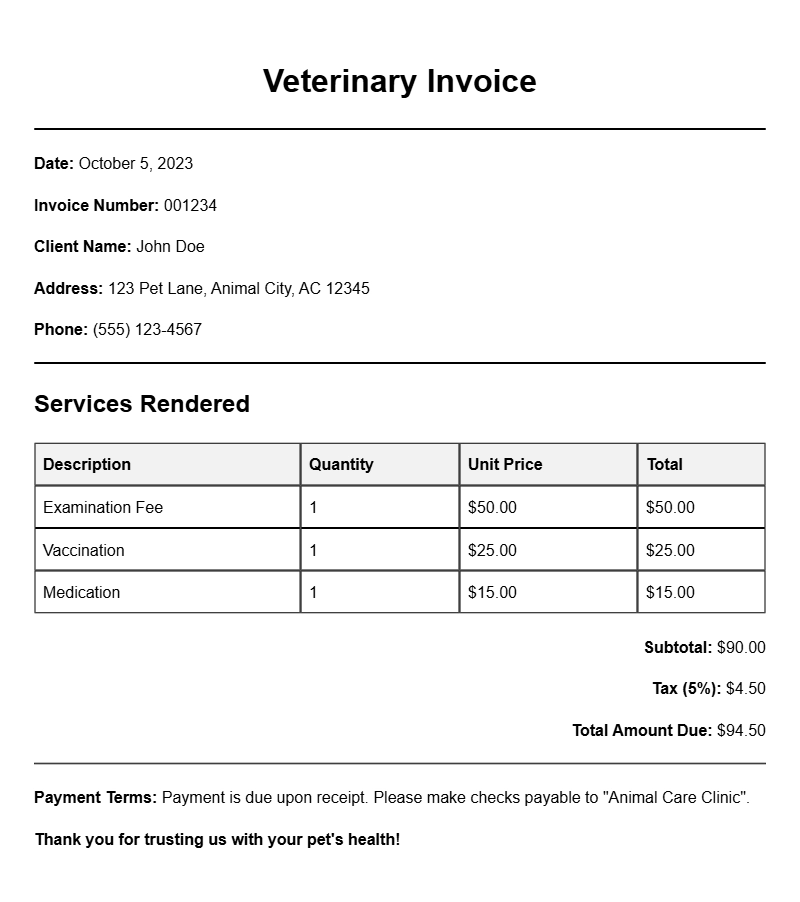
When you’re running a veterinary practice, clear communication with pet owners is key, especially when it comes to billing. Having a solid invoice template can streamline the payment process and ensure that your clients understand what they are being charged for. This article offers practical guidance on creating effective veterinarian invoice samples that cater to your practice’s needs.
What is a Veterinarian Invoice?
A veterinarian invoice is a document that outlines the services provided to a pet, along with their associated costs. This document serves as a receipt for the pet owner and a record for the veterinary practice. It’s essential for maintaining transparency and ensuring timely payments.
When to Use a Veterinarian Invoice
You should use a veterinarian invoice every time you provide services, whether it’s a routine check-up, surgery, or a simple vaccination. Issuing an invoice not only helps in tracking payments but also provides a professional touch that enhances your practice’s credibility.
Key Components of a Veterinarian Invoice
An effective veterinarian invoice should include the following sections:
- Practice Information: Your clinic’s name, address, phone number, and website.
- Client Information: The pet owner’s name, address, and contact number.
- Pet Information: The name and type of pet, along with any relevant medical history.
- Service Description: Detailed list of services performed, including dates and any medications provided.
- Costs: Itemized list of charges, including taxes and total amount due.
- Payment Terms: Information on accepted payment methods and due dates.
Step-by-Step Guide to Writing a Veterinarian Invoice
Creating a veterinarian invoice can be straightforward if you follow these steps:
- Choose a Template: Start with a pre-designed invoice template or create your own using a word processor or spreadsheet software.
- Fill in Your Information: Add your clinic details at the top of the invoice.
- Client and Pet Details: Input the pet owner’s information and the specifics of their pet.
- List Services Provided: Clearly describe each service and its associated cost.
- Total the Invoice: Ensure the total amount is clearly visible, including any applicable taxes.
- Review: Double-check for accuracy to avoid any misunderstandings.
Realistic Examples and Templates
Here’s a sample snippet of what a veterinarian invoice might look like:
Veterinary Clinic
123 Pet Lane
Anytown, USA 12345
(123) 456-7890
www.veterinaryclinic.com
Invoice #: 001
Date: [Insert Date]
Bill To:
John Doe
456 Owner St.
Anytown, USA 12345
(987) 654-3210
Pet Information:
Pet Name: Max
Species: Dog
Breed: Labrador
Age: 5 years
Services:
– Routine Check-Up: $50
– Vaccination: $25
– Flea Treatment: $30
Subtotal: $105
Tax (5%): $5.25
Total Amount Due: $110.25
Payment Terms: Due upon receipt. Accepting cash, credit, and debit.
Common Mistakes to Avoid
When creating your invoices, keep an eye out for these common pitfalls:
- Missing Information: Ensure all fields are filled out completely to avoid confusion.
- Ambiguous Descriptions: Use clear and specific language for services rendered to prevent disputes.
- Incorrect Calculations: Always double-check math to ensure accuracy in totals.
Tips for Customization
Make your invoice stand out and more effective by considering these customization tips:
- Add a Personal Touch: Include a thank you note or a reminder for the next visit.
- Use Branding: Incorporate your clinic’s logo and colors.
- Digital Options: Consider creating a PDF invoice for easy emailing.
Designing a veterinarian invoice doesn’t have to be a daunting task. By following these guidelines and using the provided template, you can create an effective invoice that meets your practice’s needs and enhances your client interactions. For more examples, check out resources for metal fabricators or content writers, which offer various customizable templates that can inspire your own designs.
Document Examples & Template Samples