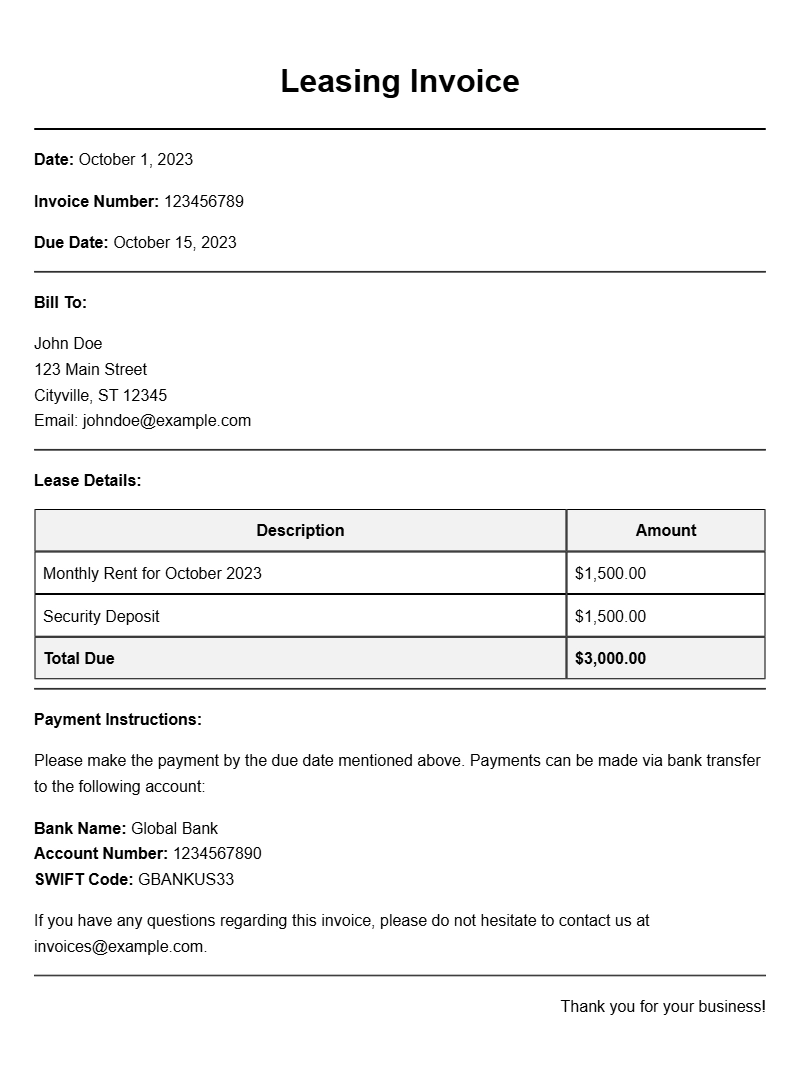
When managing a lease, whether for equipment, property, or vehicles, keeping your financial records in order is essential. A leasing invoice serves as a formal request for payment, detailing the terms of the lease agreement and the amounts due. Having access to effective leasing invoice samples can help streamline your invoicing process, ensuring you capture all necessary details and avoid common pitfalls.
What Is a Leasing Invoice?
A leasing invoice is a document that a lessor (the party providing the lease) sends to a lessee (the party leasing the asset). This invoice outlines the amount owed for leasing an asset, along with other relevant details such as payment terms, lease duration, and any additional fees. Essentially, it serves as a formal request for payment based on the agreed-upon lease terms.
When Is It Used?
You typically use a leasing invoice in several scenarios:
- Monthly rental payments for property
- Payments for leasing equipment, such as machinery or technology
- Vehicle lease payments
In each case, the invoice helps keep track of payments and provides a record for both parties involved.
Key Components of a Leasing Invoice
A well-structured leasing invoice includes several key components:
- Contact Information: Names and addresses of both the lessor and lessee.
- Invoice Number: A unique identifier for tracking purposes.
- Date of Issue: The date the invoice is created.
- Payment Due Date: When payment is expected.
- Description of the Lease: Details of the asset being leased, including identification numbers if applicable.
- Amount Due: Total amount that needs to be paid, including any taxes or additional fees.
- Payment Instructions: How and where to make the payment.
Step-by-Step Writing Guide
Creating a leasing invoice can be straightforward. Follow these steps:
- Start with your business information at the top.
- Include the date and a unique invoice number.
- Add the lessee’s details below your information.
- Clearly list the leased asset and describe any additional fees.
- State the total amount due and include payment instructions.
- Consider adding terms of service or agreements regarding late payments.
Realistic Examples/Templates
Here’s a basic leasing invoice template you can customize:
YOUR BUSINESS NAME
123 Business St.
City, State, Zip Code
Email: yourbusiness@email.com
Phone: (123) 456-7890
Invoice Number: 1001
Date: [Insert Date]
Due Date: [Insert Due Date]
Billed To:
Client Name
Client Address
City, State, Zip Code
Description of Lease:
– Equipment: [Description of Equipment]
– Lease Period: [Start Date] to [End Date]
– Monthly Rent: $[Amount]
Total Amount Due: $[Total Amount]
Payment Instructions:
Please make the payment via [Payment Method] to [Payment Address or Account].
Common Mistakes to Avoid
When creating leasing invoices, steer clear of these common pitfalls:
- Inaccurate Details: Double-check all information, such as names, dates, and amounts.
- Missing Payment Terms: Clearly state when payment is due and any penalties for late payment.
- Not Following Up: If payment isn’t received, don’t hesitate to follow up with a reminder.
Tips for Customization
Personalize your leasing invoice to fit your business style:
- Use your branding elements, like logos and colors, for a professional touch.
- Consider adding a section for notes or special instructions to personalize your communication.
- Employ digital tools or software that can automate invoice creation, making it easier to manage.
Creating effective leasing invoices doesn’t have to be daunting. With the right template and knowledge of the essential components, you can ensure timely payments and maintain clear records. For more examples, you can check out leasing invoice samples related to restaurant consulting, claims adjusting, beer festivals, editorial work, and inspections. Happy invoicing!
Document Examples & Template Samples