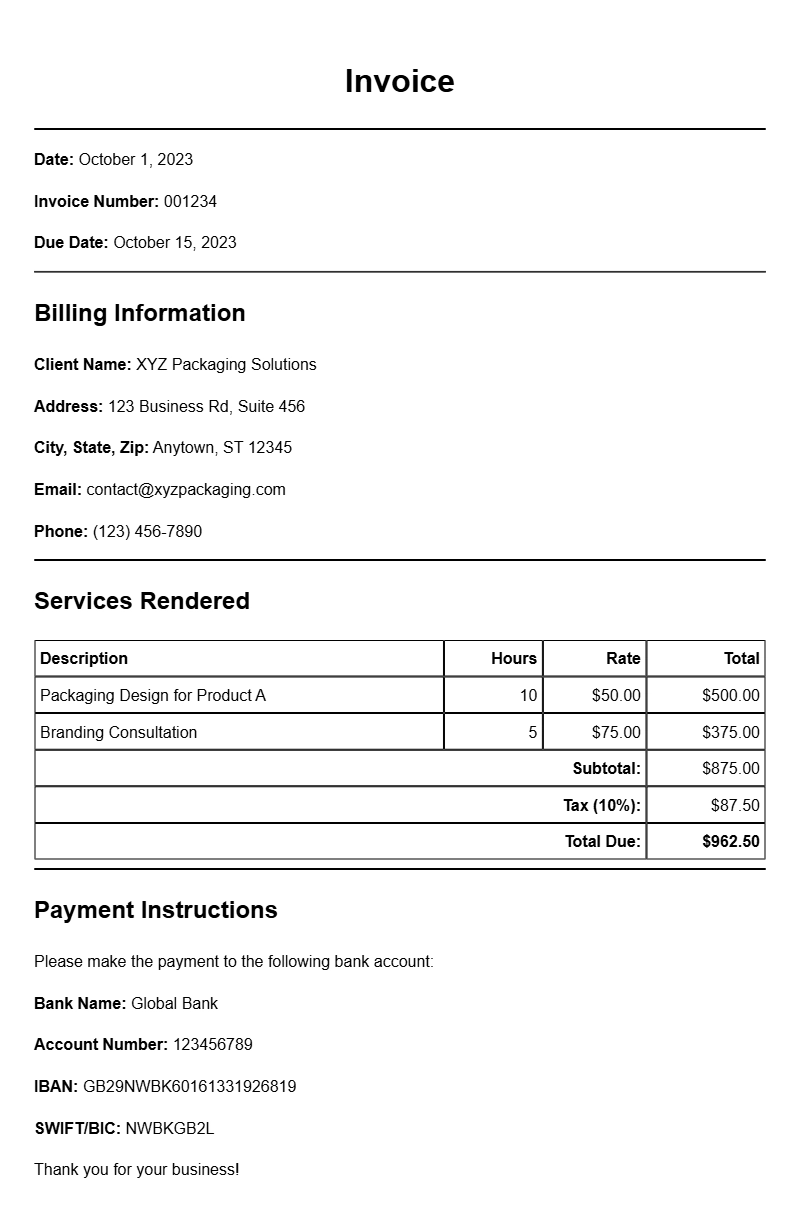
If you’re a packaging designer, you know how important it is to get your invoicing right. A clear, professional invoice not only helps you get paid on time but also reflects your brand. In this article, you’ll find practical advice on packaging designer invoice samples, including what they are, when to use them, and how to create one that suits your needs.
WHAT IS A PACKAGING DESIGNER INVOICE?
A packaging designer invoice is a document that outlines the services you’ve provided to a client, along with the amount they owe you. It typically includes details like your business name, the client’s information, the services rendered, and payment terms. This document serves as both a request for payment and a record of the transaction.
WHEN IS IT USED?
You’ll use a packaging designer invoice after completing a project or delivering a design. Whether it’s a one-time project or an ongoing retainer, sending an invoice ensures you get compensated for your work. It’s a standard practice in the industry that helps maintain professionalism.
KEY COMPONENTS OF A PACKAGING DESIGNER INVOICE
- Your Business Details: Include your name, address, phone number, and email.
- Client Information: Add the client’s name, company name, address, and contact details.
- Invoice Number: Give unique identifiers to each invoice for tracking.
- Services Provided: List the design services you offered, along with descriptions.
- Payment Terms: Specify when payment is due and acceptable payment methods.
- Total Amount Due: Clearly state the total cost for your services.
- Notes or Additional Information: This is where you can add any extra details or thank your client for their business.
STEP-BY-STEP WRITING GUIDE
- Start with Your Business Information: Place your logo and contact details at the top.
- Add Client Information: Include the client’s name, company name, and contact details.
- Insert Invoice Number: Create a unique number for easy reference.
- Detail the Services: List what you provided, including hours worked or project milestones.
- Calculate the Total: Sum up the costs and make sure to double-check your math.
- Specify Payment Terms: Clarify when payment is due and how the client can pay.
- Include a Personal Touch: A short note thanking your client can go a long way.
REALISTIC EXAMPLES/TEMPLATES
Here’s a simple template to get you started:
Your Business Name
Your Address
Your Phone Number
Your Email
Client’s Name
Client’s Company
Client’s Address
Invoice Number: 001
Date: [Insert Date]
Due Date: [Insert Due Date]
Description of Services:
– Packaging Design for Product X: $500
– Revisions (3 included): $0
– Additional Design Consultation: $150
Total Amount Due: $650
Payment Terms: Due within 30 days. Please make checks payable to [Your Business Name].
Thank you for your business!
COMMON MISTAKES TO AVOID
- Not Including a Unique Invoice Number: This helps keep your records organized.
- Missing Payment Terms: Always specify when and how you expect to be paid.
- Failing to List Services Clearly: Clients should be able to see what they are paying for.
TIPS FOR CUSTOMIZATION
Make your invoice stand out by adding your logo and using your brand colors. You can also tailor the language to match your brand voice. If you often work with specific clients, consider creating templates that are pre-filled with their details to save time.
Getting your invoicing right is essential for a packaging designer. By following these guidelines and using the samples provided, you can create invoices that not only look professional but also streamline your payment process. For more templates, check out our resources on marketing consulting invoices, site cleanup invoices, and construction contractor invoices.
Document Structure & Example Models