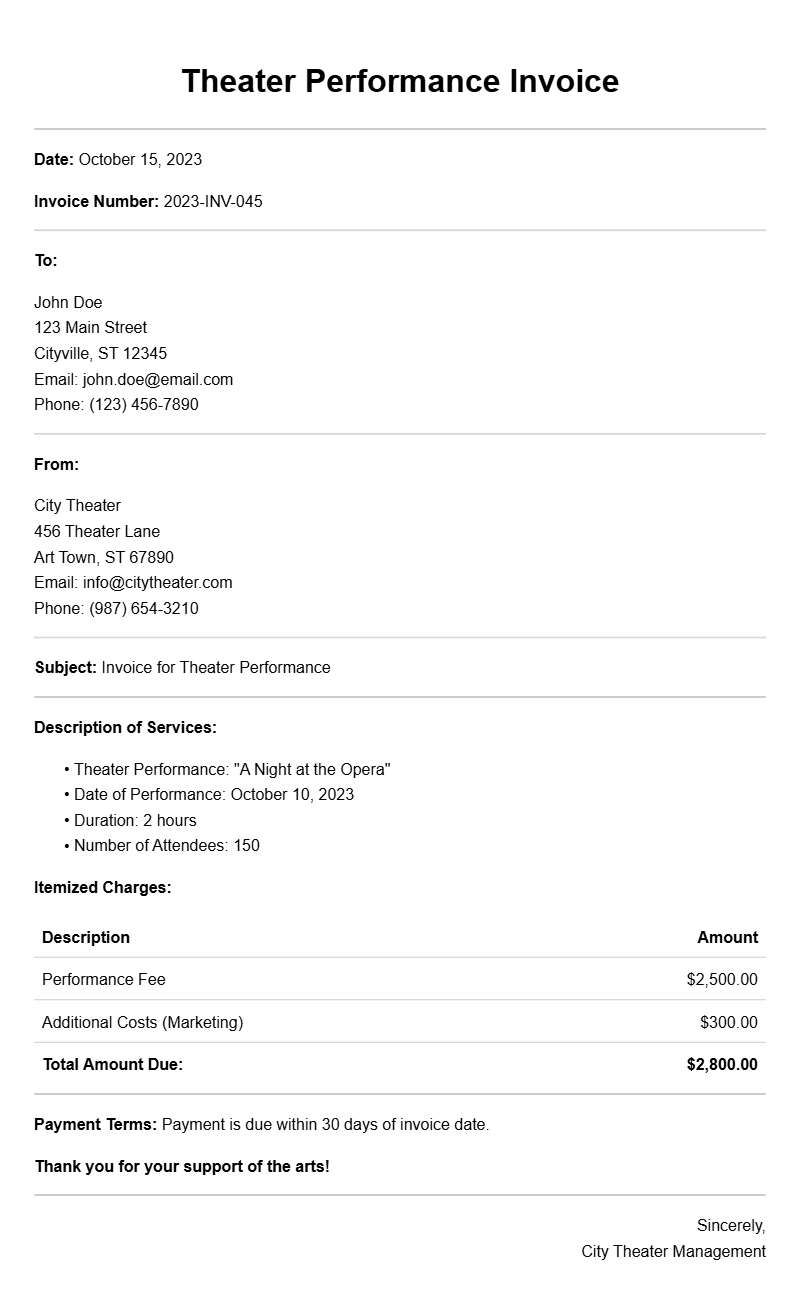
When it comes to managing a theater production, keeping track of finances is crucial. One essential document in this process is the theater performance invoice. Whether you’re a theater manager, a performer, or a vendor, understanding how to create and manage invoices can simplify your operations and ensure everyone gets paid on time.
WHAT IS A THEATER PERFORMANCE INVOICE?
A theater performance invoice is a financial document that outlines the services rendered or products delivered during a theater performance. It typically includes details such as the date of the performance, the nature of the services (like ticket sales, costume rentals, or set design), and the total amount due. This document serves both as a request for payment and a record of the transaction.
WHEN IS IT USED?
You’ll use a theater performance invoice at various stages in a production, including:
- After a performance when ticket sales need to be settled.
- When vendors provide services, such as sound and lighting equipment.
- For payments to actors and crew members for their work.
KEY COMPONENTS OF A THEATER PERFORMANCE INVOICE
To ensure clarity and professionalism, your invoice should include the following components:
- Header: Your theater’s name, logo, and contact information.
- Invoice Number: A unique identifier for tracking purposes.
- Date: The date when the invoice is issued.
- Recipient Information: Name and contact details of the person or company being billed.
- Description of Services: A detailed breakdown of the services or products provided.
- Total Amount Due: The total cost, including any applicable taxes.
- Payment Terms: Instructions on how and when to pay.
STEP-BY-STEP WRITING GUIDE
Creating an invoice can be straightforward if you follow these steps:
- Gather Information: Collect all relevant details, including services provided, dates, and payment terms.
- Choose a Format: Use a simple document format or an invoice template that suits your style.
- Fill in the Details: Start with your header, followed by the recipient’s information and the invoice details.
- List Services: Clearly describe each service or product with corresponding costs.
- Calculate Total: Add up all costs and ensure accuracy.
- Review: Double-check all information for errors before sending it out.
REALISTIC EXAMPLES/TEMPLATES
Here’s a simple template to get you started:
THEATER NAME
Address | Phone Number | Email
Invoice #: 001
Date: [Insert Date]
Billed To:
[Recipient Name]
[Recipient Address]
Description of Services:
1. Performance Tickets – [Date] – $[Amount]
2. Costume Rental – [Description] – $[Amount]
Total Amount Due: $[Total Amount]
Payment Terms: Due within 30 days of receipt.
COMMON MISTAKES TO AVOID
When creating an invoice, watch out for these common pitfalls:
- Omitting important details like payment terms or due dates.
- Failing to double-check for errors in amounts or descriptions.
- Not following up on unpaid invoices.
TIPS FOR CUSTOMIZATION
Tailor your invoice to reflect your theater’s branding and style:
- Use a consistent font and color scheme that matches your promotional materials.
- Consider adding a personal touch, such as a thank-you note for your clients.
- Integrate digital payment options to make it easier for recipients to pay.
Creating a theater performance invoice doesn’t have to be daunting. With a clear structure and attention to detail, you can ensure timely payments and keep your production running smoothly. If you need more examples, check out resources like leasing invoice samples or shipping invoice templates for inspiration.
Practical Document Examples