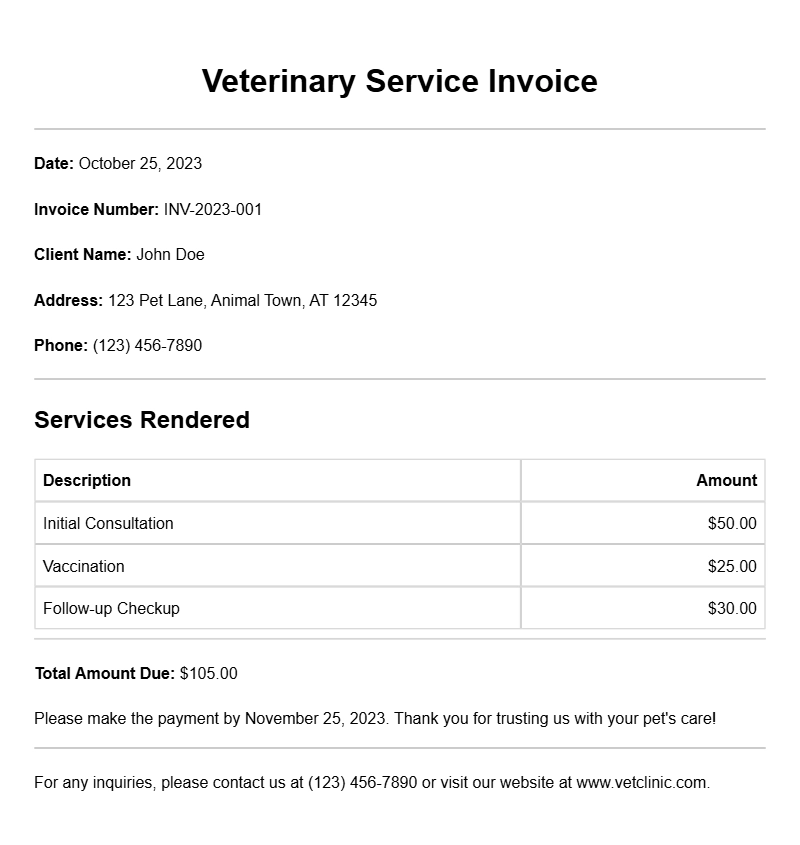
Creating a veterinary service invoice can seem daunting at first, but it’s a crucial tool in maintaining clear communication and financial transparency between you and your clients. These invoices not only serve as a record of services rendered but also help in tracking payments and managing your practice’s finances efficiently. Let’s break down what a veterinary service invoice looks like, when you’ll need one, and how to create your own.
WHAT IS A VETERINARY SERVICE INVOICE?
A veterinary service invoice is a document that details the services provided to an animal, along with associated costs. It is issued to pet owners after treatment or consultation and serves as proof of the transaction. The invoice should be clear and itemized, making it easy for clients to understand what they are paying for.
WHEN IS IT USED?
You’ll typically issue a veterinary service invoice after a consultation, treatment, or procedure. Whether it’s a routine check-up, vaccinations, or emergency care, having an invoice helps keep everything transparent. This is especially handy for record-keeping and for clients who may want to submit expenses to insurance companies.
KEY COMPONENTS OF A VETERINARY SERVICE INVOICE
To create an effective veterinary invoice, include the following components:
- Practice Information: Name, address, phone number, and email of the veterinary practice.
- Client Information: Name and contact details of the pet owner.
- Pet Information: Name and species of the pet, along with any relevant medical history.
- Date of Service: When the services were rendered.
- Itemized List of Services: Description of each service, including any medications or supplies used.
- Total Amount Due: Clear indication of the total charges.
- Payment Terms: Information about payment methods and due dates.
STEP-BY-STEP WRITING GUIDE
Follow these steps to craft your invoice:
- Start with your business name and logo at the top of the invoice.
- Include the invoice date and a unique invoice number for easy reference.
- List the client’s details and pet information clearly.
- Detail each service provided, along with their costs.
- Add the total at the bottom and specify payment options.
REALISTIC EXAMPLES/TEMPLATES
Here’s a simple template to help you get started:
Veterinary Practice Name
Address
Phone Number
Email
Invoice Number: 001
Date: [Insert Date]
Client: [Client Name]
Contact: [Client Contact]
Pet: [Pet Name, Species]
Services Rendered:
1. Consultation – $50.00
2. Vaccination – $25.00
3. Medication – $15.00
Total Amount Due: $90.00
Payment Terms: Due upon receipt. Accepts cash, credit, or checks.
COMMON MISTAKES TO AVOID
- Failing to include a unique invoice number, which can lead to confusion.
- Not itemizing services, making it hard for clients to understand their charges.
- Omitting payment terms, which can delay payment.
TIPS FOR CUSTOMIZATION
Feel free to modify the template to suit your practice’s style. Add your branding elements, like colors and fonts, to make it visually appealing. Consider including a message thanking clients for their business, or reminders about follow-up visits or vaccinations.
By using a well-structured veterinary service invoice, you not only enhance your professionalism but also make the payment process straightforward for your clients. Keeping everything clear and organized can save both you and your clients time and confusion in the long run.
For additional resources, check out these related invoice samples: roof repair invoice samples, developer conference invoice samples, pipe installation invoice templates, video editor invoice templates, and baby photoshoot invoice templates.
Document Structure & Example Models