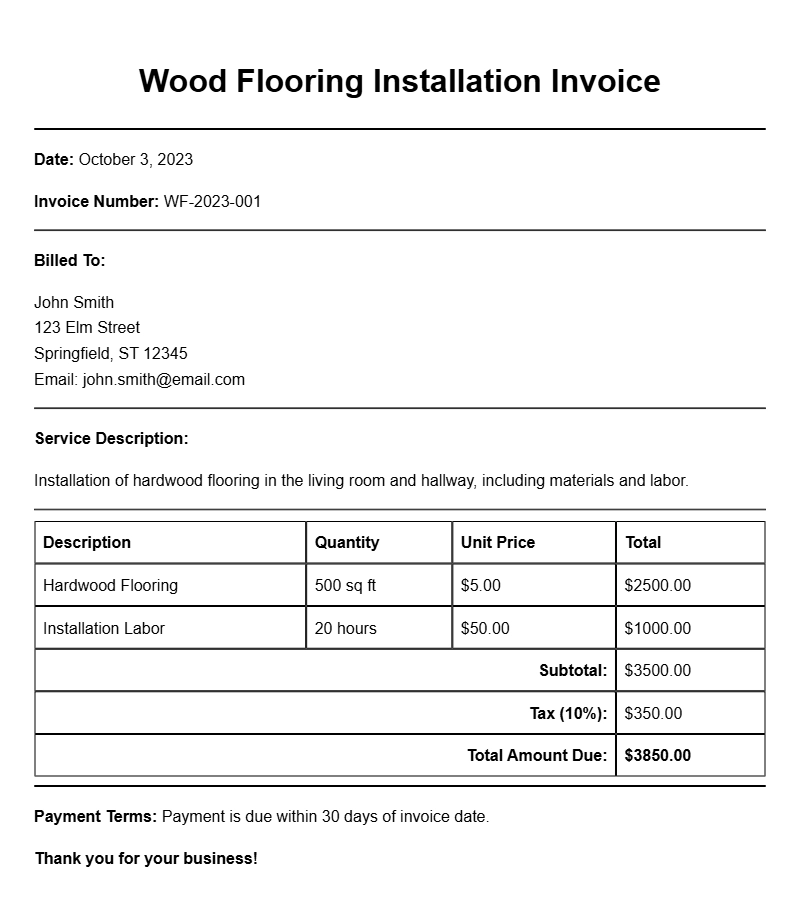
When you’re installing wood flooring, keeping track of your costs and payments is essential. A well-crafted invoice serves as more than just a request for payment; it’s a record of the work completed and a professional touch for your clients. If you’re looking for wood flooring installation invoice samples, you’re in the right place. This guide will help you understand what a wood flooring invoice should include and how to create one that meets your needs.
What is a Wood Flooring Installation Invoice?
A wood flooring installation invoice is a document that details the services provided for a flooring project, including labor, materials, and any additional costs. This document allows contractors to itemize what a client is being charged for and serves as a formal request for payment.
When is it Used?
Invoices are typically issued upon project completion or at specific milestones during a job. If you’re working on a large project, you might send a partial invoice after completing a significant phase. It’s also common to provide an invoice for a deposit before starting the work.
Key Components of a Wood Flooring Installation Invoice
- Contact Information: Include your business name, address, phone number, and email. Also, add the client’s contact details.
- Invoice Number: A unique identifier for tracking purposes.
- Date: The date when the invoice is issued.
- Services Provided: A detailed list of the services, including types of wood, square footage, and installation methods.
- Costs: Break down the costs for materials, labor, and any additional charges like disposal fees.
- Payment Terms: Specify when payment is due and accepted payment methods.
Step-by-Step Writing Guide
- Gather Information: Start by collecting details about the project, including material costs and labor hours.
- Choose a Template: Use a simple invoice template or create your own layout.
- Fill in the Details: Input your contact information, the client’s details, and the specifics of the job.
- Calculate Totals: Ensure all costs are accurately calculated and clearly presented.
- Review for Accuracy: Double-check all entries to avoid errors.
Realistic Examples/Templates
Here’s a simple example of what your invoice might look like:
Invoice #: 001
Date: [Insert Date]
From:
[Your Business Name]
[Your Address]
[Your Phone Number]
[Your Email]
To:
[Client’s Name]
[Client’s Address]
Description of Services:
– Installation of Oak Wood Flooring, 500 sq. ft.
– Labor Costs: $2,000
– Material Costs: $3,000
– Additional Costs (disposal, etc.): $200
Total Amount Due: $5,200
Payment Terms: Due upon receipt
Common Mistakes to Avoid
- Not itemizing costs clearly, which can lead to confusion.
- Forgetting to include payment terms, making it unclear when payment is expected.
- Overlooking the invoice number, which is vital for tracking and referencing.
Tips for Customization
Make your invoice feel personal and professional by customizing it with your branding—such as your logo and color scheme. You can also add a brief thank you note to show appreciation for the client’s business. Adjust the template to include any state-specific taxes or fees if applicable.
Creating an effective invoice for wood flooring installation doesn’t have to be daunting. By following these guidelines and utilizing the provided examples, you’ll craft invoices that are clear, professional, and beneficial for both you and your clients. If you’re also looking for invoice samples for other services, check out the examples for crypto conference services, wedding photography, performance-based projects, construction work, and laundry services.
Editable Document Format Examples